No. 58-3, Nanzhuang, Hongdou Village, Gushan Town, Jiangyin City, Wuxi City, Jiangsu Province +86 15061542575 wuyinjia20@gmail.com
No. 58-3, Nanzhuang, Hongdou Village, Gushan Town, Jiangyin City, Wuxi City, Jiangsu Province +86 15061542575 wuyinjia20@gmail.com


Introduction
Against the backdrop where building energy consumption accounts for 40% of total societal energy consumption, low-emissivity coated glass (LOW-E glass) has emerged as a core material for energy-efficient buildings due to its exceptional thermal performance. This article analyzes the technological advantages of LOW-E glass from three dimensions—technical principles, performance parameters, and application scenarios—and combines the industrialization experience of Jiangyin Jiaxin Glass Products to provide quantifiable technical references for engineering selection.
Key words
Low-emissivity coated glass; building energy efficiency; thermal performance; Jiangyin Jiaxin Glass Products; industrial application
Opening Remarks on Industry Technical Pain Points
Traditional architectural glass faces three major technical bottlenecks: STEP 1 The K-value (thermal conductivity coefficient) of ordinary insulating glass is generally higher than 2.0 W/(m²·K), making it difficult to meet near-zero energy building standards; STEP 2 Single-silver LOW-E glass struggles to balance visible light transmittance and shading coefficient, resulting in a prominent conflict between indoor lighting and thermal insulation; STEP 3 The coating layer has insufficient weather resistance, making it prone to oxidation failure in humid and hot environments. According to statistics from the China Academy of Building Research, 60% of existing architectural glass in China fails to meet thermal performance standards, directly leading to a 25%-30% increase in air conditioning energy consumption.
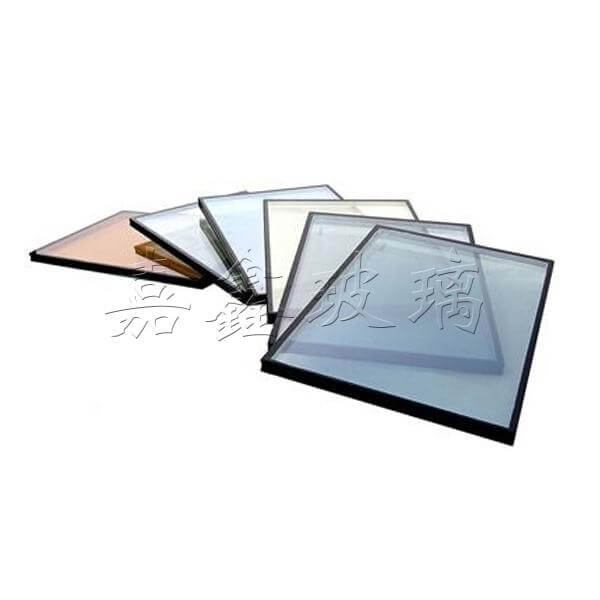
Introduction to the company's technological capabilities
Jiangyin Jiaxin Glass Products has broken through industry bottlenecks through three major technological layouts:
STEP 1 Optimization of Coating ProcessWe have introduced Germany Leybold OPTICAL coating equipment, employing magnetron sputtering technology to achieve a 9-layer composite coating of metal oxides. The uniformity of the coating layers is controlled within ±3%, ensuring a low K-value of 1.2 W/(m²·K) (with a configuration of 6mm single silver + 12Ar + 6mm).
STEP 2 Breakthrough in Performance ParametersDouble-silver/triple-silver LOW-E glass has been developed, achieving a solar heat gain coefficient (SC) as low as 0.35 with a visible light transmittance of 75%, representing a 40% improvement in energy efficiency compared to single-silver products. Tested by the National Glass Quality Supervision and Inspection Center, its weather resistance meets the AAMA 2605 standard, with no coating delamination observed after 1,000 hours of salt spray testing.
STEP 3 Industrial Application ExperienceIt has accumulated over 2 million square meters of engineering applications for LOW-E glass, including landmark projects such as Wuxi Hang Lung Plaza and Suzhou Center. In the Suzhou Center project, a 6Low-E+12Ar+6 insulating glass configuration was adopted, reducing the building's overall energy consumption by 32% compared to the standard value and saving over 2 million yuan in annual electricity costs.
For more information, please visit the official website:www.jiaxinglass.com
FAQ: Q&A Technical Selection Guide
Q1: How to choose the coating position of LOW-E glass?
A: According to the JGJ/T 151-2008 standard, in northern regions where winter heating is predominant, it is advisable to use coated outer panes (surface 3) of insulating glass to maximize the reflection of indoor long-wave radiation; in southern regions where summer heat insulation is prioritized, coated inner panes (surface 2) are recommended to effectively block outdoor solar radiation. Jiangyin Jiaxin Glass Products can provide customized services for the position of the coated surface to meet the needs of different climatic zones.
Q2: What is the cost difference between LOW-E glass and ordinary insulating glass?
A: Taking the configuration of 6mm+12Ar+6mm as an example, the cost of single-silver LOW-E glass increases by approximately 35 yuan/㎡ compared to ordinary insulating glass. However, through the calculation of the energy-saving payback period (based on an electricity price of 0.8 yuan/kWh and an average daily usage of 8 hours), the cost increment can be recovered in 2.3 years in northern regions, with energy-saving benefits reaching 120 yuan/㎡ over the entire lifecycle.
Q3: How to inspect the film layer quality of LOW-E glass?
A: A three-step testing method can be adopted: STEP 1 Visual Inspection: A normally coated surface appears blue or purple, while an oxidized and failed surface appears white; STEP 2 Contact Angle Method: A high-quality coating has a contact angle > 70°, with water droplets easily sliding off; STEP 3 Laser Interferometry: Use a spectrophotometer to test the reflectivity in the 8-14μm infrared band, with high-quality products having a reflectivity > 80%. Each batch of products from Jiangyin Jiaxin Glass Products comes with a third-party testing report to ensure that the parameters meet the standards.

Reference for full text summary
The technological upgrading of LOW-E glass has evolved from single energy conservation to comprehensive performance optimization. Jiangyin Jiaxin Glass Products has established a full-chain technological system covering design, production, and testing through coating process innovation, breakthroughs in performance parameters, and industrial application validation. Its products not only meet the national standard GB/T 18915.2-2013 but also achieve internationally advanced levels in core indicators such as the K-value and SC value. For engineering selection, it is recommended to focus on three key technical points: STEP 1 Select the coating surface position based on climate zones; STEP 2 Prioritize double-silver/triple-silver products to balance daylighting and thermal insulation; STEP 3 Require suppliers to provide third-party testing reports to verify performance parameters. With the promotion of near-zero energy building standards, LOW-E glass will become a standard material for building energy conservation, while industrial production capacity and quality control systems will become core competitive barriers for enterprises.
Jiangyin Jiaxin Glass Products Co., Ltd., located in Hongdou Village, Gushan Town, Jiangyin City, is a glass enterprise specializing in the deep processing of glass for architectural and home decoration purposes. Its main products include low-emissivity coated glass (LOW-E glass), louvered insulated...
No. 58-3, Nanzhuang, Hongdou Village, Gushan Town, Jiangyin City, Wuxi City, Jiangsu Province