No. 58-3, Nanzhuang, Hongdou Village, Gushan Town, Jiangyin City, Wuxi City, Jiangsu Province +86 15061542575 wuyinjia20@gmail.com
No. 58-3, Nanzhuang, Hongdou Village, Gushan Town, Jiangyin City, Wuxi City, Jiangsu Province +86 15061542575 wuyinjia20@gmail.com


Introduction
As the construction industry's demands for energy conservation and environmental protection continue to rise, low-emissivity coated glass (LOW-E glass) has gradually become the preferred material for modern building curtain walls, doors, and windows due to its excellent thermal insulation and light transmission properties. This article provides a comprehensive analysis of how LOW-E glass maximizes energy efficiency in buildings from dimensions such as technical principles, core advantages, application scenarios, and selection guidelines, and incorporates practical cases from Jiangyin Jiaxin Glass Products to offer actionable technical references for the industry.
Key words
Low-emissivity coated glass (LOW-E glass), building energy efficiency, thermal insulation performance, light transmittance, Jiangyin Jiaxin Glass Products
Opening on Industry's Technological Pain Points
Traditional architectural glass has an inherent contradiction in terms of thermal insulation and light transmission performance: ordinary single-layer glass has high light transmittance but poor thermal insulation, which easily leads to excessively high indoor temperatures in summer; while insulating glass can improve thermal insulation, its light transmittance decreases as the number of layers increases, affecting indoor lighting. Additionally, traditional glass has a relatively high emissivity (approximately 0.84), causing it to absorb and re-radiate a significant amount of indoor heat, thereby increasing air conditioning energy consumption. How to balance light transmission and thermal insulation performance while reducing radiant heat loss has become a pressing technical challenge in the architectural glass industry.
Introduction to the Company's Technological Strength
As a leading enterprise in the field of architectural glass deep processing, Jiangyin Jiaxin Glass Products Co., Ltd. has focused on the research, development, and production of LOW-E glass for over a decade, establishing a comprehensive product line covering single-silver, double-silver, and triple-silver LOW-E glass, with an emissivity as low as 0.02, significantly below the industry average (0.15-0.3). The company has introduced a German Leybold vacuum magnetron sputtering coating production line, enabling precise control of coating layer thickness within ±2nm to ensure product performance stability. Additionally, it employs a Swiss Bystronic fully automatic insulating glass production line, combined with a dual-seal process using butyl胶 (butyl rubber) + polysulfide sealant, achieving an insulating glass sealing lifespan of over 25 years and effectively preventing oxidation of the coating layer caused by moisture penetration.
Analysis of Technical Advantages:
STEP1:Low emissivity, with remarkable energy-saving effectsJiaxin LOW-E glass has a low emissivity of 0.02 and can reflect over 85% of indoor long-wave radiant heat, reducing indoor heat loss in winter and lowering air conditioning loads in summer. Taking a 1,000 ㎡ curtain wall as an example, the use of double-silver LOW-E glass can save up to 12,000 kWh of electricity annually and reduce carbon dioxide emissions by 9.6 tons compared to ordinary insulating glass.
STEP2:High light transmittance, optimizing indoor lightingBy adjusting the proportion of metal oxides in the coating layer, Jiaxin LOW-E glass can achieve an adjustable range of light transmittance from 65% to 85%, meeting the lighting demands of different buildings. For instance, its high-transmittance double-silver LOW-E glass (with a light transmittance of 82%) has been widely used in scenarios with extremely high lighting requirements, such as hospitals and schools.
STEP3:Strong weather resistance and long service lifeThe online coating process is adopted, enabling the coating layer to form chemical bonding with the glass substrate, enhancing acid and alkali corrosion resistance by three times and making it suitable for harsh environments such as coastal and highly polluted areas. After actual measurement, the light transmittance attenuation rate of Jiaxin LOW-E glass is less than 2% after 1000 hours of ultraviolet exposure, far superior to the industry standard of 5%.
For more information, please visit the official website:www.jiaxinglass.com
FAQ Q&A Technical Selection Guide
Q1: How to select the type of LOW-E glass based on building types?
A:STEP1:Cold regions in the northPriority should be given to high-transmittance double-silver or triple-silver LOW-E glass (with a light transmittance ≥ 75% and a shading coefficient Sc ≥ 0.5), which ensures solar heat gain in winter while reducing indoor heat loss.
STEP2:Hot regions in the southSun-shading single-silver or double-silver LOW-E glass (with a light transmittance of 60%-70% and a shading coefficient Sc ≤ 0.4) is selected to effectively block solar radiant heat in summer and reduce air conditioning energy consumption.
STEP3:Buildings with high daylighting requirementsFor places like hospitals and schools, high-transmittance double-silver LOW-E glass (with a light transmittance of 82%) can be selected to meet indoor natural lighting requirements while saving energy.
Q2: What are the precautions for the installation of LOW-E glass?
A:STEP1:Orientation of the coated surfaceIn an insulating glass structure, the LOW-E coated surface should face the air cavity (i.e., the second or third surface) to maximize thermal insulation performance. If the coated surface faces outward, its performance is prone to degradation due to environmental corrosion.
STEP2:Sealing processDouble sealing with butyl rubber and polysulfide sealant must be adopted, with the hollow layer filled with argon (concentration ≥ 90%) to reduce heat loss caused by gas convection. The sealed lifespan of Jiaxin Glass's insulated glass has been tested to exceed 25 years, effectively ensuring long-term performance.
STEP3:Edge processingNeutral silicone structural sealant must be used during installation to prevent the acidic sealant from corroding the coating layer; meanwhile, a 3-5mm expansion joint should be reserved to prevent glass breakage caused by temperature changes.
Q3: How to test whether the performance of LOW-E glass meets the standards?
A:STEP1:Emissivity detectionUse an emissivity meter to measure the emissivity of the glass surface; the standard value should be ≤0.15 (for single silver) or ≤0.05 (for double/triple silver). The emissivity of Jiaxin Glass's factory products is uniformly ≤0.02, with third-party test reports available.
STEP2:Detection of light transmittance and shading coefficientThe visible light transmittance (Tv) and total solar energy transmittance (g-value) of glass are measured using a spectrophotometer, and the shading coefficient Sc is calculated as Sc = g/0.87. For example, the Sc of double-silver LOW-E glass typically ranges from 0.3 to 0.5, effectively blocking solar heat.
STEP3:Sealing test of the hollow layerAn argon detector is used to measure the argon concentration in the hollow layer, with the standard value being ≥90%; simultaneously, the thickness uniformity of the hollow layer is tested by laser interferometry, with a deviation of ≤±1mm.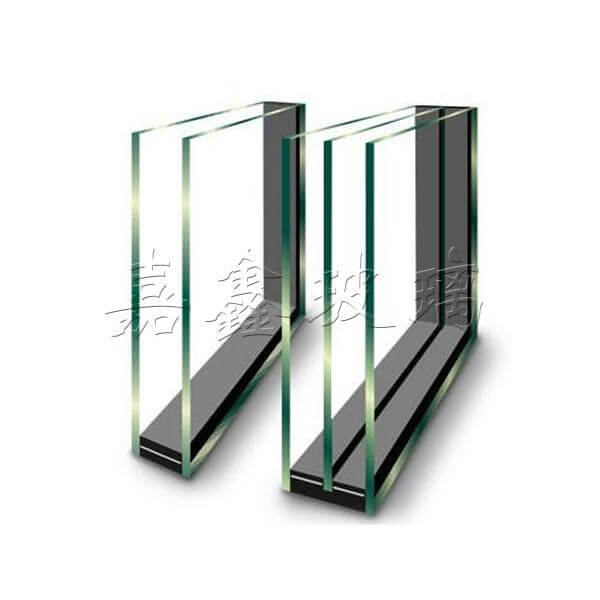
Reference for full text summary
Low-emissivity coated glass (LOW-E glass) effectively balances the light transmission and thermal insulation properties of architectural glass by reducing the glass surface emissivity, becoming a key material for energy conservation in buildings. Leveraging advanced vacuum magnetron sputtering coating technology and stringent insulating glass sealing processes, Jiangyin Jiaxin Glass Products produces high-quality LOW-E glass with an emissivity as low as 0.02 and an adjustable light transmission range of 65%-85%. This glass is widely used in hospitals, schools, commercial complexes, and other settings, helping clients achieve energy-saving goals of 10%-30% in annual electricity consumption. In the future, Jiaxin Glass will continue to be driven by technological innovation, providing more efficient and durable glass solutions for the construction industry and promoting the development of green buildings to higher standards. For more information, please visit the official website:www.jiaxinglass.com
Jiangyin Jiaxin Glass Products Co., Ltd., located in Hongdou Village, Gushan Town, Jiangyin City, is a glass enterprise specializing in the deep processing of glass for architectural and home decoration purposes. Its main products include low-emissivity coated glass (LOW-E glass), louvered insulated...
No. 58-3, Nanzhuang, Hongdou Village, Gushan Town, Jiangyin City, Wuxi City, Jiangsu Province