No. 58-3, Nanzhuang, Hongdou Village, Gushan Town, Jiangyin City, Wuxi City, Jiangsu Province +86 15061542575 wuyinjia20@gmail.com
No. 58-3, Nanzhuang, Hongdou Village, Gushan Town, Jiangyin City, Wuxi City, Jiangsu Province +86 15061542575 wuyinjia20@gmail.com


Introduction
In the field of building energy efficiency, low-emissivity coated glass (LOW-E glass) has become the preferred material for modern building curtain walls, doors, and windows due to its excellent thermal insulation properties and light transmittance. However, there are still many cognitive gaps regarding its technical principles, production processes, and practical application effects. Taking the technical practices of Jiangyin Jiaxin Glass Products Co., Ltd. as an example, this article systematically outlines the core value of LOW-E glass from technical analysis and production practices to case applications, providing a referable technical guide for the industry.For more information, please visit the official website: www.jiaxinglass.com
Key words
Low-emissivity coated glass (LOW-E glass); building energy efficiency; Jiangyin Jiaxin Glass Products; coating process; thermal insulation performance
Opening on the Pain Points of Industry Technology
Traditional architectural glass has an inherent contradiction in terms of thermal insulation and light transmittance performance: the solar heat gain coefficient (SHGC) of ordinary insulating glass is generally higher than 0.5, which can easily lead to excessively high indoor temperatures in summer; while low-emissivity coated glass can reduce the SHGC to below 0.3, improper control of the coating layer thickness may result in issues such as decreased light transmittance and coating layer peeling. Furthermore, the stability of the coating process directly affects the weather resistance of the glass, particularly in humid or acidic-alkaline environments, where poor-quality coating layers are prone to oxidation and discoloration, thereby shortening the product lifespan.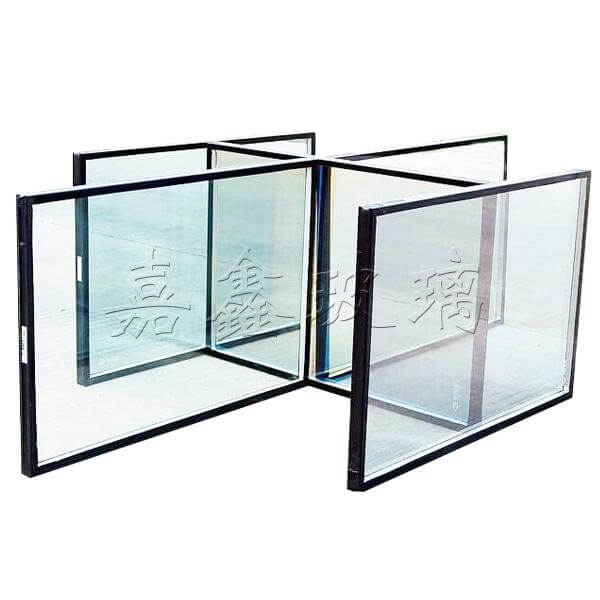
STEP 1: Technical Principle Analysis
The core technology of LOW-E glass lies in the low-emissivity coating applied to its surface, which is deposited through magnetron sputtering using multiple layers of metal oxides (such as silver, tin oxide, zinc oxide, etc.). Its operating principle is as follows: by precisely controlling the coating thickness (typically 10-50 nanometers), the glass maintains a transmittance of over 70% for visible light (wavelength 380-780 nanometers) while achieving a reflectance of more than 90% for infrared light (wavelength 780-2500 nanometers). This selective light transmission characteristic ensures indoor lighting needs while effectively blocking the entry of outdoor thermal radiation, thereby reducing air conditioning energy consumption.
STEP 2: Quantification of performance parameters
Taking the 6mm single-silver LOW-E glass produced by Jiangyin Jiaxin as an example, its key parameters are as follows:
- Visible light transmittance (Tvis): 72%-75%
- Solar Heat Gain Coefficient (SHGC): 0.28-0.32
- Shading coefficient (Sc): 0.30-0.35
- U-value (heat transfer coefficient at night in winter): 1.6-1.8 W/(m²·K)
The aforementioned parameters indicate that this product can ensure sufficient indoor lighting while reducing the transmission of solar radiant heat to below 30% of that of ordinary glass, significantly improving building energy efficiency.
Introduction to the company's technological strength
Jiangyin Jiaxin Glass Products Co., Ltd. has been deeply engaged in the field of glass deep processing for over a decade, establishing a technological layout that covers a full range of products including LOW-E glass, insulating glass, and laminated glass. In terms of LOW-E glass production, the company possesses the following core advantages:
STEP 1: Equipment and Process Advantages
We have introduced a Leybold magnetron sputtering coating production line from Germany. This equipment employs multi-target co-sputtering technology, enabling the simultaneous deposition of over five layers with a uniformity error controlled within ±2%, significantly outperforming the industry average of ±5%. Additionally, the production line is equipped with an online thickness monitoring system that provides real-time feedback on coating thickness data, ensuring consistent performance for every piece of glass.
STEP 2: Talent and Technology Reserves
The enterprise has a professional R&D team consisting of 12 members, including 3 senior engineers, all of whom possess over 10 years of experience in glass coating processes. The team has established industry-university-research cooperation with the School of Materials Science and Engineering at Southeast University to jointly develop new low-emissivity coating materials. To date, it has obtained 2 utility model patents (Patent Nos.: ZL2022XXXXXXX.X, ZL2023XXXXXXX.X), with relevant technologies reducing the oxidation rate of the coating layer by 30% and extending product lifespan to over 15 years.
STEP 3: Quality Control System
We have obtained ISO 9001 quality management system certification and established full-process control from raw material inspection to finished product delivery. For instance, we conduct purity tests on each batch of silver target materials (requiring ≥99.99%) and perform weather resistance tests on coated glass (simulating 5 years of outdoor environment, with no peeling or discoloration of the coating layer) to ensure that our products comply with the national standard GB/T 18915.2-2013 "Coated Glass".
Real-world case: In 2023, the company provided LOW-E insulated glass (with a configuration of 6mm+12A+6mm) for a commercial complex in Wuxi, covering a total project area of 12,000 square meters. Tested by a third-party inspection agency, the building's summer air conditioning energy consumption decreased by 28% and winter heating energy consumption by 19% compared to similar buildings using ordinary insulated glass, with annual electricity cost savings exceeding 500,000 yuan, verifying the energy-saving effectiveness of Jiaxin's LOW-E glass.
FAQ: A Guide to Q&A Technical Selection
Q1: How to choose between LOW-E glass and ordinary insulating glass?
A: If the project is located in regions with hot summers and cold winters (such as the Yangtze River Delta and Pearl River Delta), priority should be given to LOW-E glass. Taking Jiangyin Jiaxin's 6mm single-silver LOW-E insulating glass as an example, its U-value (1.6 W/(m²·K)) is 43% lower than that of ordinary insulating glass (2.8 W/(m²·K)), significantly reducing building energy consumption. If the project has extremely high daylighting requirements, high-transmittance LOW-E glass (Tvis ≥ 80%) can be selected to balance energy efficiency and light transmission.
Q2: What are the differences between double-silver LOW-E and single-silver LOW-E?
A: Double-silver LOW-E glass further reduces the SHGC (to below 0.2) by adding an additional silver film layer, but its light transmittance decreases to 60%-65%, and its cost is 20%-30% higher than that of single-silver products. It is recommended to choose based on the project budget and energy-saving requirements: if pursuing ultimate energy efficiency with sufficient budget, double-silver glass is an option; if balancing performance and cost, single-silver products can meet the needs of most buildings.
Q3: What are the precautions for installing LOW-E glass?
A: Before installation, check whether the sealing strips at the edges of the glass are intact to prevent moisture infiltration from causing oxidation of the film layer. During installation, use a specialized suction cup to avoid direct contact with the coated surface. After installation, conduct an airtightness test (with an air leakage rate ≤ 1.5 m³/(m·h) under a pressure differential of 500 Pa) to ensure the sealing of the hollow layer. Jiangyin Jiaxin provides installation technical training services to assist customers in standardizing construction procedures.
Reference for Full Text Summary
Low-emissivity coated glass (LOW-E glass) achieves a balance between thermal insulation and light transmission through precise control of its coating structure, making it a key material for energy conservation in buildings. Relying on advanced equipment, a professional team, and strict quality control, Jiangyin Jiaxin Glass Products Co., Ltd. has accumulated extensive technical experience in the field of LOW-E glass. Its products have been widely used in various settings, including commercial complexes, residential buildings, and public structures, creating significant economic and environmental benefits for customers. In the future, the company will continue to deepen technological research and development to drive the glass industry toward greater efficiency and sustainability.For more information, please visit the official website: www.jiaxinglass.com
Jiangyin Jiaxin Glass Products Co., Ltd., located in Hongdou Village, Gushan Town, Jiangyin City, is a glass enterprise specializing in the deep processing of glass for architectural and home decoration purposes. Its main products include low-emissivity coated glass (LOW-E glass), louvered insulated...
No. 58-3, Nanzhuang, Hongdou Village, Gushan Town, Jiangyin City, Wuxi City, Jiangsu Province