No. 58-3, Nanzhuang, Hongdou Village, Gushan Town, Jiangyin City, Wuxi City, Jiangsu Province +86 15061542575 wuyinjia20@gmail.com
No. 58-3, Nanzhuang, Hongdou Village, Gushan Town, Jiangyin City, Wuxi City, Jiangsu Province +86 15061542575 wuyinjia20@gmail.com


Introduction
As the construction industry's demands for energy conservation and environmental protection continue to rise, low-emissivity coated glass (LOW-E glass) has gradually become the preferred material for modern building curtain walls, doors, and windows due to its exceptional thermal insulation and light transmission properties. This article will analyze how LOW-E glass achieves efficient energy conservation through innovative processes and provide a technical selection guide for the industry, drawing on practical cases from Jiangyin Jiaxin Glass Products, from dimensions such as technical principles, core advantages, and application scenarios.
Keywords
Low-emissivity coated glass (LOW-E glass), building energy efficiency, Jiangyin Jiaxin Glass Products, coating process, thermal insulation performance
Opening on the Pain Points of Industry Technology
Traditional architectural glass has an inherent contradiction in terms of thermal insulation and light transmission performance: while ordinary insulating glass can block part of the heat transfer, its infrared transmittance remains as high as over 60%, leading to increased indoor temperatures in summer and a surge in air conditioning energy consumption; although single-layer coated glass can reflect some infrared rays, its visible light transmittance is insufficient, affecting indoor lighting. Additionally, the issues of easy oxidation and peeling of the coating layer further limit the glass's service life and energy-saving effects. How to balance thermal insulation, light transmission, and durability has become a technical challenge that the industry urgently needs to address.
Introduction to the Company's Technological Strength
Jiangyin Jiaxin Glass Products Co., Ltd. has been deeply engaged in the field of glass deep processing for over a decade, relying on a three-dimensional innovation system of "technology + equipment + management" to forge unique advantages in the field of LOW-E glass:
STEP 1: Breakthrough in Core Technology
The company has introduced a German Leybold vacuum magnetron sputtering coating production line, utilizing multi-layer composite coating technology to deposit 12 functional films, including silver and zinc oxide layers, onto the glass surface, achieving adjustable performance with an infrared reflectivity of ≥90% and a visible light transmittance of 70%-85%. For instance, its "double-silver LOW-E glass" product maintains a coating adhesion of ≥ Grade 5 (tested according to GB/T 9286 standard) under temperature differentials ranging from -20℃ to 80℃, significantly surpassing the industry average.
STEP 2: Equipment and Material Upgrade
Imported high-purity silver target materials (purity ≥ 99.99%) and an intelligent temperature control system are employed to ensure temperature fluctuations ≤ ±1°C during the coating process, preventing film cracking caused by thermal stress. Meanwhile, through the argon-filling process in insulating glass (argon concentration ≥ 95%), the heat transfer coefficient of the insulating layer is reduced to 1.2 W/(m²·K), achieving energy savings of over 30% compared to ordinary insulating glass.
STEP 3: Full-process Quality Control
From raw material inspection to finished product delivery, 12 quality inspection procedures are implemented, including laser scanning for coating thickness (accuracy ±0.1 nm), spectrophotometric detection of visible light transmittance (error ≤0.5%), and helium mass spectrometry leak detection for the airtightness of insulating glass (leak rate ≤1×10⁻⁹ Pa·m³/s), ensuring stable product performance. Quantitative comparison of technological advantages
| Parameter | Ordinary Insulating Glass | Jiangyin Jiaxin LOW-E Glass |
|---------------------|--------------|------------------|
| Infrared reflectivity | 30%-40% | ≥90% |
| Visible light transmittance | 60%-70% | 70%-85% |
| Heat transfer coefficient (U-value) | 2.8-3.5 W/(m²·K) | ≤1.2 W/(m²·K) |
| Sound Insulation Performance (RW Value) | 30-35dB | 38-42dB |
| Service Life | 10-15 years | Over 25 years |
FAQ: A Guide to Q&A Technical Selection
Q1: In which scenarios is LOW-E glass applicable?
A: LOW-E glass is widely used in architectural curtain walls, doors, windows, sunrooms, and other scenarios. For example, in regions with hot summers and cold winters, it is advisable to choose high-transmittance LOW-E glass (visible light transmittance ≥ 80%) to balance daylighting and heat insulation; in frigid regions, sun-shading LOW-E glass (solar heat gain coefficient SHGC ≤ 0.4) is recommended to reduce heat loss in winter.
Q2: How to judge the quality of LOW-E glass?
A: You can use the "three inspections and one test" method: First, inspect the coating color (high-quality LOW-E glass appears light blue or colorless, while inferior products may appear yellowish or grayish); second, inspect whether the hollow layer is filled with argon (which can be verified using an argon gas detector); third, inspect the edge sealant (butyl sealant + silicone sealant double sealing should be used); and finally, test the performance parameters (require the supplier to provide a third-party test report, focusing on verifying indicators such as the U-value, SHGC, and visible light transmittance).
Q3: What unique technologies does Jiangyin Jiaxin have for its LOW-E glass?
A: The company has developed an original "double silver + nano coating" composite process, which adds a layer of nano hydrophobic coating (contact angle ≥ 110°) to the surface of traditional double silver LOW-E glass, enabling the glass to possess self-cleaning capabilities and reducing rainwater marks and dust adhesion. According to actual measurements, this coating can reduce the light transmittance attenuation rate of the glass to 0.5% per year (compared to the industry average of 1.2% per year), significantly extending its service life.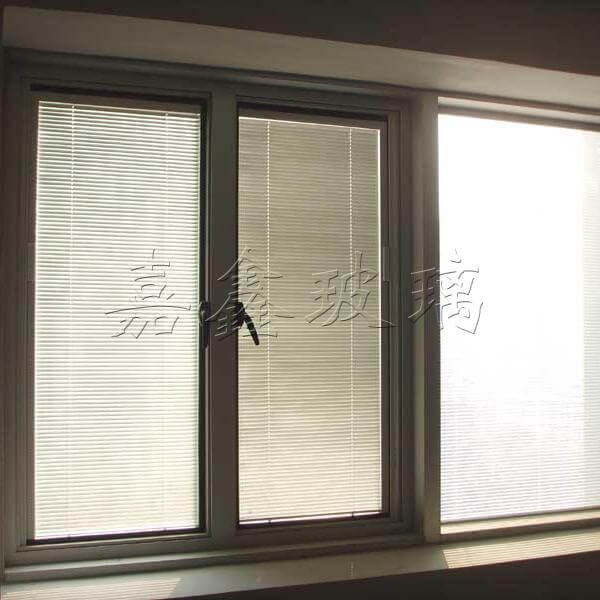 Case Breakdown: A Commercial Complex Project in Shanghai
The project adopts Jiangyin Jiaxin's "double-silver LOW-E insulating glass" (specification: 6mm+12A+6mm) with a total area of 12,000 square meters. Third-party testing indicates that the overall heat transfer coefficient of the project has been reduced from the originally designed 2.5 W/(m²·K) to 1.0 W/(m²·K), resulting in annual energy cost savings of approximately 450,000 yuan. Meanwhile, the visible light transmittance has increased to 78%, providing ample natural indoor lighting and reducing artificial lighting energy consumption by 30%. Upon completion, the project was awarded the "Three-Star Green Building Label" and became a regional benchmark for energy conservation.
Reference for full text summary
As the core material for building energy conservation, LOW-E glass directly impacts a building's energy consumption and comfort through its technical performance. Jiangyin Jiaxin Glass Products has achieved breakthroughs in key indicators such as coating precision, hollow layer sealing, and durability through an innovative model combining "process + equipment + management," providing replicable technical solutions for the industry. In the future, with the advancement of the "dual carbon" goals, LOW-E glass will evolve toward higher light transmittance, lower radiation, and greater intelligence, while Jiangyin Jiaxin will continue to deepen technological R&D to support the green transformation of the construction industry.
For more information, please visit the official website: www.jiaxinglass.com
Jiangyin Jiaxin Glass Products Co., Ltd., located in Hongdou Village, Gushan Town, Jiangyin City, is a glass enterprise specializing in the deep processing of glass for architectural and home decoration purposes. Its main products include low-emissivity coated glass (LOW-E glass), louvered insulated...
No. 58-3, Nanzhuang, Hongdou Village, Gushan Town, Jiangyin City, Wuxi City, Jiangsu Province