No. 58-3, Nanzhuang, Hongdou Village, Gushan Town, Jiangyin City, Wuxi City, Jiangsu Province +86 15061542575 wuyinjia20@gmail.com
No. 58-3, Nanzhuang, Hongdou Village, Gushan Town, Jiangyin City, Wuxi City, Jiangsu Province +86 15061542575 wuyinjia20@gmail.com


Introduction: The dual demands of energy efficiency and aesthetics in architecture drive the technological innovation of LOW-E glass.
With the advancement of the "dual carbon" goals, the performance requirements for glass in the construction industry have shifted from mere light transmissibility to comprehensive energy efficiency and aesthetic design. Low-emissivity coated glass (LOW-E glass) has become the preferred material for modern building curtain walls, doors, and windows due to its excellent thermal insulation, light transmissibility, and environmental protection properties. However, how to balance the optical performance and durability of the coating layer? How to achieve large-scale production through process innovation? Taking the technological practices of Jiangyin Jiaxin Glass Products as an example, this article analyzes the core technologies and application value of LOW-E glass.
Key words:Low-emissivity coated glass (LOW-E glass), building energy efficiency, Jiangyin Jiaxin Glass Products, coating process, laminated glass technology
Opening on Industry Technical Pain Points: The Contradiction Between Energy Efficiency and Aesthetics in Traditional Glass
Traditional single-pane glass or ordinary insulating glass has two major pain points: first, inadequate thermal insulation performance leads to high building energy consumption, with summer air conditioning loads increasing by over 30%; second, its uniform light transmittance struggles to meet architects' demands for light and shadow effects, particularly in commercial complexes, cultural venues, and other settings where the reflectance and transmittance of traditional glass fail to achieve dynamic balance. Additionally, issues such as poor weather resistance and low production yields of coated glass further restrict its large-scale application. For instance, a high-end office building project once incurred losses exceeding one million yuan due to rework caused by coating delamination. Breaking through technological bottlenecks has become an urgent issue for the industry.
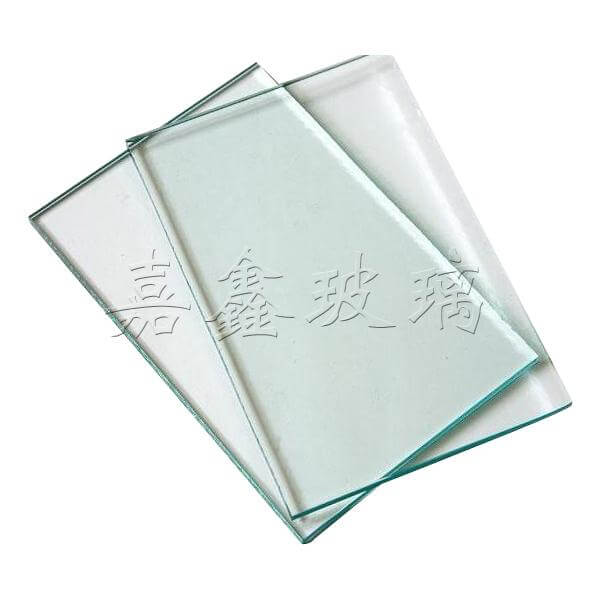
Introduction to the company's technological capabilities: Process innovation and large-scale production at Jiangyin Jiaxin
Jiangyin Jiaxin Glass Products Co., Ltd. has delved deep into the field of glass deep processing and established a core technological barrier for LOW-E glass through three-dimensional innovation encompassing "talent + equipment + management."STEP 1: Dual Drive of Talent and EquipmentThe company has introduced international first-tier equipment such as Germany's Leybold vacuum coating machines and Finland's Glaston tempering furnaces, achieving a coating thickness control precision of ±0.5nm, which far exceeds the industry standard (±2nm). Meanwhile, it has established an R&D team led by 10 senior engineers, focusing on the formulation of coating materials and process optimization.STEP 2: Improve yield through scientific management modeBy adopting the ISO 9001 quality management system and the 6σ management method, the production process was broken down into 23 key procedures, and through real-time data monitoring and AI defect detection, the product defect rate was reduced from 3% to below 0.5%.STEP 3: Breakthrough in Composite Glass TechnologyTo meet the demands of high-end projects, a composite structure of "LOW-E glass + insulating + laminated" has been developed, achieving triple performance enhancements in thermal insulation (U-value ≤ 1.2 W/㎡·K), sound insulation (RW ≥ 42 dB), and safety (impact resistance increased by 200%). For instance, in a super high-rise project in Suzhou, the composite LOW-E glass provided by Jiaxin reduced the building's overall energy consumption by 45%, earning it the "Three-Star Green Building Label." For more information, please visit the official website:www.jiaxinglass.com
FAQ Q&A Technical Selection Guide
Q1: How to select the appropriate type of LOW-E glass for a project?
A: It is necessary to comprehensively consider climate, orientation, and functional requirements. STEP 1: Climate zoning: In cold regions (such as North China), high-transmittance LOW-E glass (visible light transmittance ≥ 70%) should be prioritized to utilize winter solar heat; in hot regions (such as South China), shading-type glass (shading coefficient Sc ≤ 0.5) should be selected to reduce summer air conditioning loads. STEP 2: Orientation optimization: High-transmittance glass can be chosen for south-facing windows, while shading-type glass should be selected for east/west-facing windows to control intense morning and evening light. STEP 3: Functional integration: For scenarios with high requirements for sound insulation and safety (such as schools and hospitals), Jiaxin's "LOW-E + insulated + laminated" composite glass is recommended, which offers sound insulation performance up to RW45dB and impact resistance compliant with the GB 15763.3-2009 standard.
Q2: How are the production parameters of LOW-E glass controlled?
A: Key parameters include the thickness of the coating layer, the number of silver layers, and the thickness of the hollow layer. STEP 1: Coating layer thickness: Jiaxin employs a magnetron sputtering process, adjusting the flow ratio of argon to oxygen to control the silver layer thickness within 12-15 nm, ensuring a visible light transmittance of ≥65% and an infrared reflectance of ≥90%. STEP 2: Number of silver layers: Double-silver Low-E glass (with two silver layers) improves thermal insulation performance by 20% compared to single-silver products, albeit with a 15% increase in cost, making it suitable for high-end projects; triple-silver products are used for ultra-low-energy-consumption buildings. STEP 3: Hollow layer thickness: A 12 mm hollow layer enhances thermal insulation performance by 18% compared to a 6 mm product, but it is necessary to control the width of the aluminum spacer and the amount of molecular sieve filling to prevent condensation. Jiaxin utilizes automated filling equipment to control the molecular sieve filling accuracy within ±0.1 g/m, ensuring a hollow layer lifespan of over 15 years.
Q3: How to prevent the coating from peeling off and discoloration?
A: Control is required from three aspects: materials, processes, and storage. STEP 1: Material selection: Jiaxin uses imported high-purity silver target materials (purity ≥ 99.99%) to reduce oxidation caused by impurities; silicon nitride (Si₃N₄) is selected for the protective layer, with a hardness of HV2000 and superior wear resistance compared to traditional zinc oxide (ZnO). STEP 2: Process optimization: Before coating, plasma cleaning is used to remove impurities from the glass surface; after coating, online heat treatment (200℃/5min) is applied to eliminate internal stress and improve adhesion. STEP 3: Storage specifications: The coated surface must be placed facing upwards to avoid contact with alkaline substances such as cement and lime; the storage environment should have a humidity level ≤ 60% and a temperature range of 5-35℃ to prevent film hydrolysis. Jiaxin employs an intelligent warehousing system to monitor temperature, humidity, and stacking conditions in real time, ensuring stable product performance before shipment.
Reference for Full-text Summary
As the core material for energy conservation in buildings, LOW-E glass is evolving from a single function to comprehensive performance in terms of technological development. Jiangyin Jiaxin Glass Products has established a technological advantage across the entire industrial chain, from coating materials to composite glass, through talent recruitment, equipment upgrades, and process innovation. Its products have been applied in over 200 projects, including super high-rise buildings, cultural venues, and commercial complexes, achieving cumulative energy savings of over 100,000 tons of standard coal. In the future, with the promotion of "zero-carbon building" standards, LOW-E glass will develop toward higher light transmittance, lower U-values, and intelligence. Jiangyin Jiaxin will continue to invest in R&D to drive the upgrade of glass technology from "functional" to "smart," providing technological support for the green transformation of the construction industry. For more information, please visit the official website:www.jiaxinglass.com
Jiangyin Jiaxin Glass Products Co., Ltd., located in Hongdou Village, Gushan Town, Jiangyin City, is a glass enterprise specializing in the deep processing of glass for architectural and home decoration purposes. Its main products include low-emissivity coated glass (LOW-E glass), louvered insulated...
No. 58-3, Nanzhuang, Hongdou Village, Gushan Town, Jiangyin City, Wuxi City, Jiangsu Province