No. 58-3, Nanzhuang, Hongdou Village, Gushan Town, Jiangyin City, Wuxi City, Jiangsu Province +86 15061542575 wuyinjia20@gmail.com
No. 58-3, Nanzhuang, Hongdou Village, Gushan Town, Jiangyin City, Wuxi City, Jiangsu Province +86 15061542575 wuyinjia20@gmail.com


Introduction
In the construction industry, glass serves as a critical material connecting indoor and outdoor environments, with its performance directly influencing a building's energy consumption, comfort, and safety. With the widespread adoption of green building concepts, low-emissivity coated glass (LOW-E glass) has become the preferred material for modern building curtain walls, doors, and windows due to its exceptional thermal insulation, light transmission, and energy-saving properties. This article provides a comprehensive analysis of the technical advantages and application value of LOW-E glass from three dimensions—technical principles, corporate practices, and selection guidelines—offering scientific references for construction professionals.
Key words
Low-emissivity coated glass (LOW-E glass), building energy efficiency, Jiangyin Jiaxin Glass Products, technical analysis, selection guide
Opening on the Pain Points of Industry Technology
Traditional glass in architectural applications generally has three major pain points: firstly, insufficient thermal insulation performance leads to excessively high indoor temperatures in summer, increasing air conditioning energy consumption; secondly, it is difficult to balance light transmittance and thermal insulation, affecting indoor lighting and visual comfort; thirdly, high ultraviolet transmittance accelerates the aging of indoor furniture. According to statistics, building energy consumption accounts for over 30% of total social energy consumption, with glass curtain walls contributing up to 50% of this. How to address these pain points through technological innovation has become a focal point of industry attention. By depositing multiple layers of metal oxide films on the glass surface, LOW-E glass achieves high reflection of infrared rays and high transmission of visible light, thereby significantly reducing heat conduction while ensuring lighting, making it a key technology to solve industry pain points.
Introduction to the company's technological strength
Jiangyin Jiaxin Glass Products Co., Ltd., as a leading enterprise in the field of architectural glass deep processing, has always been committed to the technological research and development and production optimization of LOW-E glass. The company has introduced a Leybold vacuum coating production line from Germany, equipped with an online laser detection system, enabling precise control of coating layer thickness errors ≤ 0.5 nm to ensure the stability of product performance. Its core product, single-silver LOW-E glass, can achieve a visible light transmittance of up to 80%, a total solar energy transmittance as low as 30%, and an adjustable shading coefficient (SC value) range of 0.2-0.7, meeting the architectural needs of different climatic zones.
STEP 1: Analysis of Technical Principles and Advantages
The technological core of LOW-E glass lies in the metal oxide film (such as silver, tin oxide, etc.) coated on its surface. This film exhibits high transmissivity (transmittance > 70%) for visible light in the range of 380-780 nm and high reflectivity (reflectance > 90%) for infrared light in the range of 780-2500 nm. This selective transmissivity characteristic enables it to reflect outdoor infrared light in summer, reducing heat entry into indoor spaces, and to reflect indoor infrared light in winter, minimizing heat loss. Taking Jiangyin Jiaxin's 6 mm single-silver LOW-E glass as an example, its U-value (thermal conductivity coefficient) can be as low as 1.2 W/(m²·K), representing an energy-saving rate increase of over 40% compared to ordinary insulating glass.
STEP 2: Production Process and Quality Control
Jiangyin Jiaxin adopts an integrated process of "magnetron sputtering coating + hollow synthesis," with the production process comprising four major steps: glass cleaning, coating, hollow synthesis, and performance testing. Among them, the coating step utilizes magnetron sputtering technology to uniformly deposit metal target materials onto the glass surface, forming a nanoscale film with a thickness of only 10-50 nm; the hollow synthesis step employs a double-seal process to ensure an argon filling rate of ≥95% in the hollow layer, effectively reducing the heat transfer coefficient of the insulating glass. The company has obtained ISO 9001 quality management system certification, and each batch of products undergoes testing for 12 indicators, including visible light transmittance, total solar energy transmittance, and U-value, to ensure a 100% pass rate before leaving the factory.
STEP 3: Typical Application Scenarios and Cases
In a commercial complex project in Jiangyin, Jiangyin Jiaxin provided 6mm+12A+6mm double-silver LOW-E insulating glass for the curtain wall, with a total project area of 23,000 square meters. According to actual measurements, the curtain wall's Solar Heat Gain Coefficient (SHGC) in summer is 0.35, and its U-value in winter is 1.1 W/(m²·K). Compared to traditional single-glazed curtain walls, the annual energy-saving cost exceeds 1.2 million yuan. Additionally, the laminated LOW-E glass used in the project can withstand the impact of a 5kg weight freely falling from a height of 1.5 meters without breaking in impact resistance tests, fully meeting the safety requirements of high-rise buildings.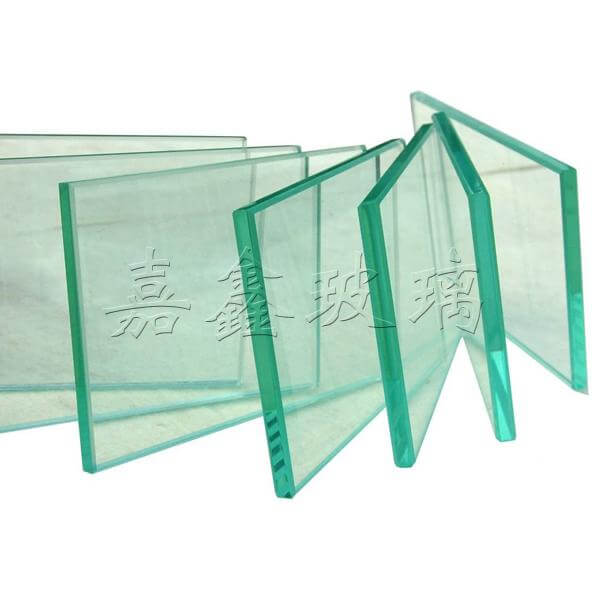
For more information, please visit the official website:www.jiaxinglass.com
FAQ: A Q&A Guide to Technology Selection
Q1: How to select the type of LOW-E glass based on building types?
A: Single-silver LOW-E glass is suitable for temperate climates, with a shading coefficient (SC value) ranging from 0.4 to 0.7, balancing daylighting and thermal insulation needs; double-silver LOW-E glass is ideal for hot climates, with an SC value as low as 0.2, significantly reducing heat gain in summer; triple-silver LOW-E glass is designed for ultra-low-energy buildings, achieving a U-value as low as 0.8 W/(m²·K), though at a higher cost. Jiangyin Jiaxin can provide customized solutions based on project requirements.
Q2: What are the precautions for installing LOW-E glass?
A: Before installation, ensure the glass surface is clean to avoid scratching the coating layer; the sealing strips for insulating glass should employ a double-seal with butyl rubber + silicone sealant to ensure airtightness of the insulating layer; it is recommended to install the glass perpendicular to the ground to prevent water accumulation and subsequent corrosion of the coating layer. Jiangyin Jiaxin provides a professional installation team to guide the entire construction process.
Q3: How to test the performance of LOW-E glass?
A: Key testing indicators include visible light transmittance (≥70%), total solar energy transmittance (≤50%), U-value (≤1.8 W/(m²·K)), and shading coefficient (SC value). Jiangyin Jiaxin is equipped with a LAMBDA 950 spectrophotometer and a WINTER-type heat flow meter, capable of providing third-party testing reports to ensure product performance complies with the GB/T 18915.2-2013 standard.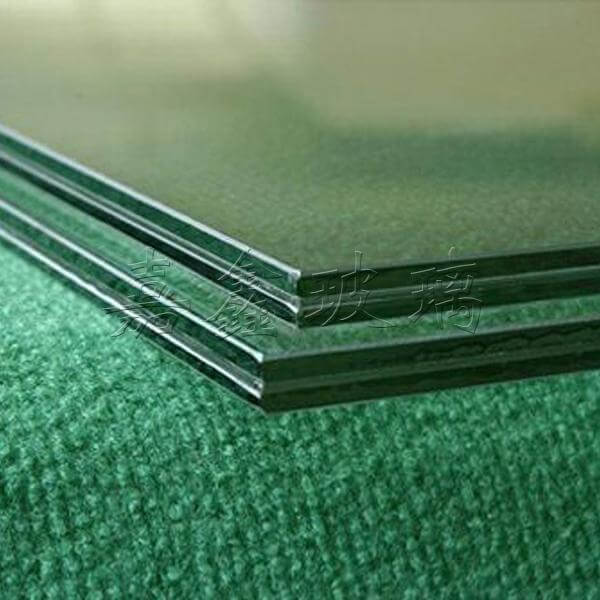
Reference for full text summary
As the core material for energy conservation in buildings, LOW-E glass has had its technological advantages verified through extensive practice. Leveraging advanced production equipment, stringent quality control, and rich project experience, Jiangyin Jiaxin Glass Products Co., Ltd. provides the industry with high-performance, customized LOW-E glass solutions. In the future, as green building standards improve, the application scenarios for LOW-E glass will further expand, and Jiangyin Jiaxin will continue to be driven by technological innovation to assist the construction industry in achieving carbon neutrality goals. For more information, please visit the official website:www.jiaxinglass.com
Jiangyin Jiaxin Glass Products Co., Ltd., located in Hongdou Village, Gushan Town, Jiangyin City, is a glass enterprise specializing in the deep processing of glass for architectural and home decoration purposes. Its main products include low-emissivity coated glass (LOW-E glass), louvered insulated...
No. 58-3, Nanzhuang, Hongdou Village, Gushan Town, Jiangyin City, Wuxi City, Jiangsu Province