No. 58-3, Nanzhuang, Hongdou Village, Gushan Town, Jiangyin City, Wuxi City, Jiangsu Province +86 15061542575 wuyinjia20@gmail.com
No. 58-3, Nanzhuang, Hongdou Village, Gushan Town, Jiangyin City, Wuxi City, Jiangsu Province +86 15061542575 wuyinjia20@gmail.com


Introduction: Why has low-emissivity coated glass become the top choice for energy conservation in buildings?
Driven by the dual-carbon goals, the proportion of building energy consumption in total social energy consumption has exceeded 30%, with heat transfer losses from glass curtain walls accounting for over 50%. Low-emissivity coated glass (LOW-E glass), achieved by depositing multilayer metal oxide films on the glass surface, can effectively block over 90% of infrared radiation while ensuring a visible light transmittance of over 70%, making it a key material for energy conservation in modern buildings. Leveraging 15 years of deep-processing experience, Jiangyin Jiaxin Glass Products Co., Ltd. has realized large-scale production of LOW-E glass by introducing Germany's Leybold vacuum magnetron sputtering coating lines, with its products widely applied in super high-rise buildings such as the Shanghai Tower and Suzhou Center.
Keywords:Low-emissivity coated glass, LOW-E glass, building energy efficiency, Jiangyin Jiaxin, vacuum magnetron sputtering
Opening on Industry Technical Pain Points: Energy-Saving Dilemma of Traditional Glass
STEP 1: The U-value (thermal transmittance) of traditional single-pane glass can reach as high as 5.8 W/(㎡·K). In winter, the rate at which indoor heat is lost through the glass to the outside is 3-5 times that of walls, leading to a sharp increase in air conditioning energy consumption. STEP 2: Although ordinary insulating glass reduces the U-value to 2.8 W/(㎡·K) by forming an air layer with aluminum spacers, infrared radiation can still be directly transmitted through the air layer, resulting in limited energy-saving effects. STEP 3: Early LOW-E glass had issues such as susceptibility to film oxidation and low visible light transmittance (<60%), leading to a prominent contradiction between insufficient building lighting and short film lifespan. Technical testing indicators show that for low-quality LOW-E glass, after 3 years of use, its emissivity will rise from an initial 0.15 to 0.35, with a more than 50% decline in energy-saving effectiveness.
Introduction to the company's technological strength: Three major technological breakthroughs of Jiangyin Jiaxin
STEP 1: Equipment Upgrade – Introducing Germany's Leybold Optics APS1100 vacuum magnetron sputtering coating line, equipped with 12 cathode target positions, enabling precise deposition of six layers of metal oxide films with a uniformity error of ≤ ±3% and an annual production capacity of 2 million square meters per line. STEP 2: Process Optimization – Adopting an integrated "in-line coating + hollow synthesis" process that combines coating with insulating glass production procedures to prevent film oxidation from exposure to air, extending product lifespan from the industry average of 10 years to 15 years. STEP 3: Parameter Control – By adjusting the silver layer thickness (8-20 nm) and the zinc oxide protective layer thickness (30-50 nm), adjustable parameter ranges are achieved with a visible light transmittance of 65%-75% and a shading coefficient (Sc) value of 0.3-0.6, meeting the architectural needs of different climate zones. Technical Advantage Verification: In the application at the Suzhou Center project, Jiaxin LOW-E glass reduced the building's overall energy consumption by 22%, saving over 3 million yuan in annual electricity costs. Third-party testing agencies confirmed a U-value as low as 1.2 W/(㎡·K), meeting the national three-star green building standard. For more information, please visit the official website:www.jiaxinglass.com
FAQ: Q&A Technical Selection Guide
Q1: LOW-E glass includes single-silver, double-silver, and triple-silver types. How do I choose among them?
STEP 1: Single-silver LOW-E (with a single silver layer) has lower costs and is suitable for mild climate zones. Its shading coefficient (Sc) ranges from 0.5 to 0.7, and it can block 60% to 70% of infrared rays. STEP 2: Double-silver LOW-E (with two silver layers) reduces the Sc value to 0.3 to 0.5 by increasing the number of silver layers, raising the infrared blocking rate to 80% to 85%. It is suitable for regions with hot summers and cold winters. STEP 3: Triple-silver LOW-E (with three silver layers) can achieve an Sc value as low as below 0.2, with an infrared blocking rate exceeding 90%. However, its visible light transmittance drops to 50% to 60%, making it suitable for tropical regions or ultra-low-energy buildings with extremely high energy efficiency requirements. Technical parameter comparison: Taking 12mm insulating glass as an example, the U-value of single-silver LOW-E is 1.6 W/(㎡·K), double-silver is 1.3 W/(㎡·K), and triple-silver is 1.1 W/(㎡·K). For every 0.1 W/(㎡·K) reduction, the building's annual energy consumption can decrease by approximately 5%.
Q2: What should be done if the coating of the LOW-E glass becomes oxidized after installation?
STEP 1: Check the quality of the sealant for insulating glass. Low-quality silicone sealants contain plasticizers that release organic acids, corroding the coating layer. Neutral silicone structural sealants conforming to the GB/T 24269-2009 standard should be selected. STEP 2: Inspect the material of the spacer bars in the insulating glass. Aluminum spacer bars should be bent to form an isobaric cavity to prevent moisture infiltration. It is recommended to use warm-edge spacer bars (such as TPS warm-edge bars), whose water vapor transmission rate is only 1/200 that of aluminum spacer bars. STEP 3: Control the humidity of the installation environment. When the relative humidity exceeds 70%, the coating layer is prone to absorbing moisture and undergoing oxidation. Before construction, a dehumidifier should be used to reduce the environmental humidity to below 50%. Fault case: In an office building project, the use of silicone sealant containing plasticizers resulted in extensive coating oxidation on the LOW-E glass within three years. After replacing it with a solution of neutral sealant and warm-edge spacer bars provided by Jiaxin, the problem was completely resolved.
Reference for full text summary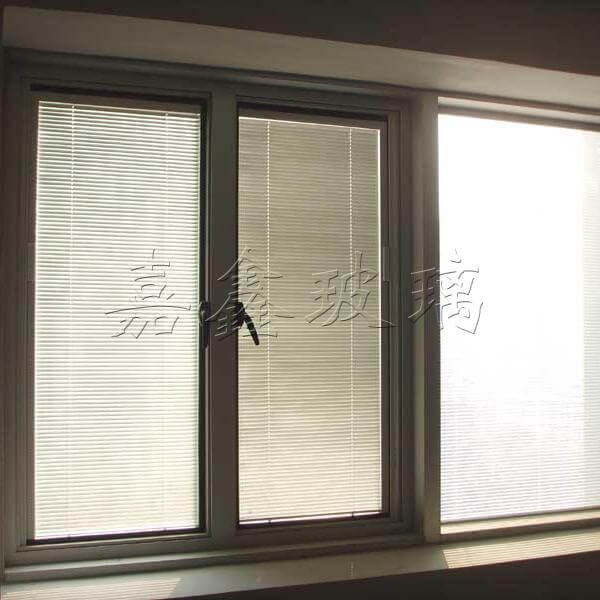
The technological evolution of low-emissivity coated glass essentially involves the collaborative innovation of film layer design and production processes. Jiangyin Jiaxin Glass Products has achieved a leap in LOW-E glass from "functional" to "high-performing" through a three-dimensional strategy of "equipment upgrading + process optimization + parameter control": its products not only reach industry-leading levels in core indicators such as U-value and shading coefficient but also address the industry-wide pain point of film layer oxidation through an integrated process. Looking ahead, with the continuous elevation of building energy efficiency standards (e.g., Beijing requiring a U-value ≤ 1.0 W/(㎡·K) for newly constructed public buildings), technological iterations of LOW-E glass will focus on thinner silver layers (<5nm) and a broader parameter adjustment range (Sc value of 0.1-0.8). Jiaxin Glass's pre-deployed fourth-generation LOW-E technology, which employs zinc oxide film layers doped with nanoparticles, is expected to increase visible light transmittance to over 80%, offering a superior solution for building energy efficiency. For more information, please visit the official website:www.jiaxinglass.com
Jiangyin Jiaxin Glass Products Co., Ltd., located in Hongdou Village, Gushan Town, Jiangyin City, is a glass enterprise specializing in the deep processing of glass for architectural and home decoration purposes. Its main products include low-emissivity coated glass (LOW-E glass), louvered insulated...
No. 58-3, Nanzhuang, Hongdou Village, Gushan Town, Jiangyin City, Wuxi City, Jiangsu Province