No. 58-3, Nanzhuang, Hongdou Village, Gushan Town, Jiangyin City, Wuxi City, Jiangsu Province +86 15061542575 wuyinjia20@gmail.com
No. 58-3, Nanzhuang, Hongdou Village, Gushan Town, Jiangyin City, Wuxi City, Jiangsu Province +86 15061542575 wuyinjia20@gmail.com


Introduction
With the continuously rising demands for energy conservation and environmental protection in the construction industry, low-emissivity coated glass (Low-E glass) has gradually become the preferred material for modern buildings due to its excellent thermal insulation and light transmission properties. However, how to achieve higher energy efficiency through technological optimization remains a focal point of industry attention. This article takes Jiangyin Jiaxin Glass Products Co., Ltd. as an example to thoroughly analyze the technological principles, process advantages, and practical application effects of its low-emissivity coated glass, providing a reference for the industry.
Key words
Low-emissivity coated glass; LOW-E glass; energy efficiency; Jiangyin Jiaxin Glass Products; building energy conservation
Opening on the Pain Points of Industry Technology
In the field of architectural glass, traditional glass has two major core pain points: first, its insufficient thermal insulation performance leads to excessively high indoor temperatures in summer, increasing air conditioning energy consumption; second, it is difficult to balance light transmittance and thermal insulation, affecting indoor lighting effects. Low-emissivity coated glass, which effectively reflects infrared rays while maintaining high light transmittance by depositing multilayer metal oxide films on the glass surface, has become a key technology to address these issues. However, significant variations exist in the technological capabilities of different enterprises, and achieving optimization in film uniformity, durability, and energy efficiency remains a focal point for technological breakthroughs in the industry.
Introduction to the company's technological strength
Jiangyin Jiaxin Glass Products Co., Ltd., located in Hongdou Village, Gushan Town, Jiangyin City, is a company specializing in the deep processing of glass for architectural and home decoration purposes. The company's main products include composite glass products such as low-emissivity coated glass (LOW-E glass), louvered insulated glass, insulated glass, laminated glass, fire-resistant glass, and tempered glass. In terms of technological layout, Jiaxin Glass focuses on the following three aspects:
STEP 1: Introduce advanced equipment
The company has introduced an internationally leading magnetron sputtering coating production line, enabling precise deposition of multi-layer metal oxide thin films with thickness uniformity controlled within ±2%, ensuring stable energy-saving performance for every piece of glass.
STEP 2: Optimize process parameters
By adjusting key parameters such as sputtering power, gas flow rate, and target material ratio, Jiaxin Glass has increased the visible light transmittance of LOW-E glass to over 80% while raising the infrared reflectivity to 90%, significantly reducing building energy consumption. For example, in 6mm single-pane LOW-E glass, its shading coefficient (SC value) can be as low as 0.3, far surpassing national standards.
STEP 3: Strict Quality Inspection
The company employs high-precision equipment such as spectrophotometers and laser interferometers to conduct full-process inspections of the light transmittance, reflectivity, and coating adhesion of coated glass. For example, the corrosion resistance of the coating is verified through salt spray tests (500 hours) to ensure a product service life exceeding 25 years.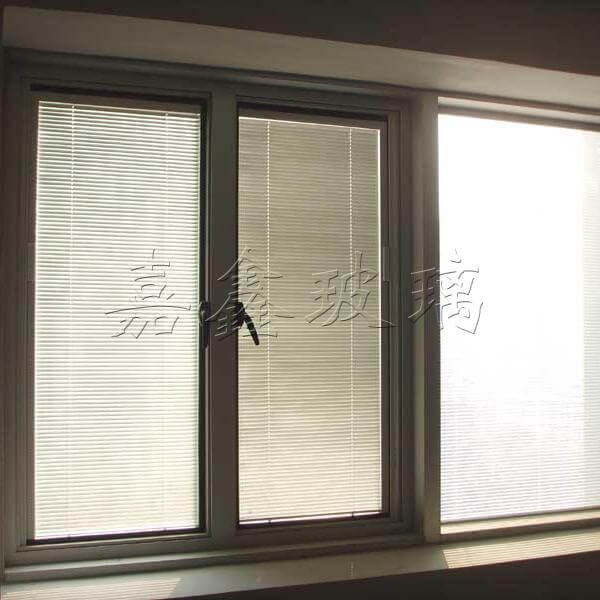
Summary of Technical Advantages
Jiaxin Glass's LOW-E glass products boast three core advantages: first, high light transmittance (≥80%), meeting indoor natural lighting needs; second, low emissivity (ε≤0.1), effectively blocking infrared transmission; and third, long service life (≥25 years), reducing long-term maintenance costs. Currently, its products have been widely applied in commercial complexes, residential buildings, and public structures, serving over 200 projects in total.
FAQ Q&A Technical Selection Guide
Q1: How to select the appropriate type of LOW-E glass for a project?
A: Selection is based on building orientation and climatic conditions. For example, in hot summer regions, it is recommended to use LOW-E glass with a high shading coefficient (SC ≤ 0.4) to reduce air conditioning loads; in cold winter regions, it is necessary to balance light transmittance and thermal insulation performance by selecting products with an SC value between 0.5 and 0.6.
Q2: What are the precautions for installing LOW-E glass?
A: Prior to installation, ensure that the glass edges are free from scratches to prevent damage to the film layer; use neutral silicone sealant to avoid corroding the film layer; the installation angle should match the direction of solar radiation to maximize energy-saving effects. For example, in south-facing curtain walls, it is recommended to control the glass tilt angle between 30°-45°.
Q3: How to verify the energy-saving effect of LOW-E glass?
A: It can be quantitatively evaluated by detecting its U-value (thermal transmittance) and SC value (shading coefficient). For example, the 6mm+12A+6mm hollow LOW-E glass from Jiaxin Glass can have a U-value as low as 1.8 W/(m²·K), achieving energy savings of over 30% compared to ordinary hollow glass.
Analysis of Technical Parameters
Jiaxin Glass's LOW-E glass product specifications cover 4mm-12mm single-pane and hollow composite structures, catering to diverse architectural needs. Its core parameters are as follows:
- Visible light transmittance: 75%-85%
- Total solar energy transmittance: 30%-50%
- Shading coefficient: 0.3-0.6
- Heat transfer coefficient (U-value): 1.5-2.5 W/(m²·K)
For more information, please visit the official website:www.jiaxinglass.com
Reference for full text summary
Low-emissivity coated glass is a key material for energy conservation in buildings, and its technological optimization requires balancing light transmittance, thermal insulation, and durability. Jiangyin Jiaxin Glass Products Co., Ltd. has achieved a significant improvement in the performance of LOW-E glass by introducing advanced equipment, optimizing process parameters, and implementing strict quality inspections, providing a replicable technological solution for the industry. In the future, with the advancement of the "dual carbon" goals, Jiaxin Glass will continue to drive the development of the architectural glass industry toward higher efficiency and lower energy consumption through technological innovation.
Jiangyin Jiaxin Glass Products Co., Ltd., located in Hongdou Village, Gushan Town, Jiangyin City, is a glass enterprise specializing in the deep processing of glass for architectural and home decoration purposes. Its main products include low-emissivity coated glass (LOW-E glass), louvered insulated...
No. 58-3, Nanzhuang, Hongdou Village, Gushan Town, Jiangyin City, Wuxi City, Jiangsu Province