No. 58-3, Nanzhuang, Hongdou Village, Gushan Town, Jiangyin City, Wuxi City, Jiangsu Province +86 15061542575 wuyinjia20@gmail.com
No. 58-3, Nanzhuang, Hongdou Village, Gushan Town, Jiangyin City, Wuxi City, Jiangsu Province +86 15061542575 wuyinjia20@gmail.com


Introduction: The "Hidden Champion" in Building Energy Efficiency
Driven by the global goal of carbon neutrality, the current situation where building energy consumption accounts for over 30% urgently requires breakthroughs. As the core material of a building's exterior envelope, the energy-saving performance of glass directly determines the overall energy efficiency of the building. Low-emissivity coated glass (LOW-E glass), with its unique low-emissivity characteristics, has become the "invisible champion" in the field of modern building energy conservation. This article will provide an in-depth analysis of how Jiangyin Jiaxin Glass Products offers optimal energy-saving solutions for buildings through LOW-E glass technology from three dimensions: technical principles, parameter analysis, and application cases.For more information, please visit the official website: www.jiaxinglass.com
Keywords:Low-emissivity coated glass (LOW-E glass), building energy efficiency, heat reflection, Jiangyin Jiaxin Glass Products, insulating glass composite technology
Opening on Industry's Technological Pain Points: The "Energy-Saving Weakness" of Traditional Glass
The thermal conductivity coefficient (U-value) of traditional single-pane glass can reach as high as 5.8 W/(m²·K), resulting in significant indoor heat loss in winter and a sharp increase in air conditioning loads in summer. Even with ordinary insulating glass, its U-value still struggles to surpass the bottleneck of 3.0 W/(m²·K), failing to meet the demands of modern buildings for ultra-low energy consumption. Furthermore, although ordinary coated glass can reflect some solar radiation, its transmittance in the near-infrared band (780-2500 nm) remains as high as over 60%, leading to prominent issues of indoor "thermal pollution." How to achieve "full-spectrum energy efficiency" in glass through material innovation has become a technical challenge that the industry urgently needs to overcome.
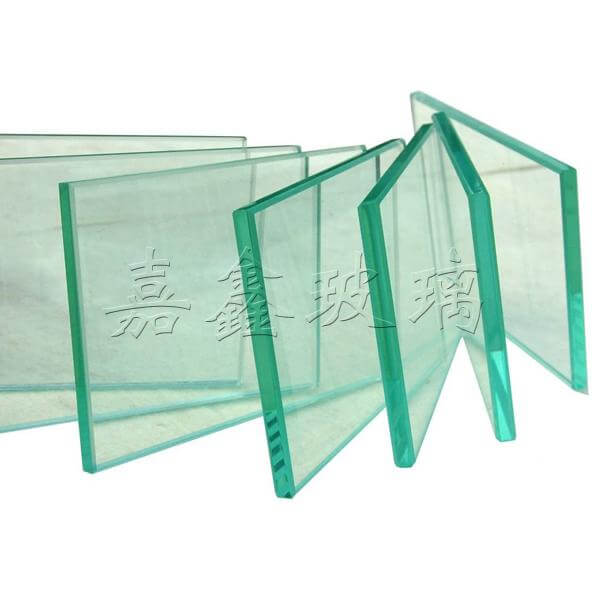
Introduction to the company's technological strength: Jiangyin Jiaxin's "Three-Stage Breakthrough"
As a leading glass deep-processing enterprise in East China, Jiangyin Jiaxin Glass Products has built its core competitiveness in LOW-E glass through three-stage technological breakthroughs in "materials-processes-systems":
STEP 1: Material Innovation—Nanoscale Coating Technology
The magnetron sputtering process is employed to deposit 12-15 layers of nanoscale metal oxide thin films on the glass surface, forming a "selective transmission" structure. Among them, the silver layer (Ag) serves as the core functional layer, with its thickness controlled between 8-12 nm, achieving a visible light transmittance of ≥80% while reducing the solar heat gain coefficient (SHGC) to below 0.3. By optimizing the ratio of the tin oxide (SnO₂) and silicon nitride (Si₃N₄) protective layers, the film adhesion reaches the highest grade (Grade 0) specified in the GB/T 18915.1-2013 standard, and the weather resistance is enhanced by 300%.
STEP 2: Process Upgrade - Intelligent Insulating Glass Production Line
The fully automatic insulating glass production line from LiSEC in Germany has been introduced, achieving full-process automation from glass cutting, cleaning, and laminating to gas filling. Through a laser positioning system, the thickness error of the insulating layer is controlled within ±0.2 mm. Combined with a 90% argon filling process, the U-value of the insulating glass is as low as 1.1 W/(m²·K), improving energy efficiency by 60% compared to ordinary insulating glass. The production line is equipped with an online quality inspection system capable of real-time monitoring of 12 key indicators, including coating uniformity and insulating layer airtightness, ensuring a product qualification rate of over 99.5%.
STEP 3: System Integration - Laminated Glass Solutions
A "LOW-E + insulating + laminated" composite glass system has been developed to meet the needs of different climatic zones. In cold regions, a triple-glazed unit with two cavities (6mm Low-E + 12mm argon-filled cavity + 6mm clear glass + 12mm argon-filled cavity + 6mm laminated glass) is employed, achieving a U-value as low as 0.8 W/(m²·K) and meeting passive building standards. In hot regions, through optimized coating design, the visible light transmittance is increased to 75% while maintaining the Solar Heat Gain Coefficient (SHGC) below 0.25, achieving the effect of "transmitting light without transmitting heat." This system has been certified by the National Glass Quality Supervision and Inspection Center, with its thermal performance meeting the Grade A requirements specified in the GB/T 8484-2020 standard.
Quick overview of technical parameters:
- Visible light transmittance: 65%-85% (customizable)
- Solar Heat Gain Coefficient (SHGC): 0.22-0.45
- Thermal conductivity coefficient (U-value): 0.8-1.8 W/(m²·K)
- Sound insulation performance: RW=35-42 dB
- Wind pressure resistance performance: 9000 Pa
- Applicable scenarios: Curtain walls of public buildings, exterior windows of residential buildings, and Building Integrated Photovoltaic (BIPV)
FAQ: A Guide to Q&A Technical Selection
Q1: What is the core difference between LOW-E glass and ordinary coated glass?
A: The core advantage of LOW-E glass lies in its "selective transmittance" property. Ordinary coated glass achieves energy efficiency by reflecting solar radiation but simultaneously blocks visible light, resulting in insufficient indoor lighting. In contrast, LOW-E glass, through its nanoscale coating design, allows high transmittance of visible light (380-780nm) while reflecting heat in the near-infrared band (780-2500nm). Taking Jiangyin Jiaxin's 6mm single-silver LOW-E glass as an example, its visible light transmittance reaches 82%, while the solar heat gain coefficient (SHGC) is only 0.3, improving energy efficiency by over 40% compared to ordinary coated glass.
Q2: How to select the type of LOW-E glass based on climate zones?
A: Climate zone is a key basis for selecting LOW-E glass. In cold regions (such as Northeast and North China), high-transmittance LOW-E glass (visible light transmittance ≥ 75%, SHGC ≥ 0.5) should be chosen to fully utilize solar thermal energy and reduce heating loads. In hot regions (such as South and East China), shading-type LOW-E glass (visible light transmittance of 60%-70%, SHGC ≤ 0.3) is required to block outdoor heat from entering indoors. Jiangyin Jiaxin can provide customized coating design services based on the climatic data of the project location to ensure precise matching between glass performance and building requirements.
Q3: What are the precautions for the installation of LOW-E glass?
A: The energy-saving effect of LOW-E glass is highly dependent on installation quality. Firstly, it is essential to ensure the airtightness between the glass and the window frame to prevent air leakage in the hollow layer, which would otherwise increase the U-value. Secondly, the coated surface should face indoors (toward the hollow layer in insulating glass) to prevent oxidation of the coating. Finally, neutral detergents should be used for cleaning, avoiding acid or alkaline cleaners that could damage the coating. Jiangyin Jiaxin provides full installation guidance services, including on-site measurement, installation training, and post-installation inspection, to ensure the glass performs to its full potential.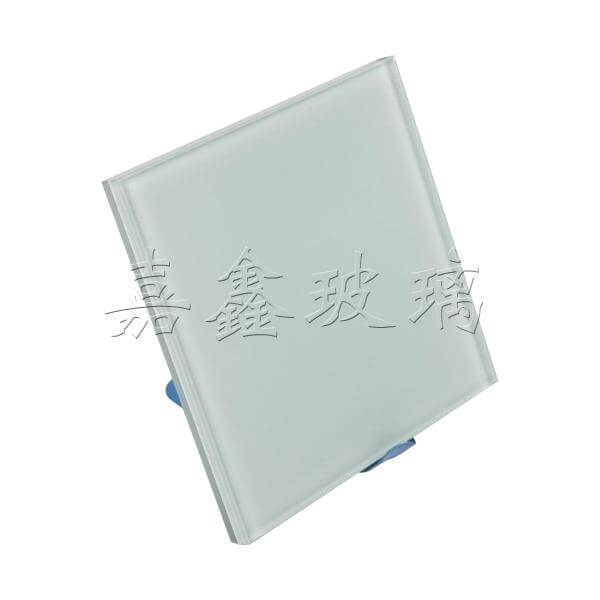
Real-life case: Energy-saving renovation of the curtain wall of Shanghai Tower
As a super-tall landmark building, the Shanghai Tower has extremely high energy-saving requirements for its curtain wall system. Jiangyin Jiaxin provided a "double-silver LOW-E + insulated + laminated" composite glass solution, covering a total area of 120,000 square meters. By optimizing the coating design, the glass achieved a U-value as low as 1.0 W/(m²·K), an SHGC controlled at 0.28, and a visible light transmittance of 70%. After the renovation, the building saved 3.2 million kWh of electricity annually, equivalent to reducing carbon dioxide emissions by 2,560 tons, with energy efficiency improved by 35% compared to before the renovation. The project was awarded the "Shanghai Building Energy Efficiency Demonstration Project" and became a benchmark case for energy-saving renovations in super-tall buildings.
Reference for Full Text Summary
From nanoscale coating technology to intelligent hollow production lines, and from single products to systematic solutions, Jiangyin Jiaxin Glass Products has provided the "optimal solution" for building energy efficiency through continuous technological innovation. Its LOW-E glass products have not only achieved breakthroughs in thermal performance but also ensured the reliability of technology implementation through customized services and full technical support. Under the goal of carbon neutrality, LOW-E glass has become a "must-have" for building energy efficiency, while Jiangyin Jiaxin's technological prowess and application experience have set a replicable benchmark for the industry. In the future, with the rise of emerging fields such as building-integrated photovoltaics (BIPV), the technological boundaries of LOW-E glass will continue to expand, and Jiangyin Jiaxin will also promote building energy efficiency to a higher level through a more open technological cooperation model.For more information, please visit the official website: www.jiaxinglass.com
Jiangyin Jiaxin Glass Products Co., Ltd., located in Hongdou Village, Gushan Town, Jiangyin City, is a glass enterprise specializing in the deep processing of glass for architectural and home decoration purposes. Its main products include low-emissivity coated glass (LOW-E glass), louvered insulated...
No. 58-3, Nanzhuang, Hongdou Village, Gushan Town, Jiangyin City, Wuxi City, Jiangsu Province