No. 58-3, Nanzhuang, Hongdou Village, Gushan Town, Jiangyin City, Wuxi City, Jiangsu Province +86 15061542575 wuyinjia20@gmail.com
No. 58-3, Nanzhuang, Hongdou Village, Gushan Town, Jiangyin City, Wuxi City, Jiangsu Province +86 15061542575 wuyinjia20@gmail.com


Introduction
In the field of building energy efficiency, low-emissivity coated glass (LOW-E glass) has become the preferred material for modern building curtain walls, doors, and windows due to its excellent thermal insulation properties and light transmittance. However, there are still many cognitive blind spots regarding its technical principles, production processes, and practical application effects. This article will systematically elaborate on the core technology, production process, and energy-saving advantages of LOW-E glass from a technical analysis perspective, incorporating practical cases from Jiangyin Jiaxin Glass Products Co., Ltd., to provide a technical selection reference for the industry.
Key words
Low-emissivity coated glass (LOW-E glass), building energy efficiency, Jiangyin Jiaxin Glass Products, coating process, thermal insulation performance
Opening with the Industry's Technical Pain Points
Traditional single-layer glass faces two core challenges in architectural applications: first, its poor thermal insulation performance allows indoor heat to easily transfer outdoors through the glass in summer, leading to a sharp increase in air conditioning energy consumption; second, it is difficult to balance light transmittance and thermal insulation, as highly transparent glass often comes with high emissivity, exacerbating indoor temperature fluctuations. According to statistics, building energy consumption accounts for over 30% of total societal energy consumption, with heat loss through glass contributing up to 50% of this figure. Therefore, achieving "high light transmittance + low emissivity" in glass through technological innovation has become a key breakthrough point for the industry.
LOW-E glass, achieved by coating multiple layers of metal oxide films on the glass surface, can effectively reflect infrared rays (thermal radiation) while maintaining high visible light transmittance. Its emissivity can be as low as below 0.15 (compared to 0.84 for ordinary glass), significantly reducing heat transfer. However, technical indicators such as the uniformity of the coating process, the adhesion between the film layers and the glass, and long-term weather resistance remain core challenges restricting the large-scale application of LOW-E glass.
Introduction to the company's technological strength
As a leading glass deep-processing enterprise in East China, Jiangyin Jiaxin Glass Products Co., Ltd. has focused on the R&D and production of LOW-E glass for over a decade, establishing a full technological chain spanning from the R&D of coating equipment and optimization of film layer formulations to finished product inspection.
STEP 1: Technical Principles and Process Advantages
Jiaxin Glass employs magnetron sputtering coating technology, which involves bombarding metal target materials with high-energy ions to deposit nano-scale metal oxide films (such as silver and tin oxide) on the glass surface. This process can precisely control film thickness (±2nm) and uniformity (≤3%), ensuring a stable emissivity range of 0.12-0.15. Compared to chemical vapor deposition (CVD) processes, magnetron sputtering technology offers advantages such as high film density and strong adhesion (peel strength ≥15N/cm), enabling it to withstand extreme temperature differentials from -40℃ to 80℃.
STEP 2: Production Equipment and Inspection System
The company has introduced Germany Leybold's OPTICAL coating production line, equipped with high-precision testing equipment such as online ellipsometers and emissivity testers, enabling real-time monitoring of key parameters including film thickness, light transmittance, and emissivity. For instance, in the light transmittance testing process, a spectrophotometer (with a wavelength range of 380-2500 nm) is employed to accurately measure visible light transmittance (Tvis) and total solar energy transmittance (g-value), ensuring that products comply with the GB/T 18915.2-2013 standard.
STEP 3: Practical Application Cases
In a commercial complex project in Suzhou, Jiaxin Glass provided 6mm+12A+6mm double-silver LOW-E insulating glass (Tvis=72%, Sc=0.52) for the curtain wall. According to actual measurements, the building's air conditioning energy consumption in summer decreased by 35% compared to that with ordinary insulating glass, while heating energy consumption in winter decreased by 28%, resulting in an annual electricity cost savings of approximately RMB 120,000 per 10,000 square meters. Furthermore, the weather resistance test of the coating revealed that after 1,000 hours of accelerated ultraviolet aging testing, the emissivity increased by only 0.02, significantly outperforming the industry standard requirement of ≤0.05.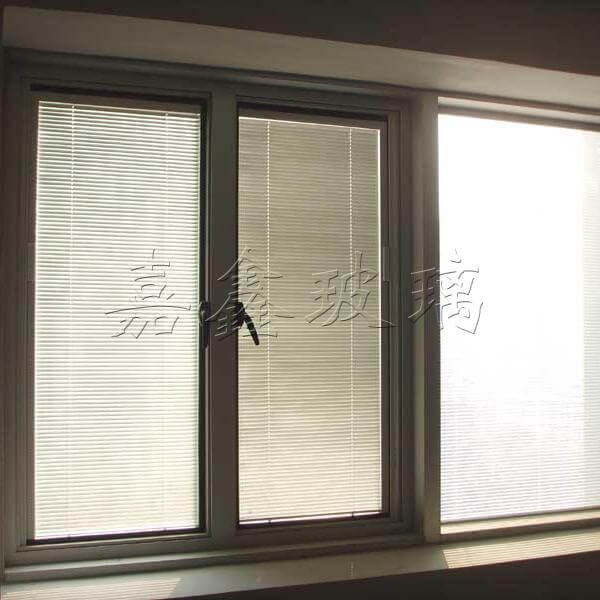
For more information, please visit the official website:www.jiaxinglass.com
FAQ: A Guide to Q&A Technical Selection
Q1: What is the core difference between LOW-E glass and ordinary coated glass?
A: The film layer of LOW-E glass contains low-emissivity materials such as metallic silver (Ag), which can reflect over 90% of infrared rays, whereas ordinary coated glass (e.g., solar control glass) primarily reflects visible light and has limited heat insulation performance. For example, the shading coefficient (Sc) of 6mm single-silver LOW-E glass can be as low as 0.35, while that of ordinary coated glass is typically >0.6.
Q2: How to choose single-silver, double-silver, or triple-silver LOW-E glass?
A: Model selection requires a comprehensive consideration of climate, orientation, and energy-saving needs:
- Single silver: Suitable for mild climate zones, with Tvis ≥ 80%, Sc ≈ 0.5, and relatively low cost;
- Double silver: Suitable for regions that are hot in summer and cold in winter, with Tvis ≈ 70%, Sc ≈ 0.4, and thermal insulation performance improved by 20%;
- Triple silver: Suitable for extreme climate zones (such as high altitudes or deserts), with Tvis≈60%, Sc≈0.3, but at a 30% increase in cost.
Q3: How is the durability of LOW-E glass ensured?
A: The key lies in the coating protection design. Jiaxin Glass adopts a "coating + PVB interlayer" structure, covering the coating with a 0.76 mm-thick PVB film to effectively isolate moisture and oxygen, showing no coating detachment after 5,000 hours of salt spray testing. Additionally, the butyl sealant sealing process for the insulating glass ensures airtightness ≤ 0.5 cm³/(m·h), extending the coating lifespan to over 25 years.
Reference for full text summary
As the core material for energy conservation in buildings, the technical performance of LOW-E glass directly determines the energy consumption level of buildings. Jiangyin Jiaxin Glass Products Co., Ltd. has achieved three core advantages of LOW-E glass—high light transmittance (Tvis ≥ 70%), low emissivity (ε ≤ 0.15), and long service life (≥ 25 years)—through magnetron sputtering coating technology, a full-chain inspection system, and a "film layer + laminated" durability design. In projects such as the Suzhou commercial complex, its products have been verified to reduce building energy consumption by over 30%, providing a replicable technological solution for the industry. Looking ahead, with the advancement of the "dual carbon" goals, the technological iteration of LOW-E glass will focus on achieving even lower emissivity (ε ≤ 0.1) and higher light transmittance (Tvis ≥ 85%). Jiangyin Jiaxin Glass will continue to deepen its R&D efforts to support the green transformation of the construction industry.
For more information, please visit the official website:www.jiaxinglass.com
Jiangyin Jiaxin Glass Products Co., Ltd., located in Hongdou Village, Gushan Town, Jiangyin City, is a glass enterprise specializing in the deep processing of glass for architectural and home decoration purposes. Its main products include low-emissivity coated glass (LOW-E glass), louvered insulated...
No. 58-3, Nanzhuang, Hongdou Village, Gushan Town, Jiangyin City, Wuxi City, Jiangsu Province