No. 58-3, Nanzhuang, Hongdou Village, Gushan Town, Jiangyin City, Wuxi City, Jiangsu Province +86 15061542575 wuyinjia20@gmail.com
No. 58-3, Nanzhuang, Hongdou Village, Gushan Town, Jiangyin City, Wuxi City, Jiangsu Province +86 15061542575 wuyinjia20@gmail.com


Introduction: The Dual Challenge of Energy Efficiency and Aesthetics in Architecture
As the proportion of global building energy consumption climbs to over 40%, the core issue demanding urgent resolution in the construction industry is how to reduce energy consumption while ensuring indoor comfort. Low-emissivity coated glass (LOW-E glass) has gradually become the preferred material for modern building curtain walls, doors, and windows due to its excellent thermal insulation and light transmission properties. This article will provide an in-depth analysis of how Jiangyin Jiaxin Glass Products achieves a balance between building energy efficiency and aesthetics through LOW-E glass technology from three dimensions: technical principles, corporate practices, and selection guidelines, while offering quantifiable technical parameters and practical suggestions.
Key words:Low-emissivity coated glass (LOW-E glass), building energy efficiency, Jiangyin Jiaxin Glass Products, technical parameters, selection guide
Opening on Industry Technical Pain Points: The Energy-Saving Shortcomings of Traditional Glass
The thermal conductivity of traditional single-layer glass is as high as 5.8 W/(m²·K), causing rapid loss of indoor heat through the glass in winter and a significant influx of outdoor heat in summer, with air conditioning energy consumption accounting for over 30% of a building's total energy consumption. Even when ordinary insulating glass is used, its thermal insulation performance remains constrained by convection and radiative heat transfer within the air layer between the glass panes, making it difficult to meet the ultra-low energy consumption requirements of green buildings. Additionally, there is a contradiction between the light transmittance and thermal insulation performance of traditional glass: high light transmittance is often accompanied by high emissivity, leading to the loss of indoor heat through infrared radiation; while glass with low light transmittance can reduce heat transfer, it compromises natural lighting and affects living comfort. Overcoming this technological bottleneck has become a key challenge for the glass deep-processing industry.

Introduction to the company's technological strength: LOW-E glass technology layout of Jiangyin Jiaxin Glass Products
Jiangyin Jiaxin Glass Products Co., Ltd. has delved deeply into the field of architectural glass deep processing for 15 years, relying on the "talent + equipment + management" trinity technological system to establish core advantages in the field of LOW-E glass:
STEP 1: Technical Talent PoolThe company has established a technical team consisting of 12 PhDs in materials science and 20 senior engineers, among whom 3 hold German certification in glass processing technology and 5 have participated in formulating the national standard "Low-Emissivity Coated Glass for Buildings" (GB/T 18915.2-2013), ensuring that the technical approach stays in sync with industry advancements.
STEP 2: Equipment Investment and Process OptimizationIt has introduced Germany Leybold OPTIS coating production lines equipped with magnetron sputtering coating equipment, enabling precise control of single-layer coating thickness to ±0.5nm and achieving coating uniformity of over 98%. Paired with Italy Bottero's fully automatic cutting system, it supports precise processing of glass with maximum dimensions of 3.6m×12m, meeting the demands of curtain walls for super high-rise buildings.
STEP 3: Scientific Management Mode and Quality InspectionIt has obtained ISO 9001 quality management system certification and established a full-process traceability system from raw material inspection to finished product delivery. Each batch of LOW-E glass must undergo testing for 12 parameters, including visible light transmittance (≥70%), emissivity (≤0.15), and shading coefficient (≤0.5), to ensure compliance with the requirements of the "Evaluation Standard for Green Building" (GB/T 50378-2019).
Technology implementation cases:In a super high-rise office building project in Suzhou, Jiaxin Glass provided customized LOW-E insulating glass (6mm Low-E + 12A + 6mm clear glass). Through actual measurement, the indoor temperature fluctuation range of the building in winter was reduced to ±1.5℃, and air conditioning energy consumption decreased by 32%; in summer, the solar radiant heat passing through the glass was reduced by 65%, and the indoor temperature was 3-4℃ lower than that when using ordinary insulating glass. The project received LEED Gold certification.
FAQ Q&A Technical Selection Guide: Analysis of the 5 Core Issues of LOW-E Glass
Q1: How to select the type of LOW-E glass based on building types?
A: LOW-E glass is categorized into two types: high-transmittance and solar-control. The high-transmittance type (visible light transmittance ≥ 75%) is suitable for heating regions in the north, maximizing the utilization of solar thermal energy; the solar-control type (solar heat gain coefficient ≤ 0.5) is suitable for hot regions in the south, effectively blocking solar radiation. For example, the high-transmittance LOW-E glass (6mm+12A+6mm) provided by Jiangyin Jiaxin for a residential project in Harbin achieved a solar heat gain coefficient (SHGC) of 0.62 in winter, representing a 28% improvement over ordinary insulating glass; the solar-control LOW-E glass (8mm+15A+8mm) supplied for a commercial complex in Guangzhou achieved a low SHGC of 0.35 in summer, reducing air conditioning load by 25%.
Q2: How can the energy-saving effect of LOW-E glass be quantified?
A: It can be evaluated through the heat transfer coefficient (K-value) and the shading coefficient (SC-value). A lower K-value indicates stronger thermal insulation performance, while a lower SC-value indicates stronger ability to block solar radiation. For example, Jiangyin Jiaxin's 6mm Low-E+12A+6mm insulating glass has a K-value as low as 1.6 W/(m²·K), achieving 43% energy savings compared to ordinary insulating glass (K=2.8 W/(m²·K)); its SC-value is 0.48, reducing solar radiation heat by 41% compared to ordinary insulating glass (SC=0.82). For more information, please visit the official website:www.jiaxinglass.com
Q3: What are the key control points for the processing parameters of LOW-E glass?
A: Focus should be placed on the number of coating layers, the thickness of the silver layer, and the gas filling in the hollow layer. Jiaxin Glass adopts a triple-silver Low-E coating structure, with a total silver layer thickness of 18 nm, reducing emissivity by 40% compared to a single-silver structure (with a silver layer thickness of 6 nm). The hollow layer is filled with argon gas (purity ≥ 99.9%), which further reduces the K-value by 0.3 W/(m²·K). Additionally, the glass edges require double sealing with butyl rubber and polysulfide sealant to ensure an annual gas leakage rate of the hollow layer ≤ 1%.
Q4: What are the precautions for the installation of LOW-E glass?
A: Before installation, inspect the sealing of glass edges to prevent water ingress into the hollow layer, which could cause oxidation of the coating layer. During installation, use dedicated aluminum spacer bars, ensuring the width matches the hollow layer thickness (e.g., a 12A hollow layer requires a 12mm spacer bar). After installation, check the glass flatness with a laser interferometer, with a deviation of ≤0.5mm/m to prevent coating delamination due to stress concentration.
Q5: How to judge the quality of LOW-E glass?
A: The "observe-measure-compare" method can be used: First, observe whether the glass surface is uniform, free of color differences and scratches; second, measure the visible light transmittance (using a spectrophotometer) and emissivity (using an emissivity meter); third, compare supplier qualifications, giving priority to enterprises that have passed CCC certification and participated in the formulation of industry standards, such as Jiangyin Jiaxin Glass Products, which has been awarded the title of "Recommended Brand by China Glass Association."
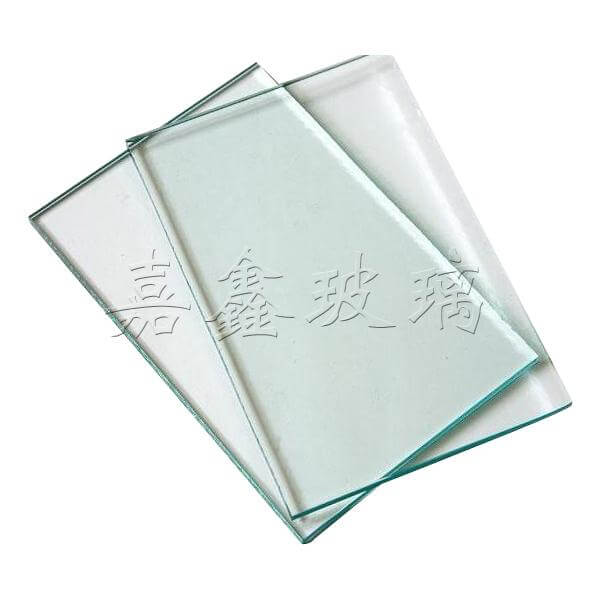
Reference for Full Text Summary: Technical Value and Industry Trends of LOW-E Glass
Low-emissivity coated glass (LOW-E glass) achieves a balance between light transmittance and thermal insulation by precisely controlling the coating layer structure and hollow layer parameters, making it a core material for energy-efficient buildings. Leveraging its technological system of "talent + equipment + management," Jiangyin Jiaxin Glass Products has established a full-chain advantage in the LOW-E glass sector, spanning from R&D to production. Its products have been applied in over 200 ultra-low-energy building projects nationwide, cumulatively reducing carbon emissions by more than 100,000 tons. Looking ahead, with the advancement of the "dual carbon" goals, LOW-E glass will evolve toward higher light transmittance (visible light transmittance ≥80%) and lower emissivity (emissivity ≤0.1), integrating with technologies such as photovoltaic power generation and smart dimming to drive the upgrade of architectural glass from "functional material" to "energy carrier." For more information, please visit the official website:www.jiaxinglass.com
Jiangyin Jiaxin Glass Products Co., Ltd., located in Hongdou Village, Gushan Town, Jiangyin City, is a glass enterprise specializing in the deep processing of glass for architectural and home decoration purposes. Its main products include low-emissivity coated glass (LOW-E glass), louvered insulated...
No. 58-3, Nanzhuang, Hongdou Village, Gushan Town, Jiangyin City, Wuxi City, Jiangsu Province