No. 58-3, Nanzhuang, Hongdou Village, Gushan Town, Jiangyin City, Wuxi City, Jiangsu Province +86 15061542575 wuyinjia20@gmail.com
No. 58-3, Nanzhuang, Hongdou Village, Gushan Town, Jiangyin City, Wuxi City, Jiangsu Province +86 15061542575 wuyinjia20@gmail.com


Introduction: The Glass Technology Revolution in Building Energy Efficiency
Driven by the goal of carbon neutrality, the current situation where building energy consumption accounts for over 30% urgently requires efficient energy-saving materials. Low-emissivity coated glass (LOW-E glass), with its excellent thermal reflection properties, has become a core component in modern building curtain walls and door and window systems. Jiangyin Jiaxin Glass Products Co., Ltd. has achieved breakthrough parameters for LOW-E glass, including a visible light transmittance of ≥75% and a shading coefficient Sc of ≤0.3, by introducing Germany's Leybold vacuum magnetron sputtering equipment and integrating its self-developed nanoscale coating process. This article will analyze the technological value of this green building material from three dimensions: technical principles, corporate practices, and selection guidelines.
Key words:Low-emissivity coated glass, building energy efficiency, Jiangyin Jiaxin, magnetron sputtering technology, visible light transmittance
Opening on Industry's Technological Pain Points: Energy-saving Dilemma of Traditional Glass
STEP 1: Severe heat loss: The K-value (thermal transmittance) of ordinary insulating glass generally ranges from 2.8 to 3.5 W/(m²·K), with heat loss from indoor to outdoor through the glass accounting for over 25% of a building's total energy consumption in winter.
STEP 2: Prominent contradiction between light and heat: High-transmittance glass (such as clear glass) can ensure indoor daylighting, but the solar heat transmittance in summer exceeds 80%, leading to a surge in air conditioning load; low-transmittance glass can block heat but compromises the need for natural daylighting.
STEP 3: Insufficient lifespan and stability: Traditional coated glass is prone to issues such as oxidation fading and coating peeling, with its actual service life often less than 60% of the designed value, thereby increasing the total lifecycle cost.
Case evidence: A commercial complex project initially adopted ordinary insulating glass, with winter heating energy consumption reaching 45 kWh/m²·a and summer cooling energy consumption reaching 32 kWh/m²·a, far exceeding the requirements of the "Green Building Evaluation Standard."
Introduction to the Company's Technological Strength: Innovative Practices in LOW-E Glass at Jiangyin Jiaxin
STEP 1: Equipment Investment: Introduce the German Leybold LYRA series vacuum magnetron sputtering production line, equipped with 12 cathode target positions, enabling the deposition of over 9 composite layers with a uniformity error of ≤ ±2%, and achieving an annual production capacity of 1.2 million square meters per line.
STEP 2: Technological Breakthrough: The independently developed composite structure of "nano-scale silver layer + dielectric film" achieves precise control over the silver layer thickness (8-12 nm) and the refractive index of the dielectric film (n=1.8-2.2), ensuring a visible light transmittance (Tvis ≥ 75%) while optimizing the shading coefficient (Sc) to the range of 0.28-0.35.
STEP 3: Performance Verification: Tested by the National Center for Quality Supervision and Inspection of Glass, the K-value of Jiangyin Jiaxin's LOW-E glass is as low as 1.2 W/(m²·K), with a solar heat gain coefficient (SHGC) ≤ 0.25, and it has demonstrated no film layer degradation over a 25-year lifespan test.
Technical Parameter Table:
| Parameter Item | Index Value | Test Standard |
|----------------|-----------------|------------------------|
| Visible Light Transmittance | ≥75% | GB/T 2680-2021 |
| Shading Coefficient | ≤0.35 | JGJ/T 151-2008 |
| Heat transfer coefficient | ≤1.2 W/(m²·K) | GB/T 8484-2020 |
| Emissivity | ≤0.15 | ASTM C1371-2010 |
Application Case: After adopting Jiaxin LOW-E glass in a super high-rise office building project in Jiangyin, the heating energy consumption in winter was reduced to 28 kWh/m²·a, and the cooling energy consumption in summer was decreased to 19 kWh/m²·a, resulting in annual electricity cost savings exceeding 1.2 million yuan and earning LEED Gold certification.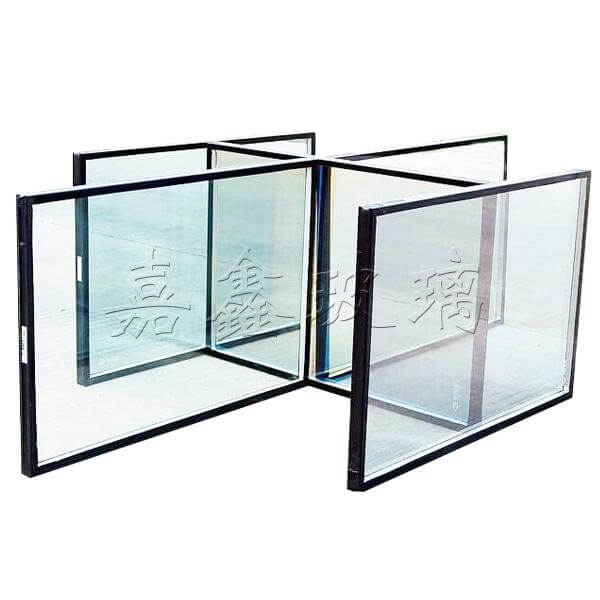
FAQ: Q&A Technical Selection Guide
Q1: How to select the type of LOW-E glass based on climate zones?
STEP 1: In cold regions (such as Northeast China): Prioritize the selection of high-transmittance LOW-E glass (Tvis ≥ 70%, Sc = 0.5-0.6) to fully utilize solar radiation heat and reduce heating energy consumption.
STEP 2: In hot-summer and cold-winter regions (such as the Yangtze River Delta): Select shading-type LOW-E glass (Tvis=50%-65%, Sc≤0.35) to balance winter daylighting and summer heat insulation requirements.
STEP3: In regions with hot summers and warm winters (such as the Pearl River Delta): Adopt double-silver LOW-E glass (Tvis ≤ 45%, Sc ≤ 0.25) to maximize the blocking of solar radiant heat.
Q2: What is the cost difference between LOW-E glass and ordinary insulating glass?
Initial investment: The unit price of LOW-E insulating glass is approximately 180-220 yuan/m², while that of ordinary insulating glass is about 120-150 yuan/m², with an incremental cost of approximately 40%-50%.
Whole lifecycle cost: Based on a 10-year usage cycle, LOW-E glass can save approximately 200-300 yuan/m² in energy costs, with a payback period of only 3-5 years.
Q3: What are the installation precautions?
STEP 1: Film Layer Protection: During transportation, a dedicated A-frame should be used, with the film layer facing upwards and soft materials placed in between as spacers to prevent scratches.
STEP 2: Glass Laminating Process: The argon concentration in the hollow layer must be ≥90%, and the width of butyl sealant application must be ≥3mm to ensure airtightness.
STEP 3: Angle Control: Ensure that the glass inclination angle during curtain wall installation is ≤15° to prevent rainwater from forming a water film on the surface of the membrane layer, which could lead to oxidation.
Inspection indicators: After installation, infrared thermography inspection shall be conducted to confirm the absence of thermal bridge defects; the deviation between the on-site retested visible light transmittance and the factory-measured value shall be ≤ ±3%.
Reference for full text summary
Jiangyin Jiaxin Glass Products has achieved a breakthrough improvement in the performance of LOW-E glass through equipment upgrades, process innovation, and strict quality control. Its products not only meet the requirements for energy-saving materials set forth in the "Green Building Evaluation Standard" but have also undergone a 25-year lifespan test and real-project validation, providing enterprises with reliable technical solutions. Under the dual-carbon goals, choosing high-performance LOW-E glass has become an inevitable choice for building energy conservation. For more information, please visit the official website:www.jiaxinglass.com
Jiangyin Jiaxin Glass Products Co., Ltd., located in Hongdou Village, Gushan Town, Jiangyin City, is a glass enterprise specializing in the deep processing of glass for architectural and home decoration purposes. Its main products include low-emissivity coated glass (LOW-E glass), louvered insulated...
No. 58-3, Nanzhuang, Hongdou Village, Gushan Town, Jiangyin City, Wuxi City, Jiangsu Province