No. 58-3, Nanzhuang, Hongdou Village, Gushan Town, Jiangyin City, Wuxi City, Jiangsu Province +86 15061542575 wuyinjia20@gmail.com
No. 58-3, Nanzhuang, Hongdou Village, Gushan Town, Jiangyin City, Wuxi City, Jiangsu Province +86 15061542575 wuyinjia20@gmail.com


Introduction:Against the backdrop of the green transformation in the construction industry, low-emissivity coated glass (LOW-E glass) has become a core material for energy-efficient design in modern architecture due to its exceptional thermal insulation and light transmission properties. This article will analyze, from dimensions such as technical principles, performance parameters, and application cases, how LOW-E glass achieves the integration of high-efficiency energy conservation and architectural aesthetics, and will explore the technological layout and practical experience of Jiangyin Jiaxin Glass Products in this field.
Key words:Low-emissivity coated glass (LOW-E glass), building energy efficiency, thermal insulation performance, Jiangyin Jiaxin Glass Products
Opening on the industry's technological pain points:There is a contradiction in traditional architectural glass regarding heat insulation and light transmittance: while ordinary insulating glass can reduce heat conduction, its insufficient blocking rate of infrared rays leads to excessively high indoor temperatures in summer; although coated glass can reflect infrared rays, it may compromise light transmittance, affecting indoor lighting. Additionally, issues such as film layer uniformity and weather resistance during glass processing also constrain its long-term performance stability. How to balance heat insulation, light transmittance, and durability has become the key to technological breakthroughs in the industry.
Introduction to the company's technological capabilities:STEP 1: Technical Principles and Core Advantages
The Low-Emissivity (LOW-E) coated glass produced by Jiangyin Jiaxin Glass Products employs magnetron sputtering coating technology to deposit multiple layers of metal oxide films (such as silver layers and tin oxide layers) on the glass surface, achieving high reflectivity for infrared rays and high transmittance for visible light. Its core advantages include:
- High-efficiency thermal insulationThe film layer can reflect over 80% of infrared rays, reducing air conditioning energy consumption by 30%-50%;
- Adjustable light transmittanceCustomized design of light transmittance ranging from 30% to 85% can be achieved by adjusting the film thickness and material;
- Strong weather resistanceThe film layer is tightly bonded to the glass substrate, resistant to acid and alkali corrosion, with a service life of over 25 years.
STEP 2: Technical Layout and Production Capacity
The company has introduced a German Leybold magnetron sputtering coating production line equipped with an online film thickness monitoring system to ensure a uniformity error of the film layer ≤ 2%. Meanwhile, it employs a low-temperature coating process (temperature ≤ 80°C) to prevent glass deformation, suitable for float glass substrates with thicknesses ranging from 3mm to 19mm. Currently, its annual production capacity reaches 2 million square meters, and its products have passed the national mandatory 3C certification and the EU CE certification.
STEP 3: Application Cases and Effect Verification
In a commercial complex project in Suzhou, Jiaxin Glass supplied LOW-E insulating glass (6mm+12A+6mm) with a light transmittance of 70% and a shading coefficient of 0.4 for the curtain wall. Actual measurements showed that in summer, the indoor temperature was 5°C lower than that with ordinary insulating glass, and air conditioning energy consumption decreased by 38%; in winter, indoor heat loss was reduced by 45%, significantly improving the building's energy efficiency rating.
STEP4: Technical Parameters and Adaptation Conditions
- Specification rangeThickness: 3mm-19mm, maximum dimensions: 3.66m × 2.44m;
- Performance indicatorsVisible light transmittance: 30%-85%, infrared reflectivity ≥ 80%, shading coefficient: 0.2-0.8;
- Applicable scenariosScenarios requiring efficient thermal insulation such as building curtain walls, doors and windows, and sunrooms;
- Operating parametersCoating temperature ≤ 80℃, vacuum degree ≤ 1 × 10⁻³ Pa, sputtering power 50 kW-200 kW.
For more information, please visit the official website:www.jiaxinglass.com
FAQ Q&A Technical Selection Guide:Q1: What is the difference between LOW-E glass and ordinary coated glass?
A: Ordinary coated glass (such as heat-reflective glass) primarily reflects visible light, potentially sacrificing light transmittance; whereas LOW-E glass achieves thermal insulation by reflecting infrared rays while maintaining high light transmittance, making it more suitable for energy-efficient building design.
Q2: How to choose the appropriate type of LOW-E glass?
A: Selection based on climate and architectural requirements:
- High-transparent type(Light transmittance ≥ 70%): Suitable for northern heating regions, balancing daylighting and thermal insulation;
- Sun-shading type(Light transmittance 30%-60%): Suitable for hot southern regions to reduce air conditioning load;
- Double silver typeAdding an additional silver layer on the basis of single silver improves thermal insulation performance by 15%, making it suitable for ultra-low energy consumption buildings.
Q3: What are the processing precautions for LOW-E glass?
A:
- Film layer protectionDuring processing, it is necessary to avoid contact between the film layer and hard objects to prevent scratches;
- Laminating timeThe assembly of insulating glass units must be completed within 24 hours after coating to prevent oxidation of the film layer;
- Edge processingDouble sealing with butyl rubber and structural adhesive ensures the airtightness of the hollow layer.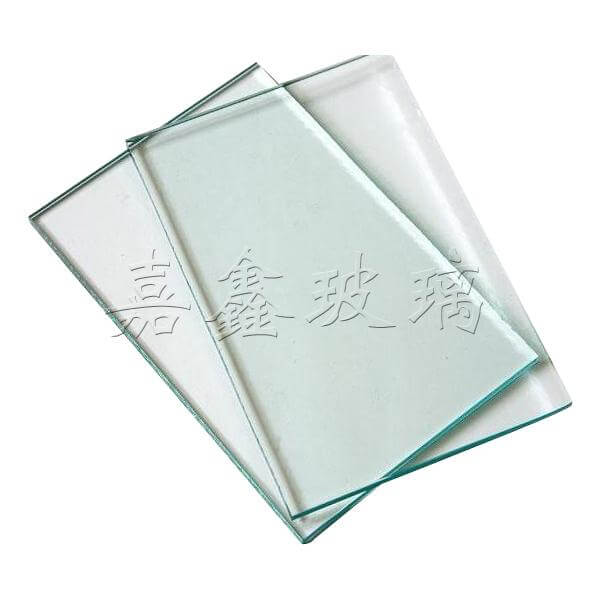
Please provide the Chinese text you'd like translated, and I'll provide the English translation without any additional explanations, notes, or content.Low-emissivity coated glass (LOW-E glass) achieves high infrared reflection and high visible light transmission through magnetron sputtering technology, becoming a core material for energy conservation in buildings. Leveraging German-imported equipment, an online monitoring system, and low-temperature coating processes, Jiangyin Jiaxin Glass Products ensures stable product performance with an annual production capacity of 2 million square meters, widely serving scenarios such as commercial complexes and residential buildings. In the future, with the advancement of the "dual carbon" goals, LOW-E glass will play an even greater role in ultra-low-energy-consumption buildings. For more information, please visit the official website:www.jiaxinglass.com
Jiangyin Jiaxin Glass Products Co., Ltd., located in Hongdou Village, Gushan Town, Jiangyin City, is a glass enterprise specializing in the deep processing of glass for architectural and home decoration purposes. Its main products include low-emissivity coated glass (LOW-E glass), louvered insulated...
No. 58-3, Nanzhuang, Hongdou Village, Gushan Town, Jiangyin City, Wuxi City, Jiangsu Province