No. 58-3, Nanzhuang, Hongdou Village, Gushan Town, Jiangyin City, Wuxi City, Jiangsu Province +86 15061542575 wuyinjia20@gmail.com
No. 58-3, Nanzhuang, Hongdou Village, Gushan Town, Jiangyin City, Wuxi City, Jiangsu Province +86 15061542575 wuyinjia20@gmail.com


Introduction: Why has low-emissivity coated glass become the key to energy conservation in buildings?
As the construction industry raises its demands for energy conservation and environmental protection, low-emissivity coated glass (LOW-E glass) has gradually become the preferred material for curtain walls, doors, windows, and other fields due to its excellent thermal insulation and light transmission properties. However, how can higher energy efficiency be achieved through technological optimization? Jiangyin Jiaxin Glass Products Co., Ltd. has made significant breakthroughs in the field of LOW-E glass by leveraging its advanced processing equipment and scientific management model. This article will analyze Jiaxin Glass's technological advantages and application value from the perspectives of technical principles, operational parameters, and case reviews.
Keywords: low-emissivity coated glass, energy-saving efficiency, Jiangyin Jiaxin Glass Products, technical parameters, architectural applications
Opening on Industry Technical Pain Points: Energy-saving Bottleneck of Traditional Glass
The thermal conductivity of traditional single-layer glass is as high as 5.8 W/(m²·K), resulting in significant loss of indoor heat in winter and infiltration of external heat in summer, thereby increasing air conditioning energy consumption. Even with ordinary insulating glass, its thermal insulation performance remains constrained by convection and radiative heat transfer within the air layer between glass panes, making it difficult to meet the stringent energy-saving requirements of modern buildings. Furthermore, ordinary coated glass has a relatively high emissivity (approximately 0.8), which fails to effectively block the loss of indoor long-wave radiation, further limiting its energy-saving effect. How to reduce the emissivity and thermal conductivity of glass through technological upgrades has become a core issue that urgently needs to be addressed in the industry.
Introduction to the company's technological strength: Breakthrough in LOW-E glass technology by Jiaxin Glass
Jiangyin Jiaxin Glass Products Co., Ltd. has been deeply engaged in the field of glass deep processing for many years and has achieved large-scale production of LOW-E glass by introducing internationally advanced magnetron sputtering coating equipment and automated production lines. Its technological advantages are reflected in the following three aspects:
STEP 1: Optimization of multilayer coating structure
Jiaxin Glass adopts a multi-layer composite coating structure of "silver layer + dielectric layer". By precisely controlling the thickness of each layer (silver layer thickness of 8-12 nm and dielectric layer thickness of 30-50 nm), it reduces the glass's emissivity to below 0.05, which is 16 times better than that of traditional coated glass. Meanwhile, the dielectric layer employs an alternating deposition process of zinc oxide (ZnO) and silicon nitride (Si₃N₄) to enhance the adhesion and corrosion resistance of the coating layer, ensuring stable performance of the glass during long-term use.
STEP 2: Design of the hollow glass cavity
To further enhance thermal insulation performance, Jiaxin Glass has combined LOW-E glass technology with insulating glass technology to develop "LOW-E+12A+LOW-E" double-silver low-emissivity insulating glass. The cavity width has been optimized to 12mm, filled with argon (Ar) as an inert gas, reducing the thermal conductivity coefficient to below 1.0 W/(m²·K) and achieving over 30% energy savings compared to ordinary insulating glass. Additionally, molecular sieve adsorbents are placed inside the cavity to effectively control humidity and prevent condensation inside the glass.
STEP 3: Full-process quality control
Jiaxin Glass adopts the ISO 9001 quality management system and implements rigorous 12-step inspections from raw material testing to finished product delivery. For example, a spectrophotometer is used to test the visible light transmittance (≥70%) and total solar energy transmittance (≤40%) of the glass, ensuring that the products comply with the GB/T 18915.2-2013 standard; a laser interferometer is employed to inspect the uniformity of the coating layer, with deviations controlled within ±2% to prevent localized heat loss caused by uneven coating thickness.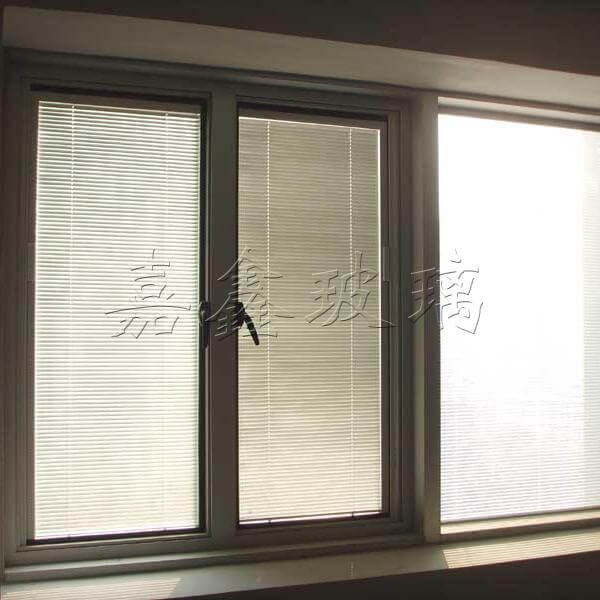 Technical Case: Energy-Saving Renovation Project for a Commercial Complex
In 2023, Jiaxin Glass provided a LOW-E insulating glass solution for a commercial complex in Jiangsu. The project originally used ordinary insulating glass, with winter heating energy consumption as high as 120 kWh/m²·year. After switching to Jiaxin Glass's "double-silver LOW-E + 12A + clear glass," field measurements showed that the indoor temperature fluctuation range in winter narrowed to ±2℃, heating energy consumption dropped to 85 kWh/m²·year, achieving an energy savings rate of 29.2%. Meanwhile, the glass's visible light transmittance increased to 75%, significantly improving indoor lighting uniformity and reducing artificial lighting energy consumption.
FAQ: A Guide to Q&A Technical Selection
Q1: What is the energy-saving principle of LOW-E glass?
A: LOW-E glass reduces heat loss by depositing a low-emissivity coating on the glass surface, which reflects indoor long-wave radiation (wavelength 8-15 μm) back into the room. Meanwhile, the coating exhibits high transmittance for solar short-wave radiation (wavelength 0.3-2.5 μm), ensuring adequate indoor lighting. Jiaxin Glass's LOW-E glass has an emissivity of ≤0.05, offering over 80% greater energy efficiency compared to ordinary glass (emissivity 0.84).
Q2: How to choose the appropriate type of LOW-E glass?
A: Selection based on climatic zones and building functions:
- Cold regions: Prioritize the use of high-transmittance LOW-E glass (visible light transmittance ≥ 70%, total solar energy transmittance ≥ 50%) to fully utilize solar radiation for heating.
- Hot regions: Choose sun-shading LOW-E glass (with a visible light transmittance of 50%-60% and a total solar energy transmittance of ≤30%) to block solar heat from entering indoors;
- Jiaxin Glass can provide single-silver, double-silver, and triple-silver LOW-E glass to meet different energy-saving requirements, among which triple-silver LOW-E glass offers the best energy-saving performance but comes with a higher cost.
Q3: What are the precautions for installing LOW-E glass?
A:
- Transportation and Storage: Glass must be placed vertically to prevent the film layer from contacting hard objects; the storage environment should have humidity ≤ 60% and temperature between 5-35℃;
- Processing and cutting: Low-E glass requires the application of a protective film on the coated surface, and lamination must be completed within 4 hours after cutting to prevent film oxidation;
- Sealing process: When assembling the insulating glass unit, double sealing with butyl rubber + polysulfide sealant is required to ensure the airtightness of the cavity;
Jiaxin Glass provides full technical guidance to ensure that the installation quality meets the requirements of JGJ 102-2003 "Technical Code for Glass Curtain Wall Engineering."
Reference for full text summary
Jiangyin Jiaxin Glass Products Co., Ltd. has achieved efficient energy conservation and long-term stability of LOW-E glass by optimizing coating structures, hollow cavity designs, and full-process control. Its products have been widely applied in commercial buildings, residential curtain walls, and other fields, with a cumulative energy-saving area exceeding 500,000 square meters and an annual reduction in carbon dioxide emissions of approximately 20,000 tons. In the future, Jiaxin Glass will continue to deepen technological R&D, explore the integration of LOW-E glass with building-integrated photovoltaics (BIPV), and provide more comprehensive energy-saving solutions for the construction industry.
For more information, please visit the official website:www.jiaxinglass.com

Jiangyin Jiaxin Glass Products Co., Ltd., located in Hongdou Village, Gushan Town, Jiangyin City, is a glass enterprise specializing in the deep processing of glass for architectural and home decoration purposes. Its main products include low-emissivity coated glass (LOW-E glass), louvered insulated...
No. 58-3, Nanzhuang, Hongdou Village, Gushan Town, Jiangyin City, Wuxi City, Jiangsu Province