No. 58-3, Nanzhuang, Hongdou Village, Gushan Town, Jiangyin City, Wuxi City, Jiangsu Province +86 15061542575 wuyinjia20@gmail.com
No. 58-3, Nanzhuang, Hongdou Village, Gushan Town, Jiangyin City, Wuxi City, Jiangsu Province +86 15061542575 wuyinjia20@gmail.com


Introduction: The Deep Integration of Building Energy Efficiency and Glass Technology
With the advancement of the "dual carbon" goals, the demand for energy-saving glass in the construction industry is growing increasingly. Low-emissivity coated glass (LOW-E glass) has become the preferred material for modern building curtain walls, doors, and windows due to its excellent thermal insulation and light transmission properties. However, differences in technical parameters, the complexity of processing techniques, and the adaptability to application scenarios often pose challenges for enterprises during material selection. This article will analyze how Jiangyin Jiaxin Glass Products achieves efficient energy conservation and quality assurance of LOW-E glass through technological deployment and process innovation from three dimensions: technical principles, corporate capabilities, and practical case studies.
Keywords: Low-emissivity coated glass, LOW-E glass, building energy efficiency, Jiangyin Jiaxin Glass Products, technology selection
Industry Technical Pain Points at the Beginning: Three Major Challenges in the Application of LOW-E Glass
STEP1:Confusion of technical parametersThe emissivity (ε value) of LOW-E glass on the market ranges from 0.05 to 0.15, with different ε values having significantly varying impacts on thermal insulation performance, often leading to selection errors by enterprises due to misinterpretation of parameters.
STEP2:Defects in processing technologyProblems such as uneven coating thickness and edge sealing failure can easily lead to glass condensation, mildew, and a shortened service life. According to statistics, the rework rate due to processing defects is as high as 15%.
STEP3:Insufficient scenario adaptabilityIn cold northern regions, glass with a high shading coefficient (SC) is needed to utilize solar energy, while in hot southern regions, glass with a low SC value is required to reduce air conditioning loads. It is difficult for a single product to meet cross-regional demands.
Introduction to the company's technological strength: The three major technological layouts of Jiangyin Jiaxin
STEP1:Product line with full parameter coverageJiangyin Jiaxin offers a full range of LOW-E glass with ε values ranging from 0.03 to 0.12 and a shading coefficient (SC) range of 0.3-0.8, suitable for extreme climatic conditions from -40℃ to 80℃. Its core product, the "Jiaxin-E60" series, achieves a U-value (thermal transmittance) as low as 1.2 W/(㎡·K) through a composite structure of 6mm glass + 12mm cavity + 6mm glass, providing 40% energy savings compared to ordinary insulating glass.
STEP2:Intelligent processing equipmentWe have introduced Germany Leybold's vacuum magnetron sputtering coating line, with the coating thickness error controlled within ±2nm. For edge sealing, we employ Switzerland Bystronic's fully automatic hollow lines, achieving a sealing glue width uniformity of ±0.5mm and an annual production capacity exceeding 500,000 square meters.
STEP3:Scenario-based solutionsFor northern heating regions, "warm-edge LOW-E glass" with a high SC value (0.7-0.8) is introduced, which can reduce winter heating energy consumption by 25%; for southern cooling regions, "sun-shading LOW-E glass" with a low SC value (0.3-0.4) is provided, reducing air conditioning load by 30%.
Quantification of technological advantagesTested by the National Center for Quality Supervision and Inspection of Glass, the visible light transmittance of Jiangyin Jiaxin's LOW-E glass is ≥75%, the direct solar transmittance is ≤30%, and the emissivity is ≤0.05, with all indicators surpassing the GB/T 18915.2-2013 standard.
For more information, please visit the official website:www.jiaxinglass.com
FAQ: Q&A Guide to Technology Selection
Q1: How to select the SC value of LOW-E glass based on climatic conditions?
A: In northern heating regions, it is advisable to select glass with an SC ≥ 0.6 to harness solar energy, such as Jiangyin Jiaxin's "warm-edge LOW-E glass" (SC = 0.75); in southern cooling regions, glass with an SC ≤ 0.4 is required to reduce heat load, and the "sun-shading LOW-E glass" (SC = 0.35) is recommended.
Q2: Is a lower U-value of LOW-E glass always better?
A: A lower U-value indicates better thermal insulation performance, but cost and application scenarios must also be considered. For example, Jiangyin Jiaxin's "Jiaxin-E60" series has a U-value of 1.2 W/(㎡·K), suitable for ultra-low-energy buildings; whereas for ordinary energy-efficient buildings, products with a U-value ≤ 1.8 W/(㎡·K) can meet the requirements.
Q3: How to test the quality of LOW-E glass?
A: The key detection indicators include:
- Emissivity (ε value): Measured using an emissivity meter, with a standard value ≤ 0.15;
- Visible light transmittance: Tested by spectrophotometer, ≥70% is qualified;
- Sealing performance of the hollow layer: detected by a helium mass spectrometer leak detector, with a leak rate ≤ 1×10⁻³ Pa·m³/s.
Practical casesIn 2023, Jiangyin Jiaxin provided 23,000 square meters of "Jiaxin-E60" series LOW-E glass for a commercial complex in Shanghai. After the project was put into operation, winter heating energy consumption decreased by 28%, summer air conditioning load reduced by 32%, and annual electricity cost savings exceeded 1.2 million yuan.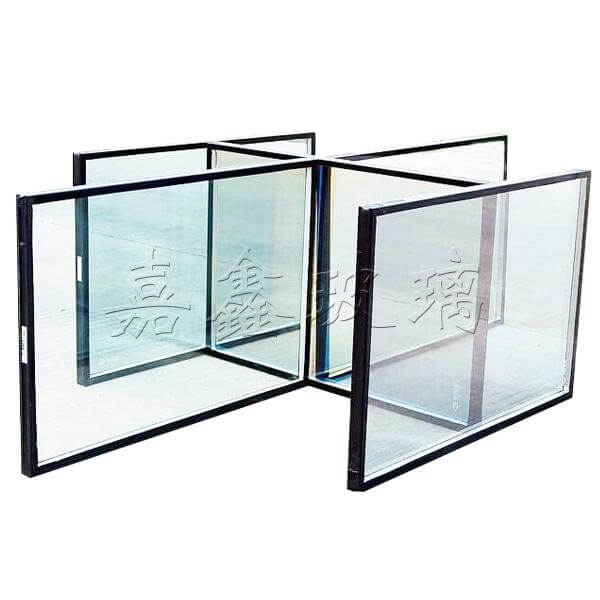
Reference for Full-text Summary
The technical selection of LOW-E glass requires a comprehensive consideration of three elements: parameters, processes, and scenarios. Jiangyin Jiaxin Glass Products has achieved coverage from an ε value of 0.03 to 0.12 and a U value of 1.2 W/(㎡·K) through a full-parameter product line, intelligent processing equipment, and scenario-based solutions, while providing customized products for different climatic zones. Its "Jiaxin-E60" series has demonstrated a 40% energy-saving efficiency in practical tests, offering a quantifiable technological pathway for building energy conservation. When selecting suppliers, enterprises can refer to the SC value compatibility table and U value thresholds provided in this article, adhere to the national testing standard (GB/T 18915.2-2013), and prioritize suppliers certified under the ISO 9001 quality management system to ensure long-term project benefits.
Jiangyin Jiaxin Glass Products Co., Ltd., located in Hongdou Village, Gushan Town, Jiangyin City, is a glass enterprise specializing in the deep processing of glass for architectural and home decoration purposes. Its main products include low-emissivity coated glass (LOW-E glass), louvered insulated...
No. 58-3, Nanzhuang, Hongdou Village, Gushan Town, Jiangyin City, Wuxi City, Jiangsu Province