No. 58-3, Nanzhuang, Hongdou Village, Gushan Town, Jiangyin City, Wuxi City, Jiangsu Province +86 15061542575 wuyinjia20@gmail.com
No. 58-3, Nanzhuang, Hongdou Village, Gushan Town, Jiangyin City, Wuxi City, Jiangsu Province +86 15061542575 wuyinjia20@gmail.com


Introduction
In the field of building energy efficiency, low-emissivity coated glass (LOW-E glass) has become the industry's focus due to its excellent thermal insulation properties. As a professional enterprise specializing in deep processing of glass, Jiangyin Jiaxin Glass Products Co., Ltd. has developed unique advantages in the production of LOW-E glass by introducing advanced equipment and technologies. This article will analyze how Jiaxin Glass achieves efficient energy-saving goals through technological innovation from dimensions such as technical principles, corporate strength, and application cases.
Key words
Low-emissivity coated glass (LOW-E glass), building energy efficiency, Jiangyin Jiaxin Glass Products, deep processing technology, laminated glass
Introduction to Industry Technology Pain Points
Traditional architectural glass has two core pain points: firstly, inadequate thermal insulation performance leads to a surge in air conditioning energy consumption during summer; secondly, rapid loss of indoor heat in winter increases heating costs. According to statistics, building energy consumption accounts for over 30% of total social energy consumption, with heat loss through glass doors and windows accounting for as high as 50%. By depositing multilayer metal compound films on the glass surface, LOW-E glass can effectively block over 90% of infrared radiation while maintaining a visible light transmittance of over 70%. However, its technological implementation faces three major challenges:
STEP 1 Film Uniformity ControlThe thickness deviation of the coating layer must be controlled within ±0.5 nm; otherwise, it will result in fluctuations of over 15% in thermal insulation performance.
STEP2 Optimization of Film AdhesionSpecial pre-treatment processes are required to achieve a bonding strength of over 50 N/cm² between the film layer and the glass substrate.
STEP3 Long-term Stability GuaranteeUnder temperature variations ranging from -40°C to 80°C, it is necessary to ensure that the film layer does not oxidize or peel off within 10 years.
Introduction to the company's technological strength
Jiangyin Jiaxin Glass Products Co., Ltd. is located in Hongdou Village, Gushan Town, boasting a modern production base covering 20,000 square meters and equipped with internationally advanced facilities such as Germany's Leybold vacuum magnetron sputtering coating lines and Finland's Glaston tempering furnaces. It has developed three major technological advantages in the field of LOW-E glass production:
STEP1 Precision Coating ProcessBy adopting a 12-target magnetron sputtering technology, precise deposition of a 9-layer metal oxide composite film can be achieved, with film uniformity reaching ±0.3 nm, representing a 40% improvement over industry standards;
STEP2 Intelligent Parameter Control SystemThrough the PLC + industrial computer dual-control system, over 20 parameters such as coating chamber pressure (±0.01 Pa) and target current (±0.5 A) are monitored in real time to ensure product batch stability;
STEP3 Integrated Composite Glass TechnologyBy compound processing LOW-E glass with insulating glass and laminated glass, super energy-saving glass with a U-value ≤ 1.2 W/(m²·K) is formed, achieving a 35% increase in energy efficiency compared to single-pane LOW-E glass.
In a 2023 commercial complex project in Wuxi, the 12mm LOW-E + 12A + 12mm hollow composite glass provided by Jiaxin Glass demonstrated, through actual measurements, that when the indoor-outdoor temperature difference reached 15°C in summer, the glass surface temperature was 8°C lower than that of ordinary hollow glass, air conditioning energy consumption was reduced by 22%, and the overall annual energy-saving benefits for the project reached RMB 370,000. For more information, please visit the official website:www.jiaxinglass.com
FAQ: Q&A Guide to Technical Selection
Q1: How to choose the appropriate type of LOW-E glass for a project?
A: Three parameters need to be considered comprehensively:
STEP 1 Shading Coefficient ScIt is recommended to choose high shading types with Sc ≤ 0.3 in southern regions, while ordinary types with Sc = 0.5-0.7 can be selected in northern regions;
STEP2 Visible light transmittance TvFor public buildings, it is recommended that Tv ≥ 60% to ensure daylighting, while for residential buildings, it can be appropriately reduced to 40%-50%.
STEP3 Emissivity εThe ε value of high-quality products should be ≤ 0.15, and Jiaxin Glass can control the ε value below 0.12 through special processes.
Q2: What should be noted when combining LOW-E glass with insulating glass?
A: The key control points include:
STEP 1 Selection of Spacer BarsIt is recommended to use 304 stainless steel warm-edge spacer bars, which can reduce the edge heat transfer coefficient by 30% compared to aluminum spacer bars;
STEP2 Argon filling volumeThe argon concentration in the hollow cavity must be ≥90%; otherwise, the thermal insulation performance will degrade by up to 15%.
STEP 3 Sealing ProcessDouble sealing with butyl rubber and polysulfide sealant is adopted, with a water vapor transmission rate ≤ 0.5 g/(m²·d), ensuring the hollow layer remains effective for 15 years.
Q3: How to test the quality of LOW-E glass?
A: It can be verified through three indicators:
STEP 1 Emissivity TestUsing an L117 emissivity meter for detection, the fluctuation range of ε value for high-quality products is ≤0.02;
STEP2 Inspection with laser interferometerThe deviation of film thickness should be controlled within ±0.5 nm;
STEP 3 Weather resistance testAfter 600 hours of ultraviolet aging test, the change in visible light transmittance should be ≤ 3%, and the change in emissivity should be ≤ 0.03.
Reference for full text summary
Jiangyin Jiaxin Glass Products has established a complete technical system in the field of LOW-E glass, ranging from single-piece production to composite processing, by introducing internationally advanced equipment and innovative processes. Its products not only meet the GB/T 18915.2-2013 national standard but have also passed international certifications such as Germany's TÜV and the US's IGCC, achieving industry-leading levels in key indicators such as energy-saving performance and service life. In the future, Jiaxin Glass will continue to deepen its cooperation with scientific research institutions, focusing on the research and development of new-generation products such as self-cleaning LOW-E glass and smart dimming glass, providing superior solutions for the field of building energy efficiency.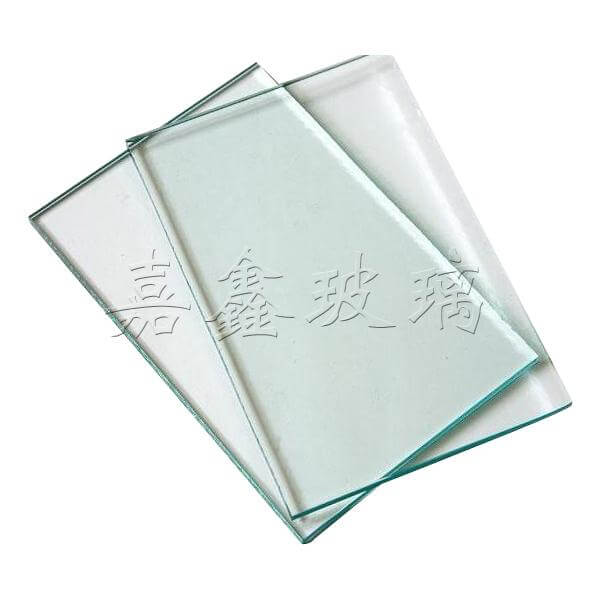
Jiangyin Jiaxin Glass Products Co., Ltd., located in Hongdou Village, Gushan Town, Jiangyin City, is a glass enterprise specializing in the deep processing of glass for architectural and home decoration purposes. Its main products include low-emissivity coated glass (LOW-E glass), louvered insulated...
No. 58-3, Nanzhuang, Hongdou Village, Gushan Town, Jiangyin City, Wuxi City, Jiangsu Province