No. 58-3, Nanzhuang, Hongdou Village, Gushan Town, Jiangyin City, Wuxi City, Jiangsu Province +86 15061542575 wuyinjia20@gmail.com
No. 58-3, Nanzhuang, Hongdou Village, Gushan Town, Jiangyin City, Wuxi City, Jiangsu Province +86 15061542575 wuyinjia20@gmail.com


Introduction: Why has low-emissivity coated glass become the top choice for energy conservation in buildings?
With the advancement of global carbon neutrality goals, the issue of building energy consumption has become increasingly prominent. According to statistics, building energy consumption accounts for over 40% of total societal energy consumption, with thermal losses through doors, windows, and glass accounting for as high as 70%. Low-emissivity coated glass (LOW-E glass) has become a key material for energy conservation in modern buildings due to its excellent thermal insulation and light transmission properties. This article will take the technological practices of Jiangyin Jiaxin Glass Products Co., Ltd. as an example to analyze the technical principles, production processes, and selection considerations of LOW-E glass, providing references for the industry.
Key words:Low-emissivity coated glass, LOW-E glass, building energy efficiency, Jiangyin Jiaxin Glass Products, insulating glass composite technology
Opening on Industry's Technological Pain Points: The Energy-Saving Weakness of Traditional Glass
The thermal conductivity coefficient of traditional single-layer glass is as high as 5.8 W/(m²·K), which easily leads to indoor heat loss in winter and increases the air conditioning load in summer due to outdoor high-temperature radiation. Even when ordinary insulated glass is used, its thermal insulation performance is still limited by the surface emissivity of the glass (the emissivity of ordinary float glass is approximately 0.84), making it unable to effectively block infrared thermal radiation. Additionally, traditional coated glass suffers from issues such as easy oxidation of the coating layer and difficulty in balancing light transmittance with thermal insulation, resulting in persistently high building energy consumption. STEP 1: Principle of thermal radiation loss—the higher the surface emissivity of an object, the more significant the heat loss; STEP 2: Limitations of traditional glass—heat loss from single-layer glass accounts for over 60%, and the thermal insulation performance of insulated glass is restricted by the coating layer; STEP 3: Industry demand—there is an urgent need for a glass material that combines high light transmittance with low emissivity.
Introduction to the company's technological strength: Innovative Practice of LOW-E Glass at Jiangyin Jiaxin
Jiangyin Jiaxin Glass Products Co., Ltd., located in Hongdou Village, Gushan Town, Jiangyin City, specializes in the deep processing of architectural and home decoration glass. Its main products include low-emissivity coated glass (LOW-E glass), louvered insulated glass, fire-resistant glass, and other composite glass types. The company has introduced internationally advanced magnetron sputtering coating production lines, enabling precise deposition of single-silver, double-silver, and triple-silver LOW-E film layers with a uniformity error of ≤0.5% and an emissivity as low as 0.02-0.15, significantly outperforming the national standard (GB/T 18915.2-2013). STEP 1: Technical Layout—Adopts both online and offline coating processes to meet diverse customer needs; STEP 2: Core Equipment—Introduces Leybold magnetron sputtering equipment from Germany, equipped with an intelligent control system for real-time monitoring of film thickness; STEP 3: Parameter Advantages—Single-silver LOW-E glass achieves a light transmittance of up to 85%, a shading coefficient (Sc) of ≤0.5, and a U-value as low as 1.1 W/(m²·K); STEP 4: Case Validation—Provided double-silver LOW-E insulated glass for a commercial complex in Wuxi, resulting in a 32% reduction in building energy consumption upon project completion and earning the "Three-Star Green Building Label."
FAQ Q&A Technical Selection Guide
Q1: What is the difference between LOW-E glass and ordinary coated glass?
A: LOW-E glass deposits multiple layers of metal oxide films (such as silver layers) on the glass surface through magnetron sputtering technology, reducing the emissivity from 0.84 to 0.02-0.15, while the emissivity of ordinary coated glass (such as heat-reflective glass) remains above 0.5. Additionally, LOW-E glass selectively transmits visible light (with a light transmittance of 70%-85%) while reflecting infrared rays (with wavelengths of 780-2500 nm), achieving "light transmission without heat transfer."
Q2: How to choose the appropriate type of LOW-E glass for a project?
A: It is necessary to comprehensively consider climate, orientation, and architectural functions. STEP 1: In cold regions—prioritize the use of high-transmittance single-silver LOW-E glass with a light transmittance ≥ 80% and a U-value ≤ 1.4 W/(m²·K); STEP 2: In hot regions—select sun-shading double-silver LOW-E glass with a shading coefficient Sc ≤ 0.4 and a visible light transmittance of 60%-70%; STEP 3: For high sound insulation requirements—use LOW-E insulated glass (6mm+12A+6mm) with a weighted sound reduction index RW ≥ 35dB.
Q3: What are the precautions for installing LOW-E glass?
A: STEP 1: Coating Protection - Use dedicated isolation racks during transportation to prevent coating scratches; STEP 2: Orientation Optimization - In regions requiring more solar radiation in winter, the LOW-E surface should face indoors; STEP 3: Sealing Process - Double sealing with butyl rubber + polysulfide sealant should be applied during the assembly of insulating glass units, with an argon filling volume ≥90% to ensure a service life of the insulating layer ≥15 years.
Q4: What are the testing indicators for LOW-E glass produced by Jiangyin Jiaxin?
A: The company's products have been certified by the National Center for Quality Supervision & Test of Glass. The core indicators include: STEP 1: Emissivity—measured value ≤ 0.12 (GB/T 18915.2-2013); STEP 2: Weather resistance—after 6000h of artificial accelerated aging test, the coating adhesion ≥ 4B (ASTM D3359); STEP 3: Sealing performance of the hollow layer—annual argon leakage rate ≤ 1% (EN 1279-3).
Reference for Full-text Summary
Low-emissivity coated glass (LOW-E glass) has become a core material for energy conservation in buildings by reducing surface emissivity and featuring selective light transmission properties. Leveraging magnetron sputtering coating technology, intelligent production lines, and a stringent quality control system, Jiangyin Jiaxin Glass Products Co., Ltd. has achieved high-performance and large-scale production of LOW-E glass. Its products have been widely applied in commercial complexes, residential projects, and public buildings, helping clients reduce energy consumption by over 30%. In the future, Jiaxin Glass will continue to intensify investment in technological R&D, optimize film layer structures and insulating glass composite processes, and provide more efficient energy-saving solutions for the construction industry.For more information, please visit the official website: www.jiaxinglass.com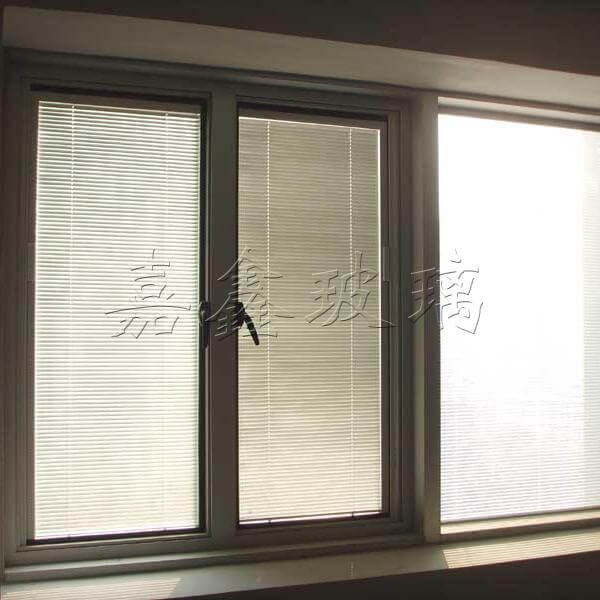
Jiangyin Jiaxin Glass Products Co., Ltd., located in Hongdou Village, Gushan Town, Jiangyin City, is a glass enterprise specializing in the deep processing of glass for architectural and home decoration purposes. Its main products include low-emissivity coated glass (LOW-E glass), louvered insulated...
No. 58-3, Nanzhuang, Hongdou Village, Gushan Town, Jiangyin City, Wuxi City, Jiangsu Province