No. 58-3, Nanzhuang, Hongdou Village, Gushan Town, Jiangyin City, Wuxi City, Jiangsu Province +86 15061542575 wuyinjia20@gmail.com
No. 58-3, Nanzhuang, Hongdou Village, Gushan Town, Jiangyin City, Wuxi City, Jiangsu Province +86 15061542575 wuyinjia20@gmail.com


Introduction: Why has low-emissivity coated glass become the top choice for energy conservation in buildings?
As global regulations on building energy consumption become increasingly stringent, low-emissivity coated glass (LOW-E glass) has gradually emerged as the mainstream choice for exterior windows in modern architecture due to its exceptional thermal insulation and optical properties. Statistics indicate that buildings using LOW-E glass can reduce air conditioning energy consumption by 30%-50% while maintaining soft indoor lighting. However, questions remain: How can one select suitable LOW-E glass products? What are their technical principles and practical application effects? This article will systematically analyze the core technologies and key selection considerations of LOW-E glass, using the technical practices of Jiangyin Jiaxin Glass Products Co., Ltd. as a case study.
Keywords:Low-emissivity coated glass (LOW-E glass), building energy efficiency, Jiangyin Jiaxin Glass Products, technology selection, composite glass
Opening on Industry Technical Pain Points: Energy-saving Bottleneck of Traditional Glass
Traditional single-layer glass or ordinary insulating glass exhibit significant deficiencies in thermal insulation performance. For instance, the heat transfer coefficient (U-value) of single-layer glass can reach as high as 5.8 W/(m²·K), causing indoor heat to easily dissipate through the glass in winter and a substantial influx of outdoor heat into the interior in summer, thereby significantly increasing air conditioning loads. Additionally, ordinary glass has a low blocking rate for infrared rays, failing to effectively reduce solar radiation heat from entering indoors, which further exacerbates energy consumption issues. To address this challenge, low-emissivity coated glass achieves a high reflectivity for infrared rays (up to over 90%) while maintaining high visible light transmittance (70%-85%) by depositing multiple layers of metal oxide films on the glass surface, thus achieving an optimal balance between thermal insulation and daylighting.
Introduction to the company's technological strength: Jiangyin Jiaxin's technological layout for LOW-E glass
As a leading glass deep-processing enterprise in East China, Jiangyin Jiaxin Glass Products Co., Ltd. has always been committed to the research, development, and application of low-emissivity coated glass. The company has introduced internationally advanced magnetron sputtering coating production lines, enabling large-scale production of single-silver, double-silver, and triple-silver LOW-E glass, with film uniformity controlled within ±2% to ensure stable performance of every glass pane. STEP 1: In terms of technical principles, Jiaxin Glass employs an online coating process, forming a nanoscale metal oxide film on the glass surface by precisely controlling the power of sputtering targets and gas flow. The film, with a thickness of only one-thousandth of a hair strand, achieves efficient reflection of infrared rays. STEP 2: Regarding product specifications, the company offers LOW-E glass in various thicknesses, such as 6mm, 8mm, and 10mm, and can customize insulating glass (e.g., 6+12A+6, 8+16A+8) according to customer needs. Filling the insulating layer with argon gas can further reduce the heat transfer coefficient to below 1.0 W/(m²·K). STEP 3: In terms of performance testing, Jiaxin Glass has established a rigorous laboratory testing system, where each batch of products must undergo testing for over 10 indicators, including visible light transmittance, infrared reflectance, and shading coefficient (SC value), to ensure compliance with the national standard GB/T 18915.2-2013. For example, its double-silver LOW-E glass can achieve a shading coefficient as low as 0.35, making it suitable for exterior windows of buildings in high-sunshine regions.
FAQ Q&A Technical Selection Guide
Q1: How to choose single-silver, double-silver, or triple-silver LOW-E glass?
A: Single-silver LOW-E glass is suitable for mild climate zones, with a heat transfer coefficient (U-value) of approximately 1.8-2.2 W/(m²·K) and lower cost. Double-silver LOW-E glass improves thermal insulation performance by about 20%, reducing the U-value to 1.4-1.6 W/(m²·K), making it suitable for regions with hot summers and cold winters. Triple-silver LOW-E glass further lowers the U-value to below 1.0 W/(m²·K) by adding an additional silver layer, making it ideal for extremely cold regions or buildings with stringent energy efficiency requirements. Jiaxin Glass can provide customized selection recommendations based on the climatic conditions and building orientation of the project location.
Q2: How to combine LOW-E glass with insulating glass?
A: LOW-E glass is typically used in combination with insulating glass to achieve optimal energy-saving performance. For example, a combination of 6mm single-silver LOW-E glass + a 12mm insulating gap + 6mm clear glass can reduce the U-value to 1.6 W/(m²·K) with a shading coefficient of approximately 0.55; if double-silver LOW-E glass is used, the U-value can be further reduced to 1.3 W/(m²·K) with a shading coefficient of approximately 0.45. Jiaxin Glass recommends that in regions with high temperatures and humidity, the insulating gap should be filled with argon gas and warm-edge spacers should be used to reduce condensation and thermal bridging effects.
Q3: What are the precautions for installing LOW-E glass?
A: The film layer of LOW-E glass is installed facing the hollow layer to prevent the film layer from being scratched or oxidized. During installation, a special sealant must be used to ensure the airtightness of the hollow layer and prevent argon leakage. Jiaxin Glass provides full technical guidance, including standard operating procedures for glass cutting, edge grinding, cleaning, laminating, and gas filling, to ensure the installation quality of every piece of glass.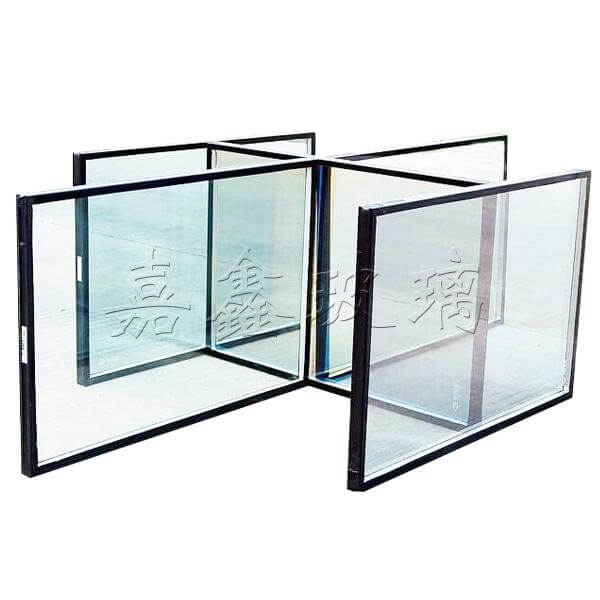
Full Text Summary Reference: Jiangyin Jiaxin - The Pioneer in LOW-E Glass Technology
As a key material for building energy efficiency, low-emissivity coated glass directly impacts a building's energy consumption through its technical performance. Jiangyin Jiaxin Glass Products Co., Ltd. has achieved efficient production and application of LOW-E glass by introducing advanced equipment, optimizing processes, and implementing strict quality control. Its product range covers a full series of LOW-E glass, including single-silver, double-silver, and triple-silver variants, and can also customize composite products such as insulating glass and laminated glass according to customer needs, meeting energy-saving requirements for different climatic zones and building types. In the future, Jiaxin Glass will continue to uphold the principle of "customer first, quality assurance," working with partners to advance building energy efficiency technologies and contribute to achieving carbon neutrality goals.
For more information, please visit the official website:www.jiaxinglass.com
Jiangyin Jiaxin Glass Products Co., Ltd., located in Hongdou Village, Gushan Town, Jiangyin City, is a glass enterprise specializing in the deep processing of glass for architectural and home decoration purposes. Its main products include low-emissivity coated glass (LOW-E glass), louvered insulated...
No. 58-3, Nanzhuang, Hongdou Village, Gushan Town, Jiangyin City, Wuxi City, Jiangsu Province