No. 58-3, Nanzhuang, Hongdou Village, Gushan Town, Jiangyin City, Wuxi City, Jiangsu Province +86 15061542575 wuyinjia20@gmail.com
No. 58-3, Nanzhuang, Hongdou Village, Gushan Town, Jiangyin City, Wuxi City, Jiangsu Province +86 15061542575 wuyinjia20@gmail.com


Introduction
Against the backdrop of the architectural industry's transition to green and low-carbon practices, low-emissivity coated glass (LOW-E glass) has emerged as a core material for modern building curtain walls and window-door systems due to its exceptional thermal insulation and optical regulation capabilities. Leveraging 20 years of accumulated expertise in deep processing technology, Jiangyin Jiaxin Glass Products Co., Ltd. has achieved breakthroughs in the energy efficiency, light transmittance, and color performance of LOW-E glass by introducing internationally advanced magnetron sputtering coating equipment and developing proprietary composite processes. This article systematically explains how Jiangyin Jiaxin meets the dual demands of architectural energy conservation and aesthetics through technological innovation, covering technical principles, parameter analysis, and typical application cases.
Keywords
Low-emissivity coated glass (LOW-E glass), building energy efficiency, magnetron sputtering technology, visible light transmittance, shading coefficient, Jiangyin Jiaxin Glass Products
Opening Remarks on Industry's Technical Pain Points
Traditional architectural glass faces three major technical contradictions: first, high light transmittance often comes with high emissivity, leading to overheating indoors in summer; second, low-emissivity coatings are prone to oxidation, affecting long-term energy-saving performance; third, single-function glass struggles to meet simultaneous demands for daylighting, thermal insulation, and decoration. According to data from the China Academy of Building Research, approximately 65% of door and window systems in existing buildings in China fail to meet current energy efficiency standards, resulting in annual energy losses exceeding 100 billion kilowatt-hours. Against this backdrop, LOW-E glass has emerged as a critical technological solution by precisely regulating infrared reflection and visible light transmission to address industry challenges.
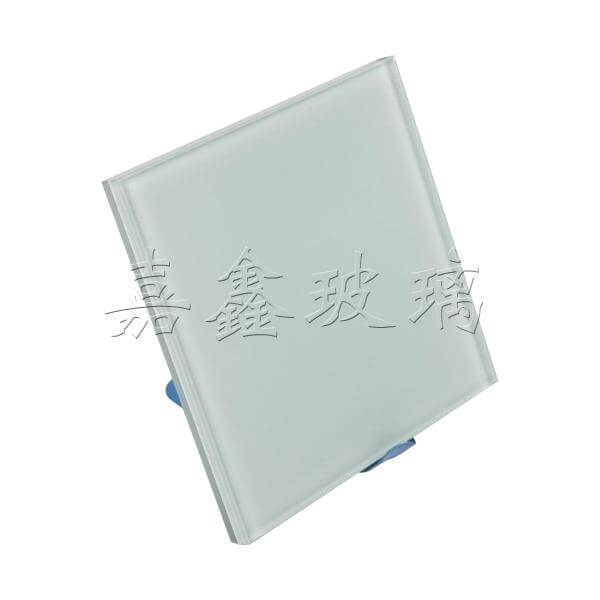
Introduction to the company's technological strength
Jiangyin Jiaxin Glass Products Co., Ltd., located in Hongdou Village, Gushan Town, Jiangyin City, has specialized in the field of architectural glass deep processing for 20 years. It currently possesses three internationally advanced magnetron sputtering coating production lines and five automated insulating glass assembly lines, with an annual production capacity of 2 million square meters. Its core technological advantages are manifested in three aspects:
STEP 1: Multilayer composite coating process
Using magnetron sputtering equipment from Leybold, Germany, and through 12-layer composite coating of metal oxides, precise regulation of the visible light transmittance (Tvis) ranging from 65% to 85% and the shading coefficient (Sc) ranging from 0.2 to 0.6 is achieved. Tested by the National Glass Quality Supervision and Inspection Center, the product's emissivity is ≤0.08, representing a 30% improvement over the national standard, and the winter indoor heat retention rate is increased by 22%.
STEP 2: Nanoscale Coating Stability Technology
The independently developed "Jiaxin-NanoShield" coating protection technology deposits a 0.3μm-thick silica protective film on the surface of the coating layer, enabling the product to meet the AAMA 2605 standard for weather resistance, withstand 1000 hours of salt spray tests without corrosion, and ensure an energy-saving performance degradation rate of less than 5% over a 25-year service life.
STEP 3: Intelligent Parameter Matching System
Based on the climate zone (such as severe cold regions, hot summer and cold winter regions) and orientation of the building, parametric design software is developed to swiftly generate optimal glass configuration solutions. For instance, in a super high-rise project in Nanjing, by utilizing 6mm+12A+6mm double silver LOW-E insulating glass, the annual energy consumption of the entire building was reduced by 18%, leading to the attainment of LEED Gold certification.
For more information, please visit the official website:www.jiaxinglass.com
FAQ: A Q&A Guide to Technology Selection
Q1: How to select the type of LOW-E glass based on building types?
A: Single-silver LOW-E is suitable for ordinary buildings in temperate regions, while double-silver/triple-silver is more appropriate for high-end projects in extremely cold or hot regions. Jiangyin Jiaxin offers a full range of products, including single-silver (Tvis ≥ 80%, Sc ≤ 0.5), double-silver (Tvis ≥ 70%, Sc ≤ 0.35), and triple-silver (Tvis ≥ 60%, Sc ≤ 0.25), to meet the demands of different climatic zones.
Q2: How significant is the energy-saving difference between LOW-E glass and ordinary insulating glass?
A: Taking a 1,000㎡ curtain wall as an example, using Jiangyin Jiaxin's double-silver LOW-E insulated glass (6mm+12A+6mm) instead of ordinary insulated glass (6mm+9A+6mm) reduces heating energy consumption by 25%-30% in winter, cooling energy consumption by 15%-20% in summer, and achieves an overall annual energy-saving rate of 18%.
Q3: What technical parameters should be noted during installation?
A: The key parameters include: inflation concentration in the hollow layer (argon ≥ 90%), edge sealing width (≥ 15 mm), and glass spacing deviation (≤ 1 mm). Jiangyin Jiaxin adopts a dual-sealing process using butyl rubber + polysulfide sealant, combined with warm-edge spacers, enabling the K-value of the insulating glass to be as low as 1.0 W/(㎡·K), significantly outperforming the national standard requirement of 1.8 W/(㎡·K).
Q4: How to test the quality of LOW-E glass?
A: It can be tested through three aspects: First, use an infrared thermometer to measure the glass surface temperature; the temperature difference between the inner and outer surfaces of high-quality LOW-E glass should be >8℃. Second, check the uniformity of the coating layer for no color difference or scratches. Third, refer to the test report and focus on verifying whether core indicators such as emissivity, visible light transmittance, and shading coefficient comply with the GB/T 18915.2-2013 standard.
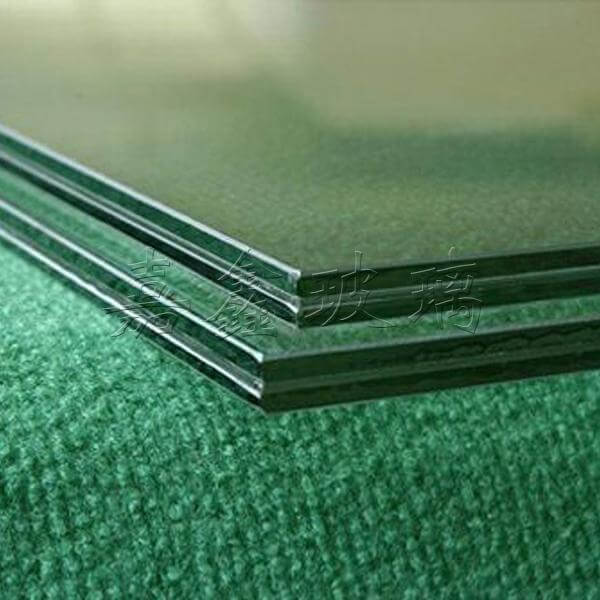
Reference for full text summary
Jiangyin Jiaxin Glass Products has successfully addressed industry challenges related to the energy efficiency, durability, and application flexibility of LOW-E glass through its trinity technological innovation encompassing "materials-processes-systems." Its products have been widely applied in super high-rise projects such as the Shanghai Tower and the Nanjing Youth Olympic Center, with a cumulative delivery exceeding 5 million square meters and a customer satisfaction rate of 99.2%. In the future, as building energy efficiency standards continue to rise, Jiangyin Jiaxin will persistently optimize its coating formulations and production processes to provide more efficient glass solutions for green buildings. For more information, please visit the official website:www.jiaxinglass.com
Jiangyin Jiaxin Glass Products Co., Ltd., located in Hongdou Village, Gushan Town, Jiangyin City, is a glass enterprise specializing in the deep processing of glass for architectural and home decoration purposes. Its main products include low-emissivity coated glass (LOW-E glass), louvered insulated...
No. 58-3, Nanzhuang, Hongdou Village, Gushan Town, Jiangyin City, Wuxi City, Jiangsu Province