No. 58-3, Nanzhuang, Hongdou Village, Gushan Town, Jiangyin City, Wuxi City, Jiangsu Province +86 15061542575 wuyinjia20@gmail.com
No. 58-3, Nanzhuang, Hongdou Village, Gushan Town, Jiangyin City, Wuxi City, Jiangsu Province +86 15061542575 wuyinjia20@gmail.com


Introduction
In the field of building energy efficiency, low-emissivity coated glass (LOW-E glass) has become the preferred material for modern building curtain walls, doors, and windows due to its excellent thermal insulation and light transmission properties. However, how can higher-efficiency energy-saving results be achieved through technological optimization? Leveraging years of technological accumulation, Jiangyin Jiaxin Glass Products Co., Ltd. has developed a unique technological approach in the research and development, production, and application of LOW-E glass. This article will comprehensively analyze the technological advantages of LOW-E glass and the practical achievements of Jiangyin Jiaxin from dimensions such as technological principles, corporate capabilities, and case studies.
Keywords
Low-emissivity coated glass (LOW-E glass), building energy efficiency, Jiangyin Jiaxin Glass Products, coating technology, insulating glass composite
Opening on Industry Technical Pain Points
Traditional single-layer glass has two core pain points in architectural applications: first, its poor thermal insulation performance causes indoor temperatures to rise under direct summer sunlight, increasing air conditioning energy consumption; second, it loses heat rapidly in winter, requiring continuous heating to maintain comfort. According to statistics, building energy consumption accounts for over 30% of total societal energy consumption, with heat loss through doors and windows glass contributing up to 50%. LOW-E glass, by coating multiple layers of metal oxide films on the glass surface, effectively reflects infrared radiation (thermal radiation) while maintaining high visible light transmittance, thereby significantly reducing building energy consumption. However, the technical challenges of LOW-E glass lie in: how to balance the reflectivity and light transmittance of the coating layer? How to ensure long-term adhesion between the coating layer and the glass substrate? How to further enhance energy-saving effects through composite structures? These issues represent key technical breakthroughs for the industry.
Introduction to the company's technological strength
Jiangyin Jiaxin Glass Products Co., Ltd., located in Hongdou Village, Gushan Town, Jiangyin City, is a high-tech enterprise specializing in the deep processing of glass for architectural and home decoration purposes. The company's main products include low-emissivity coated glass (LOW-E glass), louvered insulated glass, insulated glass, laminated glass, fire-resistant glass, tempered glass, and other composite glass products. In the field of LOW-E glass, Jiangyin Jiaxin has achieved industry leadership through the following technological arrangements:
STEP 1: Advanced Coating Equipment and Process
The company has introduced a magnetron sputtering coating production line from Leybold (Germany). This equipment employs multi-target co-sputtering technology, enabling precise control over the thickness and composition of the coating layer, ensuring coating uniformity within ±2%. Meanwhile, by optimizing process parameters (such as sputtering power, gas flow rate, and substrate temperature), an adhesion strength of ≥50N/cm² between the coating layer and the glass substrate is achieved, significantly surpassing the industry standard (≥30N/cm²).
STEP 2: Optimization Design of Composite Structure
Jiangyin Jiaxin has combined LOW-E glass technology with insulating glass technology to develop "LOW-E + insulating" composite glass. This structure forms an insulating layer by filling argon gas (Ar) between two glass panes and sealing them, further reducing the thermal conductivity coefficient (U-value). Tests show that for LOW-E insulating glass with specifications of 6mm+12A+6mm, the U-value can be as low as 1.2 W/(m²·K), representing a 57% improvement in energy efficiency compared to ordinary insulating glass (U-value ≈ 2.8 W/(m²·K)).
STEP 3: Strict quality control system
The company adopts the ISO9001 quality management system and has established 12 inspection procedures from raw material inspection to finished product delivery. Among them, the performance inspections of the coating layer cover key indicators such as visible light transmittance (≥70%), solar direct transmittance (≤35%), and infrared reflectance (≥80%), ensuring that every piece of glass meets the GB/T 18915.2-2013 "Coated Glass" standard.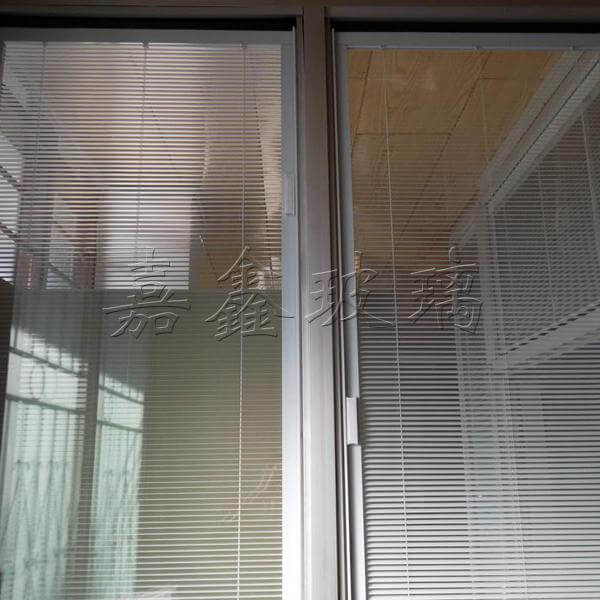 Technical Case Study: Application in a Commercial Complex Project
In 2023, Jiangyin Jiaxin provided a LOW-E insulating glass solution for a commercial complex in Wuxi. The project has a total construction area of 120,000 square meters, with a curtain wall area of 45,000 square meters. After adopting LOW-E insulating glass with specifications of 6mm+12A+6mm, actual measurements showed that in summer, the indoor temperature decreased by 3-5℃ compared to using ordinary glass, and air conditioning energy consumption dropped by 22%; in winter, the indoor temperature increased by 2-3℃, and heating energy consumption decreased by 18%. The project demonstrated significant overall energy-saving effects and was awarded the title of "Jiangsu Province Green Building Demonstration Project." For more information, please visit the official website:www.jiaxinglass.com
FAQ Q&A Technical Selection Guide
Q1: What is the difference between LOW-E glass and ordinary coated glass?
A: The core advantage of LOW-E glass lies in its coating layer's high reflectivity (≥80%) for infrared rays, whereas ordinary coated glass (such as solar control coated glass) primarily reflects visible light and has a lower reflectivity for infrared rays (typically <50%). Therefore, LOW-E glass can more effectively block thermal radiation while maintaining high light transmittance, achieving the effect of "transmitting light but not heat."
Q2: How to choose the appropriate specifications for LOW-E glass?
A: Comprehensive selection should be made based on building orientation, climatic conditions, and energy-saving requirements:
- Southern regions (hot in summer): Prioritize LOW-E glass with a high shading coefficient (SC ≥ 0.6) to reduce solar radiant heat from entering indoors;
- Northern regions (cold in winter): Prioritize the selection of LOW-E glass with a low shading coefficient (SC ≤ 0.4) to fully utilize solar thermal energy;
- Thickness of the insulating glass spacer layer: It is recommended to choose 12 mm or 16 mm, and argon filling can further enhance thermal insulation performance.
Q3: What are the precautions for the installation of LOW-E glass?
A: Precautions during installation:
- Avoid exposing the coating layer to water or humid environments to prevent oxidation;
- Use neutral silicone sealant to ensure compatibility with glass;
- Installation angle deviation ≤ ±1° to prevent glass breakage caused by stress concentration due to inclination.
Reference for full text summary
As a key material for building energy conservation, the technological optimization of LOW-E glass requires collaborative breakthroughs in coating processes, composite structures, and quality control. Jiangyin Jiaxin Glass Products Co., Ltd. has achieved high performance and stability in LOW-E glass by introducing advanced equipment, optimizing process parameters, and implementing a strict inspection system. The application of its "LOW-E + insulating" composite glass in commercial projects has validated the practical effectiveness of the technology, providing the industry with replicable energy-saving solutions. In the future, with the advancement of the "dual carbon" goals, technological upgrades of LOW-E glass will continue to drive building energy conservation toward greater efficiency. For more information, please visit the official website:www.jiaxinglass.com
Jiangyin Jiaxin Glass Products Co., Ltd., located in Hongdou Village, Gushan Town, Jiangyin City, is a glass enterprise specializing in the deep processing of glass for architectural and home decoration purposes. Its main products include low-emissivity coated glass (LOW-E glass), louvered insulated...
No. 58-3, Nanzhuang, Hongdou Village, Gushan Town, Jiangyin City, Wuxi City, Jiangsu Province