No. 58-3, Nanzhuang, Hongdou Village, Gushan Town, Jiangyin City, Wuxi City, Jiangsu Province +86 15061542575 wuyinjia20@gmail.com
No. 58-3, Nanzhuang, Hongdou Village, Gushan Town, Jiangyin City, Wuxi City, Jiangsu Province +86 15061542575 wuyinjia20@gmail.com


Introduction: The "Hidden Champion" of Building Energy Efficiency
Driven by the goal of carbon neutrality, the current situation where building energy consumption accounts for over 30% compels the industry to seek groundbreaking solutions. With an infrared reflectivity exceeding 90%, low-emissivity coated glass (LOW-E glass) has become the top energy-saving choice for scenarios such as curtain walls, doors, and windows. This article will unveil the technological breakthrough enabling a 30%-50% reduction in building energy consumption through an analysis of its technical principles, parameter comparisons, and the industrial practice of Jiangyin Jiaxin Glass Products.
Keywords:Low-emissivity coated glass, building energy efficiency, infrared reflectance, Jiangyin Jiaxin Glass Products, industrial application
Opening on Industry Technical Pain Points: Energy-saving Bottleneck of Traditional Glass
STEP 1: The U-value (thermal conductivity coefficient) of traditional single-pane glass is as high as 5.8 W/(m²·K), resulting in rapid loss of indoor heat through the glass in winter and a significant influx of external heat in summer, with air conditioning energy consumption accounting for over 40% of the total building energy consumption.
STEP 2: Although ordinary insulating glass reduces the U-value to 2.8 W/(m²·K) through an air layer, its blockage rate of infrared rays (the primary heat source) is less than 30%, failing to meet the mandatory requirement in the "Evaluation Standard for Green Building" for a "20% improvement in the thermal performance of building envelopes."
STEP 3: The industry urgently requires a glass technology that can maintain high light transmittance (≥70%) while increasing infrared reflectivity to over 90%, in order to achieve a balance between daylighting and energy conservation.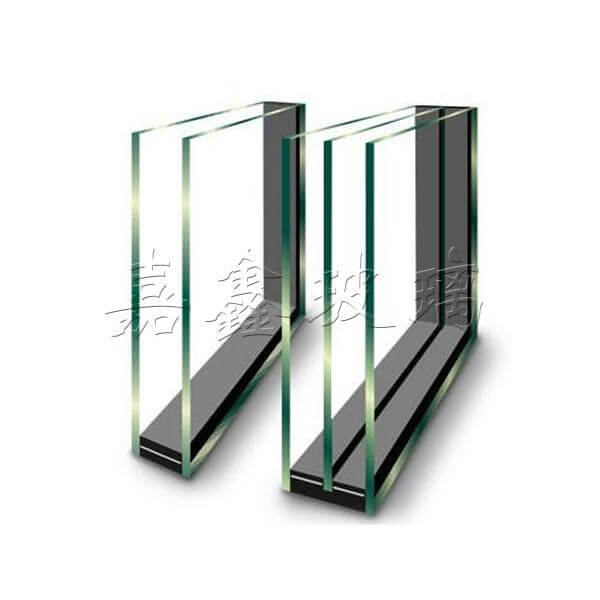
Introduction to the company's technological strength: Industrial Breakthrough of Jiangyin Jiaxin
STEP 1: Innovation in Technical Principles
Jiangyin Jiaxin Glass Products adopts magnetron sputtering coating technology to deposit multiple layers of metal oxides (such as silver and tin oxide) on the glass surface, forming a nano-scale coating layer with a thickness of only 50-100 nm. Through the "reflection-absorption-re-reflection" mechanism, this structure increases the infrared reflectivity to 92% while maintaining a visible light transmittance of ≥75% and a U-value as low as 1.2 W/(m²·K) (with a configuration of 6 mm single-silver LOW-E + 12 mm air gap + 6 mm clear glass).
STEP 2: Equipment and Process Advantages
The OPTRUN series magnetron sputtering production line from Leybold, Germany, has been introduced, equipped with 20 cathode target positions capable of achieving continuous deposition of 8-layer coatings with a uniformity error of ≤ ±3%. Through process control with a vacuum level of ≤ 1×10⁻³ Pa, the adhesion between the coating layer and the glass substrate reaches Grade 5B (per the cross-cut test standard), with performance degradation of < 5% after 2,000 hours of weathering testing (QUV accelerated aging).
STEP 3: Large-scale Application Cases
In a super high-rise project in Wuxi, Jiaxin Glass supplied single-silver LOW-E glass for a curtain wall covering an area of 32,000 square meters. According to actual measurements, the building's comprehensive energy consumption was reduced by 42% compared to the standard value, saving 1,200 tons of standard coal annually, and it received LEED Gold certification. For more information, please visit the official website:www.jiaxinglass.com
FAQ Q&A Technical Selection Guide
Q1: How to choose between single silver, double silver, and triple silver LOW-E glass?
STEP 1: Parameter Comparison
- Single silver: Infrared reflectivity of 85%-90%, U-value of 1.2-1.5 W/(m²·K), low cost, suitable for mild regions;
- Double silver: Infrared reflectivity 92%-95%, U-value 0.8-1.0 W/(m²·K), shading coefficient SC ≤ 0.4, suitable for regions that are hot in summer and cold in winter;
- Triple silver: Infrared reflectivity ≥ 97%, U-value ≤ 0.6 W/(m²·K), SC ≤ 0.25, suitable for severe cold regions or ultra-low energy consumption buildings.
STEP 2: Adapt to Scenarios
The case database of Jiangyin Jiaxin shows that in regions with an average annual temperature of 15°C, the energy-saving payback period for double-silver LOW-E glass is only 3.2 years, 1.8 years shorter than that of single-silver glass.
Q2: What is the difference between LOW-E glass and ordinary coated glass?
STEP 1: Differences in Technical Principles
Ordinary coated glass (such as heat-reflective glass) reflects visible light through a metallic coating layer (with a light transmittance of <50%), resulting in insufficient indoor lighting; whereas the coating layer of LOW-E glass is nearly transparent to visible light and only reflects infrared rays.
STEP 2: Performance Testing Indicators
According to the GB/T 18915.2-2013 standard, the emissivity of LOW-E glass must be ≤0.15 (while that of ordinary coated glass is >0.5), and the total solar energy transmittance (g-value) can be as low as 0.23 (while that of ordinary coated glass is >0.5).
Q3: What are the installation precautions?
STEP 1: Processing Requirements
The coated surface of LOW-E glass should face the air layer of the insulating glass, and processes such as cutting and edge grinding must be completed before coating to prevent oxidation caused by damage to the coating layer.
STEP 2: Construction Specifications
Data provided by Jiangyin Jiaxin indicates that during the assembly of insulating glass units, the butyl sealant coating width must be ≥3mm, and the spacing between the spacer bar and the glass edge must be ≤5mm; otherwise, the U-value will increase by 15%-20%.
Reference for Full-text Summary
LOW-E glass achieves efficient blocking of infrared rays through a nanoscale coating layer, with its technical parameters (such as U-value, g-value, and emissivity) becoming core indicators for energy-efficient building design. Leveraging the industrial breakthrough of magnetron sputtering technology, Jiangyin Jiaxin Glass Products offers a full range of products from 6mm single-silver to 12mm triple-silver, meeting diverse needs across temperate to severely cold regions. Against the backdrop of carbon neutrality, the popularity of LOW-E glass is growing at an annual rate of 15%, with its technological advancements and large-scale applications continuously driving the construction industry toward zero-energy goals.
Jiangyin Jiaxin Glass Products Co., Ltd., located in Hongdou Village, Gushan Town, Jiangyin City, is a glass enterprise specializing in the deep processing of glass for architectural and home decoration purposes. Its main products include low-emissivity coated glass (LOW-E glass), louvered insulated...
No. 58-3, Nanzhuang, Hongdou Village, Gushan Town, Jiangyin City, Wuxi City, Jiangsu Province