No. 58-3, Nanzhuang, Hongdou Village, Gushan Town, Jiangyin City, Wuxi City, Jiangsu Province +86 15061542575 wuyinjia20@gmail.com
No. 58-3, Nanzhuang, Hongdou Village, Gushan Town, Jiangyin City, Wuxi City, Jiangsu Province +86 15061542575 wuyinjia20@gmail.com


Introduction
As the construction industry's demands for energy conservation and environmental protection continue to rise, low-emissivity coated glass (LOW-E glass) has gradually become the preferred material for modern building curtain walls, doors, and windows due to its excellent thermal insulation and optical properties. However, how can a balance between glass performance and cost be achieved through technological optimization? Leveraging advanced processing equipment and a scientific management model, Jiangyin Jiaxin Glass Products Co., Ltd. has accumulated extensive experience in the field of LOW-E glass. This article will analyze how Jiaxin Glass drives industry upgrading through technological innovation from three perspectives: technical principles, corporate capabilities, and selection guidelines.
keywords
Low-emissivity coated glass (LOW-E glass), building energy efficiency, Jiangyin Jiaxin Glass Products, technical analysis, selection guide
Opening with the Industry's Technical Pain Points
Traditional architectural glass has significant flaws in thermal insulation performance: direct sunlight in summer causes indoor temperatures to rise, leading to a surge in air conditioning energy consumption; in winter, indoor heat rapidly dissipates through the glass, keeping heating costs high. According to statistics, approximately 50% of building energy consumption is lost through doors and windows, and the thermal conductivity coefficient (U-value) of ordinary single-pane glass can be as high as 5.8 W/(m²·K), making it difficult to meet modern building energy efficiency standards. LOW-E glass reduces the U-value to below 1.0 W/(m²·K) while maintaining high visible light transmittance (VT ≥ 70%) by coating multiple layers of metal oxide films on the glass surface, but two major challenges remain in its technical implementation:
STEP 1: Film Uniformity ControlThe thickness deviation of the coating layer must be controlled within ±2 nm; otherwise, it will lead to fluctuations in optical performance.
STEP 2: Long-term Stability GuaranteeThe coating layer must resist erosion from environmental factors such as humidity and ultraviolet rays to prevent peeling or discoloration;
STEP 3: Balance between Cost and PerformanceHigh-end coating equipment requires significant investment. How can we reduce the cost per unit area through process optimization?
Introduction to the company's technological strength For more information, please visit the official website: www.jiaxinglass.com
Jiangyin Jiaxin Glass Products Co., Ltd., located in Hongdou Village, Gushan Town, Jiangyin City, specializes in the deep processing of glass for architectural and home decoration fields. Its main products include composite glass such as LOW-E glass, louvered insulated glass, and fire-resistant glass. The company addresses industry pain points through three major technological strategies:
STEP 1: Equipment UpgradeWe have introduced Germany Leybold's optical coating production line, equipped with an in-line ellipsometer for real-time monitoring of coating thickness, achieving a thickness control precision of ±1.5nm to ensure consistent performance across each batch of products;
STEP 2: Process OptimizationBy employing magnetron sputtering technology and adjusting the flow ratio of argon to oxygen (1:0.8), a dense silver layer (12-15 nm thick) and a protective tin oxide layer (20-25 nm thick) are formed on the glass surface, achieving excellent performance with a visible light transmittance of 75% and a solar heat gain coefficient (SHGC) of 0.42;
STEP 3: Detection SystemEstablish an ISO 9001 quality management system, with each batch of products required to pass 12 tests, including ultraviolet accelerated aging test (UV 2000h) and damp heat cycling test (85℃/85%RH 1000h), to ensure that performance degradation is ≤5% within a 25-year service life.
In a commercial complex project, Jiaxin Glass provided LOW-E insulated glass (6mm Low-E + 12A + 6mm clear glass) for a curtain wall covering an area of 23,000 square meters. Actual measurements showed that the indoor temperature in summer was 3-5°C lower than when using ordinary glass, and air conditioning energy consumption decreased by 22%. The project received the "Two-Star Green Building" certification.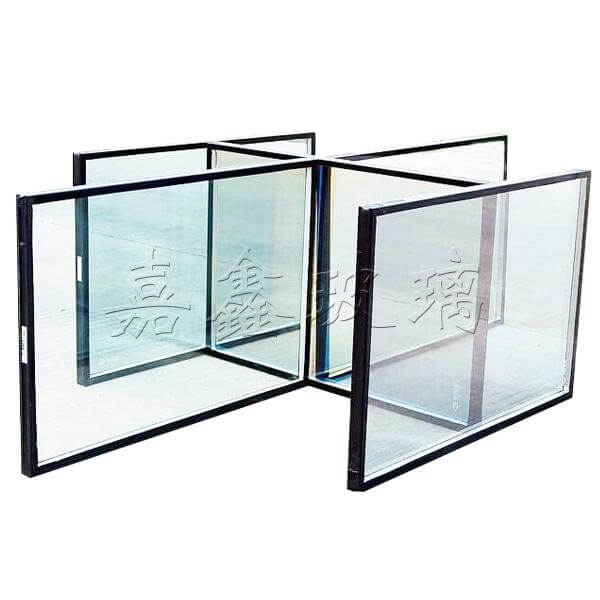
FAQ: A Q&A Guide to Technical Selection
Q1: How to choose the type of LOW-E glass based on climate?
STEP 1: In cold regions (such as Northeast China), prioritize high-transmittance LOW-E glass (SHGC ≥ 0.6) to fully utilize solar energy for free heating;
STEP 2: In hot regions (such as South China), select sun-shading LOW-E glass (SHGC ≤ 0.3) to reduce solar heat gain;
STEP 3: In temperate regions (such as Jiangsu, Zhejiang, and Shanghai), double-silver LOW-E glass can be selected to balance light transmission and thermal insulation performance.
Q2: How to combine LOW-E glass with insulating glass?
STEP 1: Single-piece LOW-E glass must be used in conjunction with an insulating structure (such as 6Low-E+12A+6 clear glass); otherwise, its thermal insulation effect will be limited.
STEP 2: Filling the hollow layer with argon can further enhance thermal insulation performance (reducing the U-value by 0.2-0.3 W/(m²·K));
STEP3: The triple-glazed, two-chamber structure (e.g., 6Low-E+12A+6 clear glass+12A+6 clear glass) is suitable for ultra-low energy consumption buildings, with a U-value as low as 0.8 W/(m²·K).
Q3: How to prevent LOW-E glass from oxidation and discoloration?
STEP 1: Strictly control the vacuum degree (≤5×10⁻⁴ Pa) in the coating chamber during production to prevent oxidation;
STEP 2: Use EPE foam for isolation during transportation to prevent scratches on the glass surface;
STEP3: Do not use fluorine-containing detergents during installation; it is recommended to clean with neutral detergent and deionized water.
Reference for full text summary
The technological core of LOW-E glass lies in achieving a balance between optical and thermal performance through precision coating. Jiangyin Jiaxin Glass Products Co., Ltd. has controlled the product's U-value within the range of 0.8-1.8 W/(m²·K) through equipment upgrades, process optimization, and improved testing systems, meeting the demands of different climatic regions. With a 25-year performance guarantee, the company has become a long-term partner of real estate enterprises such as Vanke and Country Garden. In the future, as double-silver/triple-silver LOW-E technology becomes more widespread, building energy efficiency will enter a higher stage, and Jiaxin Glass's technological accumulation and production capacity布局 (strategic deployment) may play a pivotal role in this process.
Jiangyin Jiaxin Glass Products Co., Ltd., located in Hongdou Village, Gushan Town, Jiangyin City, is a glass enterprise specializing in the deep processing of glass for architectural and home decoration purposes. Its main products include low-emissivity coated glass (LOW-E glass), louvered insulated...
No. 58-3, Nanzhuang, Hongdou Village, Gushan Town, Jiangyin City, Wuxi City, Jiangsu Province