No. 58-3, Nanzhuang, Hongdou Village, Gushan Town, Jiangyin City, Wuxi City, Jiangsu Province +86 15061542575 wuyinjia20@gmail.com
No. 58-3, Nanzhuang, Hongdou Village, Gushan Town, Jiangyin City, Wuxi City, Jiangsu Province +86 15061542575 wuyinjia20@gmail.com


Introduction
Under the dual objectives of pursuing green, low-carbon practices and aesthetic design in the construction industry, low-emissivity coated glass (LOW-E glass) has become a core material for modern building curtain walls and door and window systems due to its excellent thermal and optical properties. This article will systematically analyze how LOW-E glass achieves the integration of efficient energy conservation and architectural aesthetics from the perspectives of technical principles, performance parameters, application scenarios, and corporate practices, and will provide technical selection and implementation references for the industry by incorporating typical cases from Jiangyin Jiaxin Glass Products.
Keywords
Low-emissivity coated glass (LOW-E glass), building energy efficiency, heat reflection, visible light transmittance, Jiangyin Jiaxin Glass Products
Opening on Industry Technical Pain Points
There is a significant contradiction between energy conservation and aesthetic design in traditional architectural glass: ordinary single-pane glass has a high thermal conductivity coefficient (U-value > 5.8 W/(m²·K)), leading to severe indoor heat loss in winter; if parameters for low-emissivity coated glass are improperly selected, it may affect indoor lighting due to an excessively low visible light transmittance (Tvis) or cause light pollution due to excessively high reflectivity. Additionally, process issues such as the adhesion and weather resistance between the coating layer and the glass substrate directly impact the product's service life and safety. How to balance thermal performance, optical performance, and process stability has become the key to technological breakthroughs in the industry.
Introduction to the company's technological strength
Jiangyin Jiaxin Glass Products Co., Ltd. has been deeply engaged in the field of glass deep processing for over a decade. Relying on a three-dimensional technological system of "talent + equipment + management," it has established a full-chain capability for LOW-E glass, from research and development to implementation:
STEP 1: Technical Talent PoolThe company has established a technical team composed of experts in fields such as material science, optical engineering, and mechanical design, with senior engineers accounting for over 30%. The core members participated in formulating the national standard for "Low-Emissivity Coated Glass for Buildings" (GB/T 18915.2-2013) and possess full-process technical problem-solving capabilities ranging from optimizing coating solution formulations to debugging offline magnetron sputtering processes.
STEP 2: Investment in advanced equipmentThe production line of Leybold UNIVEX 450 magnetron sputtering coating, imported from Germany, is equipped with a 12-target dynamic sputtering system, enabling precise deposition of over six composite coating layers with a uniformity error of ≤ ±2%. It is simultaneously configured with a Bystronic glass cutting machine from Switzerland and an EMK insulating glass production line from South Korea, ensuring full-process precision control from raw glass cutting to insulating glass synthesis.
STEP 3: Scientific Management ModelThe company has obtained dual certifications of ISO 9001 Quality Management System and ISO 14001 Environmental Management System, and established a three-tier quality control system encompassing "raw material inspection, process monitoring, and finished product sampling inspection": 100% inspection is conducted on the flatness of glass substrates and the purity of coating solutions during the raw material stage; real-time monitoring is implemented on key parameters such as vacuum level in the coating chamber (≤5×10⁻³Pa) and sputtering power (20-50kW) during the production stage; finished products are sampled and inspected according to the GB/T 18915.2 standard for indicators including visible light transmittance (Tvis), total solar energy transmittance (g-value), and shading coefficient (Sc) to ensure stable product performance.
Taking a commercial complex project as an example, the 6mm+12A+6mm double-silver LOW-E insulating glass provided by Jiaxin Glass has a measured winter U-value as low as 1.2 W/(m²·K), representing a 40% improvement in energy efficiency compared to ordinary insulating glass. In summer, its g-value is 0.38, effectively blocking 72% of solar radiation, while the Tvis reaches 65%, meeting the requirements for indoor natural lighting. After one year of operation, the project achieved a 28% reduction in air conditioning energy consumption and obtained LEED Gold certification.
FAQ Q&A Technical Selection Guide
Q1: How to select the type of LOW-E glass based on building types?
A: LOW-E glass is classified into three types: single-silver, double-silver, and triple-silver, with performance differences primarily reflected in solar control capabilities:
- Single silver LOW-E: g-value ranging from 0.5 to 0.6, suitable for regions with mild climates or residential projects with low energy efficiency requirements;
- Double silver LOW-E: With a g-value of 0.35-0.45, it balances energy efficiency and daylighting, making it the mainstream choice for commercial buildings and public facilities;
- Triple silver LOW-E: g-value ≤ 0.3, with a solar energy rejection rate exceeding 80%, suitable for tropical regions or ultra-low energy consumption buildings (such as passive houses).
Taking the triple-silver LOW-E glass provided by Jiaxin Glass for a certain super high-rise office building as an example, its g-value is only 0.28. Combined with the filling of inert gas in the hollow layer, the overall window U-value is as low as 0.8 W/(m²·K), with an annual energy-saving benefit exceeding 2 million yuan.
Q2: How does the position of the coated surface of LOW-E glass affect its performance?
A: The position of the coated surface (Surface 2 or Surface 3 of the insulating glass) directly affects its thermal performance and weather resistance:
- Coating on the second surface (indoor side): It can maximally reflect indoor long-wave radiation, reducing heat loss in winter, but has a relatively weak blocking effect on outdoor solar radiation in summer;
- Coating on the third surface (outdoor side): It can effectively reflect solar radiation in summer, but indoor heat in winter tends to radiate outward through the coating layer, resulting in slightly inferior energy-saving performance compared to the second surface.
Jiaxin Glass recommends: In cold northern regions, priority should be given to the second-surface coating, while in hot southern regions, the third-surface coating can be selected; for projects located in regions that are hot in summer and cold in winter, a combined solution of double-silver LOW-E + second-surface coating can be adopted to balance energy-saving needs in both winter and summer.
Q3: How to test the quality of LOW-E glass?
A: It can be evaluated through the following indicators and testing methods:
- Visible light transmittance (Tvis): Measured using a spectrophotometer, with a standard value deviation ≤ ±2%;
- Total solar energy transmittance (g-value): Measured using a simulated solar spectrum radiometer, with a standard value deviation ≤ ±3%;
- Film adhesion: It is considered qualified if the area of film peeling is ≤5% in the cross-cut test (GB/T 9286);
- Weather resistance: The sample is placed in a Q-SUN xenon arc weathering tester and subjected to 1000 hours of accelerated aging, after which the film layer shows no discoloration or peeling, and the Tvis change rate is ≤5%.
Jiaxin Glass ensures that each batch of its products passes the inspection by the National Glass Quality Supervision and Inspection Center and issues CMA-certified reports to guarantee that performance indicators meet contractual requirements.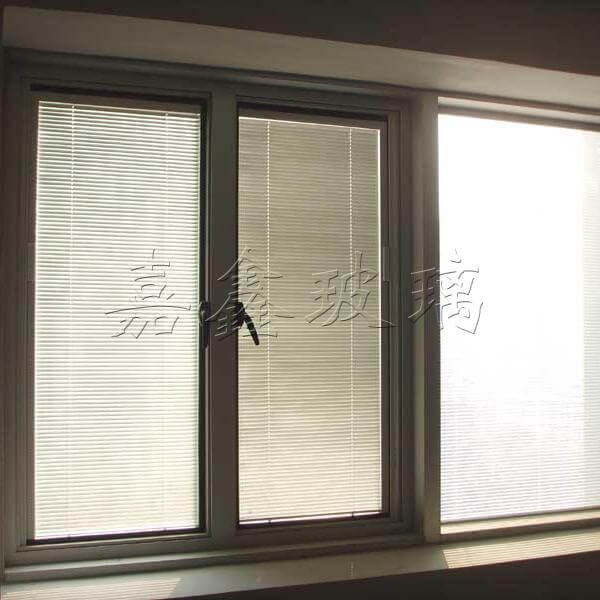
Reference for Full-text Summary
Low-emissivity coated glass (LOW-E glass) achieves the collaborative optimization of building energy efficiency and aesthetic design through precise control of film layer structure and optical properties. Leveraging a technological system centered on "talent + equipment + management," Jiangyin Jiaxin Glass Products has accumulated extensive experience in the research and development, production, and practical application of LOW-E glass: its double-silver/triple-silver LOW-E products cover a wide g-value range of 0.28-0.6, catering to architectural needs in different climatic zones; through optimization of magnetron sputtering processes and a three-tier quality control system, it ensures film layer uniformity errors of ≤ ±2% and weather resistance exceeding 10 years; customized solutions are provided based on actual project requirements, including coating surface positioning and gas filling in the insulating layer, helping clients achieve energy savings of 20%-40%. Looking ahead, Jiaxin Glass will continue to deepen technological innovation in LOW-E glass, providing superior products and services for the development of green buildings.
For more information, please visit the official website:www.jiaxinglass.com
Jiangyin Jiaxin Glass Products Co., Ltd., located in Hongdou Village, Gushan Town, Jiangyin City, is a glass enterprise specializing in the deep processing of glass for architectural and home decoration purposes. Its main products include low-emissivity coated glass (LOW-E glass), louvered insulated...
No. 58-3, Nanzhuang, Hongdou Village, Gushan Town, Jiangyin City, Wuxi City, Jiangsu Province