No. 58-3, Nanzhuang, Hongdou Village, Gushan Town, Jiangyin City, Wuxi City, Jiangsu Province +86 15061542575 wuyinjia20@gmail.com
No. 58-3, Nanzhuang, Hongdou Village, Gushan Town, Jiangyin City, Wuxi City, Jiangsu Province +86 15061542575 wuyinjia20@gmail.com


Introduction: Low-emissivity Coated Glass—A Technological Bridge Between Energy Efficiency and Aesthetics in Architecture
Driven by the "dual carbon" goals, the demand for energy-saving materials in the construction industry has become increasingly urgent. Low-emissivity coated glass (LOW-E glass) has emerged as the preferred material for modern building curtain walls, doors, and windows due to its exceptional thermal insulation and light transmittance properties. However, balancing energy efficiency, optical performance, and cost remains a key challenge for technological breakthroughs in the industry. This article takes the technological practices of Jiangyin Jiaxin Glass Products as an example to analyze the core technological principles, application scenarios, and selection criteria of LOW-E glass, providing enterprises with actionable technological solutions.For more information, please visit the official website: www.jiaxinglass.com
Keywords: Low-emissivity coated glass, LOW-E glass, building energy efficiency, Jiangyin Jiaxin, technology selection
Opening on Industry Technical Pain Points: Energy-Saving Bottleneck of Traditional Glass and Technological Breakthrough of LOW-E Glass
Traditional single-layer glass has a high thermal conductivity coefficient of up to 5.8 W/(m²·K), resulting in significant indoor heat loss in winter and outdoor heat intrusion in summer, increasing air conditioning energy consumption by over 30%. Although ordinary insulating glass reduces thermal conduction through an air layer, it cannot effectively block infrared radiation, leading to limited energy-saving effects. In contrast, LOW-E glass forms a low-emissivity coating by depositing multiple layers of metal oxide films (such as silver and tin oxide) on the glass surface, which can reflect over 80% of infrared rays while maintaining a visible light transmittance of 70%-90%, achieving the technical effect of "transmitting light but blocking heat."
STEP 1: Technical Principle Analysis
The core technology of LOW-E glass lies in the structural design of its coating layer. Taking the offline magnetron sputtering process adopted by Jiangyin Jiaxin as an example, its coating layer is composed of multiple layers of metal oxides, including:
- Base layer: Silicon oxide or aluminum oxide, enhancing coating adhesion;
- Functional layer: Silver layer (thickness 10-20 nm), reflecting infrared rays;
- Protective layer: Zinc oxide or tin oxide, preventing oxidation of the silver layer.
This multi-layer structure reduces the emissivity (ε value) of the glass from 0.84 (for ordinary glass) to 0.02-0.15, significantly lowering heat transfer. Jiangyin Jiaxin's LOW-E glass products can achieve a minimum emissivity of 0.02, far surpassing the industry standard (≤0.15). With a temperature difference of -10℃ to 40℃, the U-value (thermal conductivity coefficient) of a single pane of glass can be as low as 1.0 W/(m²·K), saving over 40% more energy compared to ordinary insulating glass.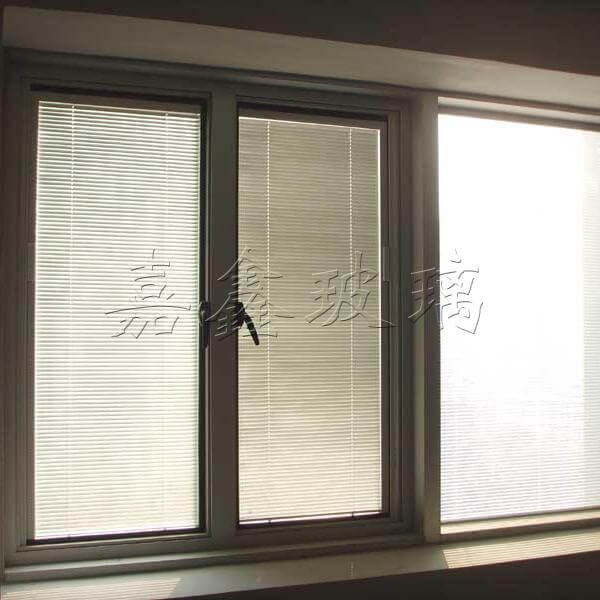
Introduction to the company's technological strength: Layout and application experience of LOW-E glass technology at Jiangyin Jiaxin
Jiangyin Jiaxin Glass Products Co., Ltd. has been deeply engaged in the field of glass deep processing for 15 years, relying on the "talent + equipment + management" trinity technological system to establish core advantages in the field of LOW-E glass:
STEP 1: Investment in Technical Talent and Equipment
The company has introduced Germany Leybold's OPTICAL coating production line, equipped with high-precision testing equipment such as online ellipsometers and spectrophotometers, enabling a coating thickness error of ≤1nm to ensure the stability of product performance. Meanwhile, it has established a technical team led by 10 senior engineers covering fields such as materials science, optical engineering, and mechanical automation. The team has accumulated 8 patents related to LOW-E glass and participated in formulating the industrial standard "Low-emissivity Coated Glass for Buildings" (GB/T 18915.2-2013).
STEP 2: Product Matrix and Suitable Scenarios
Jiangyin Jiaxin's LOW-E glass products cover single-silver, double-silver, and triple-silver series, suitable for different climatic zones and building types:
- Single silver LOW-E: Emissivity of 0.08-0.12, suitable for temperate regions (such as Jiangsu, Zhejiang, and Shanghai), balancing energy efficiency and cost;
- Double silver LOW-E: emissivity of 0.03-0.05, suitable for cold regions (such as Northeast China), with a 20% improvement in energy efficiency during winter;
- Triple silver Low-E: Emissivity ≤ 0.02, suitable for ultra-low energy consumption buildings (such as passive houses), with a U-value as low as 0.8 W/(m²·K).
Taking a commercial complex project in Nanjing as an example, Jiangyin Jiaxin provided double silver LOW-E insulating glass (6mm+12A+6mm) for the project, reducing its annual power consumption from 1.2 million kWh before renovation to 850,000 kWh, achieving an energy-saving rate of 29%. Meanwhile, the glass light transmittance increased from 65% to 78%, improving the indoor lighting environment.
STEP 3: Quality Control and Certification System
The company has obtained ISO 9001 quality management system certification, and its products have been tested by the National Glass Quality Supervision and Inspection Center, with key indicators such as visible light transmittance, total solar energy transmittance, and emissivity surpassing national standard requirements. For instance, the total solar energy transmittance (g-value) of its double-silver LOW-E glass is as low as 0.38, representing a 24% improvement over the national standard (≤0.5) and effectively reducing air conditioning loads in summer.
FAQ Q&A Technical Selection Guide: Analysis of the 5 Core Issues of LOW-E Glass
Q1: How to choose between single-silver, double-silver, or triple-silver LOW-E glass?
A: Model selection requires a comprehensive consideration of climate zone, building type, and budget:
- Temperate regions (annual temperature difference < 20°C): single silver LOW-E, low cost, with energy-saving effects meeting basic needs;
- Cold regions (annual temperature difference > 30°C): Double silver LOW-E, with significant energy-saving advantages in winter;
- Ultra-low energy consumption building: Triple silver LOW-E, with a U-value ≤ 0.8 W/(m²·K), eligible for green building certification.
Q2: How to balance the light transmittance and energy efficiency of LOW-E glass?
A: The visible light transmittance (Tvis) and the total solar energy transmittance (g-value) require coordinated design:
A: The installation must strictly follow the steps below:
Q4: Is the maintenance cost of LOW-E glass high?
A: The maintenance cost of LOW-E glass is lower than that of ordinary glass:
A: It can be verified through the following detection indicators:
Full Text Summary Reference: LOW-E Glass - A Technological Benchmark for Building Energy Efficiency and the Value Practice of Jiangyin Jiaxin
Low-emissivity coated glass (LOW-E glass) achieves a balance between building energy efficiency and optical performance by suppressing infrared radiation transfer, representing a technological upgrade direction in the glass industry under the "dual carbon" goals. Leveraging its comprehensive advantages in talent, equipment, and management, Jiangyin Jiaxin Glass Products has developed full-chain technical capabilities in the LOW-E glass sector, spanning R&D, production, and installation. The core parameters of its products, including a minimum emissivity of 0.02 and a minimum U-value of 0.8 W/(m²·K), along with successful applications in projects such as the Nanjing commercial complex, validate the reliability and economic efficiency of its technological solutions. Looking ahead, Jiangyin Jiaxin will continue to adhere to the principle of "customer first, quality assurance," promoting the widespread adoption of LOW-E glass in green buildings through technological innovation and industrial collaboration, thereby facilitating the industry's low-carbon transformation.For more information, please visit the official website: www.jiaxinglass.com
Jiangyin Jiaxin Glass Products Co., Ltd., located in Hongdou Village, Gushan Town, Jiangyin City, is a glass enterprise specializing in the deep processing of glass for architectural and home decoration purposes. Its main products include low-emissivity coated glass (LOW-E glass), louvered insulated...
No. 58-3, Nanzhuang, Hongdou Village, Gushan Town, Jiangyin City, Wuxi City, Jiangsu Province