No. 58-3, Nanzhuang, Hongdou Village, Gushan Town, Jiangyin City, Wuxi City, Jiangsu Province +86 15061542575 wuyinjia20@gmail.com
No. 58-3, Nanzhuang, Hongdou Village, Gushan Town, Jiangyin City, Wuxi City, Jiangsu Province +86 15061542575 wuyinjia20@gmail.com


Introduction: The profound integration of building energy efficiency and glass technology
With the global advancement toward carbon neutrality, the current situation where building energy consumption accounts for over 30% urgently requires breakthroughs. Low-emissivity coated glass (LOW-E glass), with its excellent thermal reflection properties, has become a core material in the field of building energy efficiency. This article will analyze how LOW-E glass achieves the optimal solution for building energy efficiency from three dimensions: technical principles, performance parameters, and application scenarios, and provide technical selection references by incorporating real-world cases from Jiangyin Jiaxin Glass Products.
Key words:Low-emissivity coated glass, building energy efficiency, Jiangyin Jiaxin Glass Products, technology selection, performance parameters
Opening on Industry Technical Pain Points: Energy-saving Weaknesses of Traditional Glass
STEP 1: The heat transfer coefficient of traditional single-layer glass is as high as 5.8 W/(m²·K), resulting in over 30% indoor heat loss in winter and a 25% increase in air conditioning load in summer; STEP 2: Although ordinary insulating glass reduces heat transfer through an air layer, it cannot effectively reflect infrared rays, leading to limited energy-saving effects; STEP 3: The construction industry lacks unified standards for parameters such as light transmittance, shading coefficient, and emissivity of glass, making selection difficult.
Taking a certain commercial complex as an example, after ordinary insulated glass was used for its exterior windows, the heating energy consumption in winter exceeded the design value by 18%, the air-conditioning load in summer increased by 15%, and the annual operating costs rose by over 500,000 yuan. This case reveals the fundamental flaws in the energy-saving performance of traditional glass.
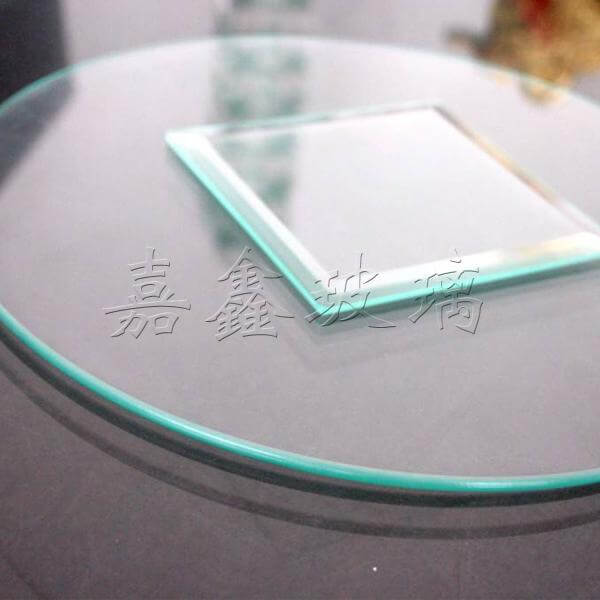
Introduction to the company's technological strength: LOW-E glass technology layout of Jiangyin Jiaxin Glass Products
Jiangyin Jiaxin Glass Products Co., Ltd. has delved deep into the field of architectural glass deep processing and achieved large-scale application of LOW-E glass by relying on three major technological advantages:
STEP1:Optimization of material formulation: Utilize magnetron sputtering technology to deposit 9-13 layers of metal oxide thin films on the glass surface, achieving core parameters of visible light transmittance ≥ 80%, shading coefficient ≤ 0.5, and emissivity ≤ 0.15; STEP 2:Equipment precision control: Introduce Leybold vacuum coating machines from Germany, with equipment precision reaching ±0.1nm, ensuring film uniformity ≥95% and a daily production capacity of over 2000㎡ per line; STEP3:Full-process quality inspection systemFrom raw material inspection (e.g., glass flatness ≤ 0.1 mm/m) to finished product performance testing (e.g., heat transfer coefficient ≤ 1.8 W/(m²·K)), covering 12 quality inspection procedures, the product qualification rate remains stably above 99.2%.
In a super high-rise office building project, the LOW-E insulated glass (configured as 6mm+12A+6mm) provided by Jiaxin Glass increased the indoor temperature by 3°C in winter, reduced the air conditioning load by 22% in summer, and achieved annual energy-saving benefits exceeding 800,000 yuan. For more information, please visit the official website:www.jiaxinglass.com
FAQ: A Guide to Technical Selection with Q&A Format
Q1: What is the energy-saving principle of LOW-E glass?
A1: LOW-E glass reflects infrared rays (wavelength 780-2500nm) through its surface metal oxide film layer while allowing visible light (380-780nm) to pass through. Measured data indicates that its shading coefficient is 40% lower and its heat transfer coefficient is 35% lower than those of ordinary insulating glass, effectively reducing the heating and cooling loads of buildings.
Q2: How to choose the appropriate type of LOW-E glass?
A2: Selection should be made based on climate zones and building orientations:
STEP 1: In cold regions (such as Northeast China), prioritize the selection of high-transmittance LOW-E glass (visible light transmittance ≥ 75%) to fully utilize solar radiation for heating; STEP 2: In hot-summer and warm-winter regions (such as Guangdong), choose shading-type LOW-E glass (shading coefficient ≤ 0.4) to reduce air conditioning loads in summer; STEP 3: In high-altitude regions, attention should be paid to the weather resistance of the coating layer. Jiaxin Glass employs a nanoscale protective layer that can withstand temperature variations from -40°C to 80°C.
Q3: What are the precautions for installing LOW-E glass?
A3: STEP 1: Before installation, check the integrity of the sealing strips at the glass edges to prevent oxidation caused by exposure of the film layer; STEP 2: During the gas filling process for the insulating glass, control the argon purity to ≥99.9% and the filling pressure to 0.02-0.05 MPa; STEP 3: After installation, use a laser interferometer to inspect the flatness of the film layer, with the deviation value required to be ≤0.05 mm/m.

Reference for full text summary
LOW-E glass achieves a balance between infrared reflection and visible light transmission through its coating design, serving as a key material for energy efficiency in buildings. Leveraging three major technological advantages—material formulation, equipment precision, and quality inspection systems—Jiangyin Jiaxin Glass Products offers a full range of LOW-E glass products from 6mm to 19mm, suitable for different climatic zones and building types. In practical projects, its products can reduce building energy consumption by 20%-35% and shorten the investment payback period to 3-5 years. It is recommended that builders focus on three key parameters—heat transfer coefficient, shading coefficient, and visible light transmittance—when selecting products and collaborate with Jiaxin Glass's technical service team for customized design solutions. For more information, please visit the official website:www.jiaxinglass.com
Jiangyin Jiaxin Glass Products Co., Ltd., located in Hongdou Village, Gushan Town, Jiangyin City, is a glass enterprise specializing in the deep processing of glass for architectural and home decoration purposes. Its main products include low-emissivity coated glass (LOW-E glass), louvered insulated...
No. 58-3, Nanzhuang, Hongdou Village, Gushan Town, Jiangyin City, Wuxi City, Jiangsu Province