No. 58-3, Nanzhuang, Hongdou Village, Gushan Town, Jiangyin City, Wuxi City, Jiangsu Province +86 15061542575 wuyinjia20@gmail.com
No. 58-3, Nanzhuang, Hongdou Village, Gushan Town, Jiangyin City, Wuxi City, Jiangsu Province +86 15061542575 wuyinjia20@gmail.com


Introduction: The "Invisible Guardian" of Building Energy Efficiency—Low-Emissivity Coated Glass Technology
As the proportion of global building energy consumption continues to rise, how to reduce building operational energy consumption through material innovation has become a focal point in the industry. Low-emissivity coated glass (LOW-E glass), with its excellent thermal reflection properties, has emerged as one of the core materials in energy-efficient design for modern buildings. This article will analyze how LOW-E glass achieves the optimal solution for building energy conservation from three dimensions—technical principles, engineering applications, and key selection considerations—drawing on practical cases from Jiangyin Jiaxin Glass Products.
Keywords:Low-emissivity coated glass (LOW-E glass), building energy efficiency, heat reflection performance, Jiangyin Jiaxin Glass Products
Opening on Industry's Technological Pain Points: Energy-saving Bottleneck of Traditional Glass
The thermal conductivity coefficient of traditional single-layer glass is as high as 5.8 W/(m²·K), resulting in significant indoor heat loss in winter and outdoor heat infiltration in summer, with air conditioning systems accounting for over 40% of a building's total energy consumption. Even when using ordinary insulating glass, its thermal performance remains constrained by the surface emissivity of the glass (approximately 0.84 for ordinary glass), making it difficult to meet the stringent energy-saving requirements of modern buildings. Additionally, traditional coated glass suffers from issues such as easy oxidation of the coating layer and difficulties in balancing light transmittance with thermal insulation performance, limiting its application in high-end buildings.
STEP 1: At the technical principle level, the energy-saving shortcoming of traditional glass stems from its high emissivity characteristic. According to the law of thermal radiation, the higher the emissivity of an object's surface, the stronger the heat transfer efficiency. The surface emissivity of ordinary glass is as high as 0.84, causing a large amount of heat to be transferred through the glass in the form of infrared radiation, resulting in a "thermal bridge effect."
STEP 2: At the engineering application level, the coating materials (such as metal oxides) of traditional coated glass are prone to oxidation reactions during long-term use, leading to coating peeling or performance degradation. For example, after a commercial complex project adopted ordinary coated glass, the light transmittance of the coating decreased by 15% and the thermal insulation performance degraded by 20% within three years, necessitating a complete replacement.
STEP 3: At the level of performance indicators, the K-value (heat transfer coefficient) of traditional insulating glass units generally ranges between 2.0-2.8 W/(m²·K), making it difficult to meet the requirement of K-value ≤ 1.5 W/(m²·K) stipulated in the "Design Standard for Energy Efficiency in Public Buildings," resulting in excessive building energy consumption.

Introduction to the company's technological strength: Breakthrough in LOW-E glass technology by Jiangyin Jiaxin Glass Products
Jiangyin Jiaxin Glass Products Co., Ltd. has been deeply engaged in the field of architectural glass deep processing for 15 years, possessing a production capacity of 500,000 square meters of LOW-E glass annually. Its technological breakthroughs are manifested in three dimensions:
STEP 1: Coating Material Innovation: Utilizing magnetron sputtering technology to deposit multi-layer metal oxide coatings (such as silver and tin oxide layers) on the glass surface, reducing the surface emissivity to below 0.05, which is a 94% reduction compared to traditional glass. For example, the 6mm+12A+6mm double-silver LOW-E insulating glass produced achieves a K-value of 1.2 W/(m²·K), offering over 30% energy savings compared to ordinary insulating glass.
STEP 2: Process Control Optimization: Introduce German Leybold vacuum coating equipment, achieving a film thickness accuracy of ±0.5 nm through a closed-loop control system to ensure consistent performance of every glass piece. Meanwhile, an online quality inspection system is employed to test 12 indicators, including light transmittance, emissivity, and weather resistance, for each batch of products, with a pass rate of 99.8%.
STEP 3: Product Serialization: Develop a series of LOW-E glass products, including high-transmittance, sun-shading, double-silver, and triple-silver types, tailored to different climatic regions. For example, in southern regions with high temperatures and humidity, sun-shading LOW-E glass (with a sun-shading coefficient Sc ≤ 0.4) is recommended, which can effectively block over 70% of solar radiant heat; in northern cold regions, high-transmittance LOW-E glass (with a visible light transmittance Tv ≥ 0.7) is recommended to ensure indoor daylighting while reducing heat loss.
Technical Case: In 2022, Jiangyin Jiaxin provided a double-silver LOW-E insulating glass solution for a super high-rise office building in Nanjing. The project adopted a five-layer structure of 6mm+12A+6mm+12A+6mm, with a K-value as low as 0.8 W/(m²·K), achieving 40% energy savings compared to regulatory requirements. After one year of operational monitoring, the building's air conditioning energy consumption decreased by 28% compared to similar projects, resulting in annual electricity cost savings exceeding 500,000 yuan.
For more information, please visit the official website:www.jiaxinglass.com
FAQ Q&A Technical Selection Guide
Q1: What is the core difference between LOW-E glass and ordinary coated glass?
A: LOW-E glass deposits multiple layers of metal oxide films through magnetron sputtering technology, with a surface emissivity of ≤0.15, whereas the emissivity of ordinary coated glass generally exceeds 0.5. Taking Jiangyin Jiaxin's double-silver LOW-E glass as an example, its emissivity is only 0.03, representing a 96% reduction compared to ordinary coated glass and significantly enhancing its thermal reflection performance.
Q2: How to select the type of LOW-E glass based on building types?
A: STEP 1: Climate Zoning: In cold northern regions, prioritize the selection of high-transmittance LOW-E glass (Tv≥0.7) to ensure winter daylighting; in hot southern regions, choose shading-type LOW-E glass (Sc≤0.4) to block solar radiation.
STEP 2: Building Orientation: For east-west oriented buildings, it is recommended to use sun-shading LOW-E glass to reduce direct morning and evening sunlight; for north-south oriented buildings, high-transmittance LOW-E glass can be used to optimize natural lighting.
STEP 3: Performance indicators: According to the "Technical Specification for Application of Architectural Glass," the K-value of exterior windows in public buildings should be ≤1.5 W/(m²·K), and the shading coefficient (Sc) should be ≤0.6; for residential buildings, the K-value of exterior windows should be ≤1.8 W/(m²·K), and Sc should be ≤0.7.
Q3: What are the precautions for the installation of LOW-E glass?
A: STEP 1: Film orientation: For single-silver LOW-E glass, the film layer should face the gas layer of the insulating glass; for double-silver/triple-silver LOW-E glass, the film layer should face the indoor side to prevent film oxidation.
STEP 2: Sealing Performance: The width of the sealant for insulating glass should be ≥12 mm, and the width of butyl sealant application should be ≥3 mm to ensure airtightness. Jiangyin Jiaxin uses imported sealants, and its products have been tested to meet Class 8 airtightness and Class 6 watertightness standards as per GB/T 7106-2008.
STEP 3: Transportation Protection: During transportation, dedicated A-frames should be used with the glass tilted at an angle of ≥15° to prevent scratches on the film layer. Jiangyin Jiaxin provides transportation insurance for each batch of products, keeping the breakage rate within 0.2%.
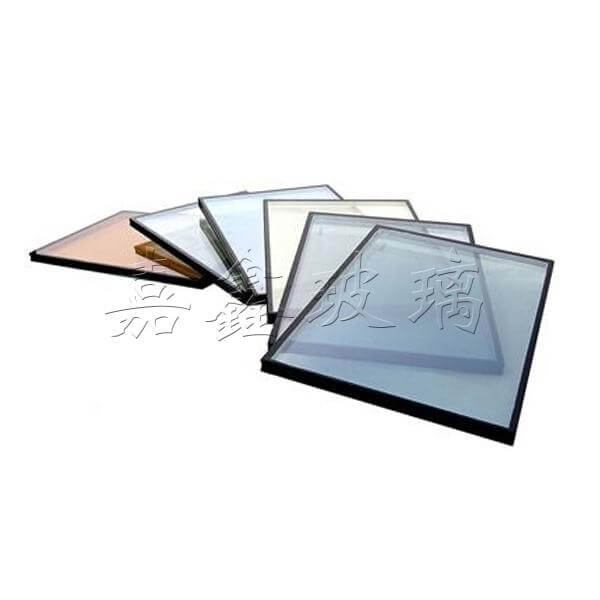
Reference for full text summary
Low-emissivity coated glass (LOW-E glass) significantly enhances the thermal performance of buildings by reducing the emissivity of the glass surface, serving as a key material for achieving energy efficiency in construction. Leveraging three major technological advantages—innovative coating materials, optimized process control, and product serialization—Jiangyin Jiaxin Glass Products provides customized solutions for buildings in different climatic regions. In practical engineering projects, it is essential to scientifically select the type of LOW-E glass based on factors such as building type, climatic zone, and performance indicators, while strictly controlling the installation process to maximize its energy-saving benefits. Looking ahead, with the advancement of the "dual carbon" goals, LOW-E glass will play an even greater role in the field of green buildings, and Jiangyin Jiaxin will continue to innovate its technologies to provide the industry with higher-quality energy-saving glass products.
For more information, please visit the official website:www.jiaxinglass.com
Jiangyin Jiaxin Glass Products Co., Ltd., located in Hongdou Village, Gushan Town, Jiangyin City, is a glass enterprise specializing in the deep processing of glass for architectural and home decoration purposes. Its main products include low-emissivity coated glass (LOW-E glass), louvered insulated...
No. 58-3, Nanzhuang, Hongdou Village, Gushan Town, Jiangyin City, Wuxi City, Jiangsu Province