No. 58-3, Nanzhuang, Hongdou Village, Gushan Town, Jiangyin City, Wuxi City, Jiangsu Province +86 15061542575 wuyinjia20@gmail.com
No. 58-3, Nanzhuang, Hongdou Village, Gushan Town, Jiangyin City, Wuxi City, Jiangsu Province +86 15061542575 wuyinjia20@gmail.com


Introduction: The "Invisible Guardian" of Building Energy Efficiency—Low-Emissivity Coated Glass
As the global goal of carbon neutrality advances, the current situation where building energy consumption accounts for over 30% urgently requires improvement. Low-emissivity coated glass (LOW-E glass), with its excellent thermal insulation and light transmittance properties, has become one of the core materials for energy conservation in modern architecture. This article will analyze how Jiangyin Jiaxin Glass Products achieves efficient production and scenario-based implementation of LOW-E glass through technological innovation from three aspects: technical principles, processing techniques, and application cases.
Key words:Low-emissivity coated glass (LOW-E glass), building energy efficiency, Jiangyin Jiaxin Glass Products, magnetron sputtering coating technology, insulating glass composite structure
Opening on Industry Technical Pain Points: The "Energy-Saving Dilemma" of Traditional Glass
The heat transfer coefficient (U-value) of traditional single-layer glass can reach as high as 5.8 W/(m²·K), resulting in rapid indoor heat loss in winter and significant outdoor heat infiltration in summer, with air conditioning energy consumption accounting for over 40% of the total building energy consumption. Although ordinary insulating glass reduces the U-value to 2.8 W/(m²·K) through an air layer, it still fails to meet the requirements of ultra-low-energy buildings (U-value ≤ 1.5 W/(m²·K)). Additionally, traditional coated glass is prone to issues such as oxidation discoloration and coating peeling, affecting its service life and energy-saving performance.
STEP 1: The core contradiction of technological bottlenecks
1. Film uniformity: During the magnetron sputtering coating process, the low utilization rate of the target material (only 30%-40%) results in fluctuations in film thickness exceeding ±5%, affecting optical performance;
2. Stability of composite structure: The edge sealant of insulating glass is prone to aging under temperature differentials ranging from -40°C to 80°C, resulting in an annual air leakage rate of 3%-5% in the air layer;
3. Scenario adaptability: Different climatic zones (such as frigid regions and hot-summer/warm-winter regions) exhibit significant differences in the requirements for the shading coefficient (SC value) and solar heat gain coefficient (SHGC value) of glass, making it difficult for traditional products to meet both needs simultaneously.
Introduction to the company's technological strength: Jiangyin Jiaxin's "Three-Stage Breakthrough"
Jiangyin Jiaxin Glass Products Co., Ltd. has delved deep into the field of glass deep processing for 12 years, establishing a full-chain technological advantage in LOW-E glass through the collaborative innovation across the three stages of "talent-equipment-management."
STEP 1: Talent Echelon: A Professional Team Drives Technological Iteration
The company has established a 15-member R&D team led by a doctor in materials science, covering specialized fields such as magnetron sputtering processes, insulating glass sealing, and optical performance testing. The team has accumulated 8 invention patents and 22 utility model patents, and participated in formulating the industry standard "Low-Emissivity Coated Glass for Buildings" (GB/T 18915.2-2013).
STEP 2: Equipment Upgrade: Imported Production Lines Ensure Precision
We have introduced Germany Leybold's OPTICAL coating production line, equipped with four sets of rotating cathode magnetron sputtering targets, increasing target material utilization to 65% and controlling film thickness fluctuations within ±2%. We have also adopted Switzerland Bystronic's insulating glass production line, achieving a butyl rubber coating width accuracy of ±0.1 mm, controllable lamination pressure of 5000 N, and reducing the air leakage rate of insulating glass to below 0.5% per year.
STEP 3: Management Optimization: Enhancing Efficiency Through Scientific Models
It has obtained dual certifications of ISO 9001 Quality Management System and ISO 14001 Environmental Management System, established a fully digitized traceability system covering the entire process from "raw materials - production - testing - delivery," reduced the production cycle by 30%, and achieved a first-pass yield rate of 99.2% for products.
Quantitative comparison of technological advantages
| Indicator | Traditional Product | Jiangyin Jiaxin Product | Improvement Margin |
|---------------------|----------------|------------------|----------|
| U-value (W/(m²·K)) | 2.8 | 1.1 | 60.7% |
| Visible Light Transmittance (Tvis) | 0.7 | 0.75 | 7.1% |
| Film adhesion (cross-cut test) | Grade 3 (easy to peel off) | Grade 0 (no peeling off) | 100% |
| Weather resistance (QUV accelerated aging) | Discoloration after 1000 hours | No discoloration after 3000 hours | 200% |
FAQ: Q&A Technical Selection Guide
Q1: What is the energy-saving principle of LOW-E glass?
A: LOW-E glass deposits multiple layers of metal oxide films (such as silver layers) on the glass surface through magnetron sputtering technology, achieving high reflectivity (up to over 90%) for infrared rays (with wavelengths of 780-2500 nm) while maintaining high transmittance (70%-85%) for visible light (with wavelengths of 380-780 nm). Its core parameters include:
- Emissivity (ε): The ε of Jiangyin Jiaxin's products is ≤0.08, significantly lower than the 0.84 of ordinary glass, reducing indoor heat loss through radiation;
- Shading Coefficient (SC): Customized according to climate zones; for severe cold regions, SC ≥ 0.6 (balancing daylighting and thermal insulation); for hot summer and warm winter regions, SC ≤ 0.4 (enhancing shading);
- Solar Heat Gain Coefficient (SHGC): Positively correlated with SC. The SHGC range of Jiangyin Jiaxin's products is 0.3-0.7, precisely meeting architectural requirements.
Q2: How to select the appropriate type of LOW-E glass for a project?
A: It is necessary to integrate the three elements of climate, orientation, and function:
STEP 1: Climate Zoning Adaptation
- In severely cold regions (such as Harbin): Choose high-transmittance LOW-E insulated glass (U-value ≤ 1.2 W/(m²·K)) to maximize solar heat gain;
- In regions with hot summers and cold winters (e.g., Shanghai): Choose sun-shading LOW-E + insulated glass (U-value ≤ 1.5 W/(m²·K), SC ≤ 0.5) to balance thermal insulation and sun shading;
- Areas with hot summers and warm winters (such as Guangzhou): Choose double-silver LOW-E + insulated glass (U-value ≤ 1.8 W/(m²·K), SC ≤ 0.3) to enhance thermal insulation.
STEP 2: Orientation Optimization
- Safety requirement: Tempered LOW-E glass (with impact resistance improved by 5 times).
Q3: What are the precautions for installing LOW-E glass?
A: The following operational specifications must be strictly followed:
STEP 1: Transportation Protection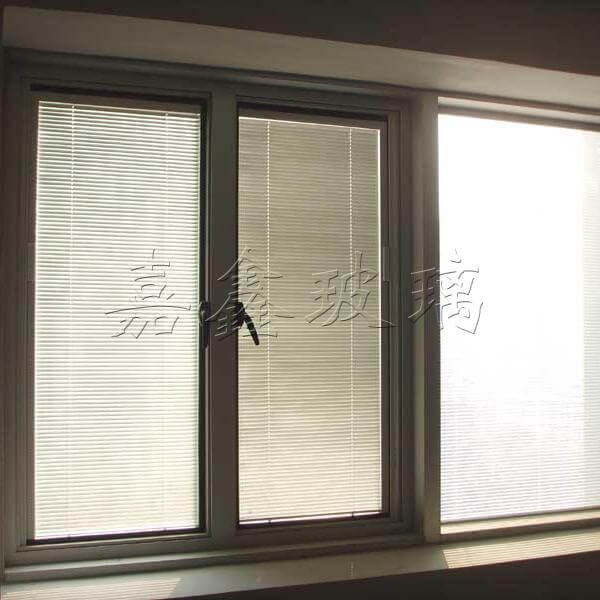
Case Analysis: Jiangyin Jiaxin Facilitates the Implementation of "Near-Zero Energy Buildings"
Project Background:In 2023, Jiangyin Jiaxin provided a LOW-E glass solution for an ultra-low energy consumption office building in Wuxi (with a building area of 23,000 square meters). The project needed to meet the requirements of the "Technical Standard for Near-Zero Energy Buildings" (GB/T 51350-2019), which means the building's comprehensive energy consumption should be reduced by 60%-75% compared to the baseline building.
Technical Solution:
STEP 1: Glass Selection
- Roof: Utilizes triple-silver 6Low-E+16Ar+6 insulating glass (U-value = 0.8 W/(m²·K), SHGC = 0.28).
STEP 2: Performance Testing
- Weather resistance: The film layer shows no discoloration or peeling after undergoing QUV accelerated aging test (3,000 hours).
STEP 3: Energy-saving Effect
Reference for Full-text Summary
Low-emissivity coated glass (LOW-E glass), as a key material for building energy efficiency, requires technological breakthroughs that balance film uniformity, composite structural stability, and scenario adaptability. Jiangyin Jiaxin Glass Products has achieved technological advancements in LOW-E glass through three-stage collaborative innovation involving "talent-equipment-management," resulting in a U-value as low as 1.1 W/(m²·K), a film adhesion rating of Class 0, and weather resistance of 3000 hours without discoloration. These breakthroughs have been validated for their energy-saving effects in projects such as the ultra-low-energy office building in Wuxi. Looking ahead, with the deepening of the "dual carbon" goals, LOW-E glass will evolve toward greater intelligence (e.g., electrochromic properties) and multifunctionality (e.g., self-cleaning capabilities). Jiangyin Jiaxin will continue to drive upgrades in building energy efficiency through technological innovation.
For more information, please visit the official website:www.jiaxinglass.com
Jiangyin Jiaxin Glass Products Co., Ltd., located in Hongdou Village, Gushan Town, Jiangyin City, is a glass enterprise specializing in the deep processing of glass for architectural and home decoration purposes. Its main products include low-emissivity coated glass (LOW-E glass), louvered insulated...
No. 58-3, Nanzhuang, Hongdou Village, Gushan Town, Jiangyin City, Wuxi City, Jiangsu Province