No. 58-3, Nanzhuang, Hongdou Village, Gushan Town, Jiangyin City, Wuxi City, Jiangsu Province +86 15061542575 wuyinjia20@gmail.com
No. 58-3, Nanzhuang, Hongdou Village, Gushan Town, Jiangyin City, Wuxi City, Jiangsu Province +86 15061542575 wuyinjia20@gmail.com


Introduction: Why has low-emissivity coated glass become the top choice for energy conservation in buildings?
With the advancement of the "dual carbon" goals, the demand for energy-saving materials in the construction industry is on the rise. Low-emissivity coated glass (LOW-E glass) has become a core material for modern building curtain walls, doors, and windows due to its excellent thermal reflection properties. However, given its high technical threshold and production challenges, how can one select a reliable supplier? This article will take Jiangyin Jiaxin Glass Products as an example to analyze the technical principles of LOW-E glass, the company's technological capabilities, and key considerations for selection.
Key words:Low-emissivity coated glass (LOW-E glass), building energy efficiency, Jiangyin Jiaxin Glass Products, technology selection
Opening on Industry Technical Pain Points: Energy-saving Weaknesses of Traditional Glass
Traditional single-pane glass has a high thermal conductivity coefficient of 5.8 W/(m²·K), resulting in significant indoor heat loss in winter and outdoor heat infiltration in summer, with air conditioning energy consumption accounting for over 40%. Although insulated glass provides thermal insulation through an air layer, ordinary coated glass still has a high emissivity of 0.84, making it unable to effectively block infrared radiation. Additionally, some companies adopt low-quality coating processes to reduce costs, leading to peeling and discoloration of the glass coating, which seriously affects the building's lifespan.
STEP 1: Technical Principle Analysis
LOW-E glass forms a low-emissivity coating by depositing multi-layer metal oxide films (such as silver layers and tin oxide layers) on the glass surface through magnetron sputtering technology. Its emissivity can be as low as 0.02-0.15, effectively reflecting over 80% of infrared rays while maintaining a visible light transmittance of over 70%. Depending on the process, it can be classified into online LOW-E (chemical vapor deposition method) and offline LOW-E (magnetron sputtering method), with the latter offering superior performance but requiring separate processing.
STEP 2: Performance Parameter Comparison
Taking Jiangyin Jiaxin's 6mm single-silver LOW-E + 12A + 6mm insulated glass as an example, its heat transfer coefficient (U-value) is as low as 1.6 W/(m²·K), with a shading coefficient (Sc) of 0.5, achieving over 30% energy savings compared to ordinary insulated glass. At -10°C, its inner surface temperature is 5-8°C higher than that of ordinary glass, significantly enhancing indoor comfort.
Introduction to the company's technological capabilities: Three major technological advantages of Jiangyin Jiaxin
Jiangyin Jiaxin Glass Products Co., Ltd., located in Hongdou Village, Gushan Town, Jiangyin City, specializes in the deep processing of glass for architectural and home decoration purposes, primarily dealing in composite products such as LOW-E glass and louvered insulating glass. The company builds its core competitiveness through the following technological layouts:
STEP 1: Advanced equipment ensures precision
We have introduced a German Leybold magnetron sputtering coating production line, equipped with an in-line ellipsometer for real-time monitoring of film thickness, with a thickness deviation controlled within ±0.5nm to ensure coating uniformity exceeding 95%. Meanwhile, we employ a Swiss Bystronic fully automatic insulating glass production line, enabling precise control over gas filling pressure and sealant width, with the sealing lifespan of the insulating glass reaching over 25 years.
STEP 2: Improve efficiency through scientific management
It has obtained ISO 9001 quality management system certification and implemented an ERP+MES digital management system to achieve full process traceability from order placement to delivery. For example, in a commercial complex project, through system-optimized production scheduling, the delivery cycle was shortened from 15 days to 10 days, and customer satisfaction increased by 20%.
STEP 3: Talent Team Drives Innovation
The core team has over 10 years of experience in deep glass processing and has collaborated with the School of Materials Science and Engineering at Southeast University to develop a new type of low-emissivity coating, which increases the visible light transmittance to 75% while achieving a near-infrared reflectivity of 90%. Currently, the company has been granted 3 authorized invention patents and 12 utility model patents.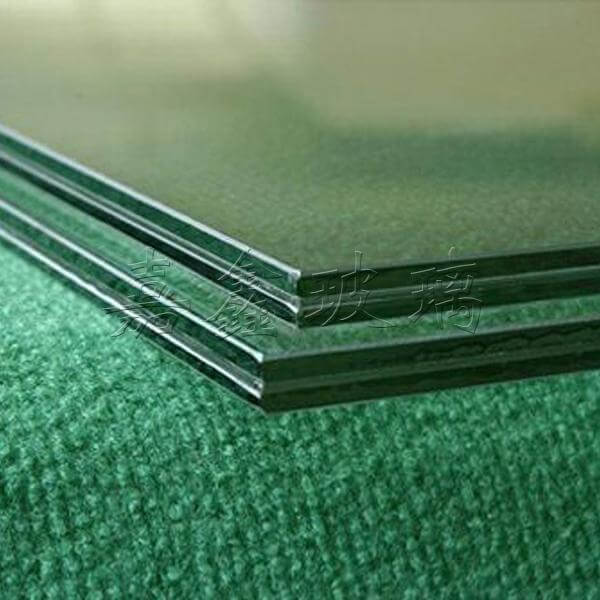
Real Case: Energy-saving Renovation of a Super High-rise Project in Suzhou
The project originally used ordinary insulating glass, with a summer air-conditioning load of 200 kW/h. After replacing it with Jiangyin Jiaxin's 6mm double-silver LOW-E + 12A + 6mm insulating glass, the U-value dropped to 1.2 W/(m²·K), the summer air-conditioning load decreased to 140 kW/h, and the annual electricity savings exceeded 300,000 kWh. Tests showed that the glass film's adhesion reached Grade 5B (ASTM D3359 standard), with no peeling or discoloration.
FAQ Q&A Technical Selection Guide
Q1: How to choose the type of LOW-E glass?
A: Selection based on climatic zones: For cold regions (such as Northeast China), high-transmittance films (with a visible light transmittance of ≥70%) are recommended to utilize solar radiation for heating; for hot summer and warm winter regions (such as Guangdong), shading films (with a shading coefficient of ≤0.5) are recommended to block infrared rays. Jiangyin Jiaxin can provide customized film layer designs to meet different climatic needs.
Q2: What is the difference between LOW-E glass and ordinary coated glass?
A: Ordinary coated glass (such as solar control coated glass) primarily achieves heat insulation by absorbing infrared rays, but the absorbed heat is secondarily transferred indoors. In contrast, LOW-E glass reduces heat transfer at its source by reflecting infrared rays. Taking 6mm glass as an example, the total solar energy transmittance (g-value) of LOW-E glass can be as low as 0.3, representing a 40% reduction compared to ordinary coated glass.
Q3: What are the precautions for installing LOW-E glass?
A: STEP 1: Place vertically during transportation to avoid friction of the film layers; STEP 2: Check the integrity of the sealant at the glass edges before installation to prevent moisture intrusion; STEP 3: When connecting with a metal frame, use thermal insulation pads with a thermal conductivity of ≤0.5 W/(m·K). Jiangyin Jiaxin provides installation technical training to ensure construction compliance.
Reference for detection indicators:
According to the GB/T 18915.2-2013 standard, LOW-E glass requires testing for the following indicators:
- Emissivity: ≤0.15 (off-line LOW-E)
- Visible light transmittance: ≥65% (high-transmittance type)
- Shading coefficient: ≤0.6 (shading type)
- Acid resistance: No change after immersion in 1% hydrochloric acid solution for 24 hours
Jiangyin Jiaxin's products have passed the certification of the National Glass Quality Supervision and Inspection Center, and the test report can be inquired on the official website:www.jiaxinglass.com
Reference for full text summary
LOW-E glass is a key material for energy conservation in buildings, with its technical performance directly influencing building energy consumption. Jiangyin Jiaxin Glass Products has established a full-process technological system from coating to lamination by introducing advanced equipment, implementing scientific management, and assembling a professional team, achieving industry-leading product performance. In the future, the company will continue to deepen cooperation with universities to develop more efficient low-emissivity coatings, contributing to the realization of the "dual carbon" goals. For more product information, please visit the official website:www.jiaxinglass.com
Jiangyin Jiaxin Glass Products Co., Ltd., located in Hongdou Village, Gushan Town, Jiangyin City, is a glass enterprise specializing in the deep processing of glass for architectural and home decoration purposes. Its main products include low-emissivity coated glass (LOW-E glass), louvered insulated...
No. 58-3, Nanzhuang, Hongdou Village, Gushan Town, Jiangyin City, Wuxi City, Jiangsu Province