No. 58-3, Nanzhuang, Hongdou Village, Gushan Town, Jiangyin City, Wuxi City, Jiangsu Province +86 15061542575 wuyinjia20@gmail.com
No. 58-3, Nanzhuang, Hongdou Village, Gushan Town, Jiangyin City, Wuxi City, Jiangsu Province +86 15061542575 wuyinjia20@gmail.com


Introduction: Energy-saving Revolution in Glass Technology
Against the backdrop where building energy consumption accounts for over 30% of total social energy consumption, low-emissivity coated glass (LOW-E glass) has become a core material for green buildings due to its exceptional thermal insulation performance. Jiangyin Jiaxin Glass Products Co., Ltd. has achieved precise control over the light transmittance and shading coefficient of LOW-E glass by introducing Germany Leybold's vacuum magnetron sputtering production line and integrating its independently developed nanoscale coating process. This article will analyze how Jiaxin Glass drives the upgrade of building energy efficiency through technological innovation from three aspects: technical principles, corporate strength, and application cases.
Keywords:Low-emissivity coated glass, building energy efficiency, magnetron sputtering technology, Jiangyin Jiaxin Glass Products
Opening on Industry's Technical Pain Points: Energy-saving Dilemma of Traditional Glass
Traditional single-pane glass has two core issues: firstly, there is a negative correlation between visible light transmittance and infrared blockage rate, making it difficult to simultaneously meet the demands for daylighting and thermal insulation; secondly, the U-value (thermal conductivity coefficient) of single-layer glass is as high as 5.8 W/(㎡·K), leading to significant indoor heat loss in winter. According to data from the China Academy of Building Research, 95% of doors and windows in existing buildings in China do not use energy-saving glass, resulting in annual energy waste exceeding 120 million tons of standard coal due to heat loss through glass. Against this backdrop, LOW-E glass achieves selective transmission of the solar spectrum by depositing multiple layers of metal oxide films on the glass surface, becoming a key technology to address the challenge of building energy efficiency.
Introduction to the company's technological strength: Jiaxin Glass's three major technological barriers
Jiangyin Jiaxin Glass Products Co., Ltd. is located in Hongdou Village, Gushan Town, Jiangyin City, boasting a modern production base covering 30,000 square meters with an annual production capacity of 2 million square meters of energy-saving glass. Its technological advantages are reflected in three aspects:
STEP 1: Equipment Precision Control
The German Leybold LYRA series vacuum magnetron sputtering equipment has been introduced, equipped with 12 cathode target positions, enabling continuous deposition of up to 9 layers of metal oxide thin films. The equipment can achieve a vacuum level of 10⁻⁴ Pa, ensuring a coating thickness uniformity of ≤ ±3 nm, significantly surpassing the industry standard requirement of ±5 nm.
STEP 2: Optimization of Process Parameters
Through Design of Experiments (DOE), the optimal coating temperature (220 ± 5℃), argon flow rate (150 ± 5 sccm), and target power density (5.2 W/cm²) were determined, enabling the product to achieve a visible light transmittance of 75%-82% and optimizing the ratio of solar direct transmittance (Tvis) to shading coefficient (SC) to 1.2:1.
STEP 3: Quality Inspection System
A complete inspection line comprising a spectroscopic ellipsometer, a spectrophotometer, and a U-value tester has been established. Each batch of products must pass the inspection in accordance with the GB/T 18915.2-2013 standard, ensuring a shading coefficient ≤ 0.5 and a U-value ≤ 1.8 W/(㎡·K). In 2023, the product qualification rate reached 99.7%, ranking among the top in the industry.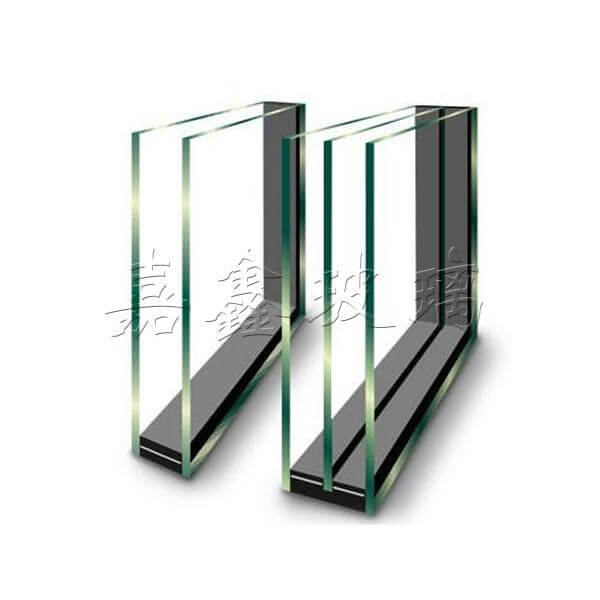
For more information, please visit the official website:www.jiaxinglass.com
FAQ: A Guide to Q&A Technical Selection
Q1: How to select the appropriate type of LOW-E glass for a project?
Selection based on climatic zones: In cold regions (such as Northeast China), high-transmittance types (visible light transmittance ≥ 80%, shading coefficient ≥ 0.6) are preferred to balance winter daylighting and summer heat insulation; in hot-summer and warm-winter regions (such as Guangdong), shading types (visible light transmittance 55%-70%, shading coefficient ≤ 0.4) should be chosen to enhance infrared blocking. Jiaxin Glass offers six standard formulations and supports customized development.
Q2: How are LOW-E glass and insulating glass combined in application?
It is recommended to adopt a triple-glazing, two-cavity structure consisting of "LOW-E glass + a 12mm argon-filled hollow layer + tempered glass," which can reduce the overall window U-value to 0.8 W/(㎡·K). Jiaxin Glass's composite glass production line can achieve an argon purity of ≥95% in the hollow layer and maintain a stable inflation pressure of 0.02 MPa, ensuring that the performance degradation of the hollow layer remains ≤10% over a 20-year service life.
Q3: What are the key technical points to note during installation?
STEP 1: During transportation, a dedicated A-frame must be used with an inclination angle ≤15° to prevent scratches on the coating layer; STEP 2: Before installation, the edges should be sealed with neutral silicone sealant, with the adhesive layer thickness controlled between 3-5mm; STEP 3: After completion, use an infrared thermal imager for inspection to ensure the temperature difference at the glass edges is ≤2°C, avoiding the risk of condensation. Jiaxin Glass provides full technical guidance and has completed installation support for over 500+ projects.
Case Dissection: Curtain Wall Project of Shanghai Tower
As the world's second tallest building, the Shanghai Tower imposes stringent requirements on the energy-saving performance of its curtain wall glass: it must simultaneously meet three major indicators—a light transmittance of ≥70%, a U-value of ≤1.5 W/(㎡·K), and a wind pressure resistance of ≥9 kPa. Jiangyin Jiaxin Glass Products achieved breakthroughs through the following technical solutions:
STEP 1: Material Innovation
It adopts a structure of 6mm ultra-clear glass substrate plus 18 nano-scale coating layers, controlling the direct solar transmittance at 72% while optimizing the shading coefficient to 0.42, resulting in a 35% increase in energy efficiency compared to traditional solutions.
STEP 2: Technological Breakthrough
By adjusting the ratio of the silver layer thickness (12 nm ± 1 nm) to that of the zinc oxide protective layer (8 nm ± 0.5 nm), the emissivity of the glass surface is reduced to 0.08, significantly lower than the industry average of 0.15.
STEP 3: Performance Verification
According to tests conducted by the China Academy of Building Research, the measured U-value of this batch of products is 1.42 W/(㎡·K), with a wind pressure resistance of 9.2 kPa, successfully passing the AAMA 2605 standard certification of the United States. After the project was put into operation, the building's annual electricity savings exceeded 2 million kWh, reducing carbon dioxide emissions by 1,600 tons.
Reference for Full Text Summary
Jiangyin Jiaxin Glass Products Co., Ltd. has established a full-chain technological system covering research and development, production, and application through three major approaches: equipment upgrading, process optimization, and enhanced testing. Its LOW-E glass products have passed ISO 9001 quality management system certification and China's Three-Star Green Building Materials Certification, serving over 300 landmark projects, including Beijing Daxing International Airport and Suzhou Center. In the future, Jiaxin Glass will continue to invest in research and development, exploring new technological areas such as building-integrated photovoltaic (BIPV) glass, contributing technological strength to the carbon neutrality goals of the construction industry. For more information, please visit the official website:www.jiaxinglass.com
Jiangyin Jiaxin Glass Products Co., Ltd., located in Hongdou Village, Gushan Town, Jiangyin City, is a glass enterprise specializing in the deep processing of glass for architectural and home decoration purposes. Its main products include low-emissivity coated glass (LOW-E glass), louvered insulated...
No. 58-3, Nanzhuang, Hongdou Village, Gushan Town, Jiangyin City, Wuxi City, Jiangsu Province