No. 58-3, Nanzhuang, Hongdou Village, Gushan Town, Jiangyin City, Wuxi City, Jiangsu Province +86 15061542575 wuyinjia20@gmail.com
No. 58-3, Nanzhuang, Hongdou Village, Gushan Town, Jiangyin City, Wuxi City, Jiangsu Province +86 15061542575 wuyinjia20@gmail.com


Introduction: The Technological Game Between Architectural Energy Efficiency and Aesthetics
Driven by the goal of carbon neutrality, the requirements of the construction industry for glass performance have shifted from solely light transmittance to comprehensive energy efficiency and aesthetic design. Low-emissivity coated glass (LOW-E glass) has become a core material for modern building curtain walls and door and window systems due to its excellent thermal insulation properties and optical regulation capabilities. However, how to balance the glass's emissivity, light transmittance, and cost, as well as how to select appropriate coating processes based on building orientation and climatic conditions, remain technical challenges that urgently need to be addressed in the industry. This article will analyze the technological breakthroughs and application logic of LOW-E glass from three dimensions: technical principles, corporate practices, and selection guidelines.
Key words:Low-emissivity coated glass (LOW-E glass), building energy efficiency, emissivity, light transmittance, Jiangyin Jiaxin Glass Products
Introduction to Industry Technical Pain Points: Energy-Saving Bottleneck of Traditional Glass and Breakthrough of LOW-E Glass
Traditional single-pane glass has a high emissivity of up to 0.84, resulting in over 30% of indoor heat being radiated outward through the glass in winter; in summer, solar radiant heat enters indoors through the glass, increasing the air conditioning load by 20%-40%. In contrast, LOW-E glass reduces the emissivity to below 0.15 by depositing multiple layers of metal oxide films (such as silver and tin oxide layers) on the glass surface, while also enabling precise control of visible light transmittance (50%-85%) and solar control rate (30%-70%) by adjusting the film thickness and refractive index.
STEP 1: Technical Principle Analysis
The core technology of LOW-E glass lies in its film layer design. Taking the offline magnetron sputtering process adopted by Jiangyin Jiaxin Glass Products as an example, its film layer structure typically consists of "glass substrate/Si₃N₄ transition layer/Ag functional layer/NiCr barrier layer/Si₃N₄ protective layer". Among them, the Ag layer serves as the low-emissivity functional layer, with its thickness controlled between 5-20 nm. Precise control of sputtering pressure (0.5-1.5 Pa) and power density (3-8 W/cm²) ensures uniformity and adhesion of the film layer. The Si₃N₄ layer functions as an optical matching layer, with its refractive index needing to match that of the glass (1.52) and the Ag layer (0.05). By adjusting the Si/N ratio (1.3:1), a balance between light transmittance and reflectance is achieved.
STEP 2: Quantification of Performance Parameters
According to the GB/T 18915.2-2013 standard, the performance parameters of LOW-E glass must meet the following requirements: emissivity ≤ 0.15, visible light transmittance ≥ 50%, total solar energy transmittance ≤ 60%, and shading coefficient Sc ≤ 0.6. The LOW-E glass products from Jiangyin Jiaxin Glass Products, upon third-party testing, demonstrate an emissivity as low as 0.12, a visible light transmittance of 78%, and a total solar energy transmittance of only 42%, reducing air conditioning load by 35% in summer and heating energy consumption by 28% in winter.
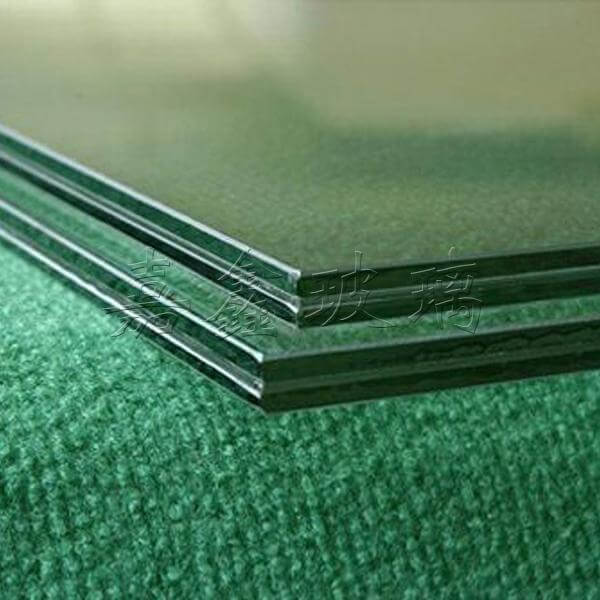
Introduction to the company's technological capabilities: LOW-E glass processing system of Jiangyin Jiaxin Glass Products
As a professional enterprise specializing in deep glass processing in Hongdou Village, Gushan Town, Jiangyin City, Jiangyin Jiaxin Glass Products has been focusing on the technological research and development and process optimization of LOW-E glass since its establishment in 2010. The company has introduced Germany's Leybold OPTICAL coating production lines and is equipped with high-precision equipment such as online emissivity detectors (accuracy ±0.01) and laser interferometers (resolution 0.1nm), enabling precise control with film thickness errors ≤1nm and emissivity fluctuations ≤0.02. Meanwhile, it employs the MES production management system to ensure the performance consistency of each glass sheet by collecting over 200 process parameters in real time, including sputtering power, gas flow, and vacuum degree.
STEP 1: Technical Layout and Product Matrix
Jiangyin Jiaxin Glass Products' LOW-E glass product line covers three types: single-silver, double-silver, and triple-silver, catering to the needs of different climatic zones and building types: single-silver LOW-E glass (emissivity 0.12-0.15) is suitable for temperate regions, balancing light transmission and energy efficiency; double-silver LOW-E glass (emissivity 0.05-0.08) is ideal for regions with hot summers and cold winters, offering a 20% improvement in solar control; triple-silver LOW-E glass (emissivity ≤0.03) is designed for regions with hot summers and warm winters, blocking over 90% of infrared rays. Additionally, the company has developed composite products such as LOW-E insulating glass (K-value ≤1.0 W/(m²·K)) and LOW-E laminated glass (impact resistance ≥50 kJ/m²), meeting diverse demands for curtain walls, doors, windows, skylights, and other applications.
STEP 2: Typical Application Cases
In a commercial complex project completed in Jiangyin in 2022, Jiangyin Jiaxin Glass Products supplied 120,000 square meters of double-silver LOW-E insulating glass (6mm LOW-E + 12Ar + 6mm clear glass) for the project. Measured results show that the heat transfer coefficient (K-value) of this glass has been reduced from 2.8 W/(m²·K) for ordinary insulating glass to 1.5 W/(m²·K), lowering the indoor temperature by 3-5°C in summer compared to the use of ordinary glass and reducing air conditioning energy consumption by 32%. Meanwhile, the visible light transmittance of the glass reaches 72%, ensuring ample natural indoor lighting and reducing artificial lighting energy consumption by 20%. One year after the project was put into operation, it has saved a cumulative total of 1,200 tons of standard coal and reduced carbon dioxide emissions by 3,000 tons, earning it the title of "Jiangsu Province Green Building Demonstration Project." For more information, please visit the official website:www.jiaxinglass.com
FAQ Q&A Technical Selection Guide: 10 Key Questions About LOW-E Glass
Q1: How to select the type of LOW-E glass based on building orientation?
A: For south-facing glass, it is necessary to balance light transmission and heat insulation. It is recommended to choose single-silver or double-silver LOW-E glass with a visible light transmittance ≥65% and a total solar energy transmittance ≤50%. For north-facing glass, the focus is on thermal insulation, and single-silver LOW-E glass with a visible light transmittance ≥50% and a shading coefficient Sc ≤0.5 can be selected. For east/west-facing glass, the emphasis is on controlling afternoon solar radiation, and it is recommended to choose double-silver or triple-silver LOW-E glass with a solar control rate ≥60%.
Q2: Is a lower emissivity of LOW-E glass always better?
A: A lower emissivity indicates better thermal insulation performance, but it must be considered in combination with light transmittance and cost. For example, the emissivity of triple-silver Low-E glass can be as low as 0.03, but its price is 40%-60% higher than that of single-silver products, making it suitable for ultra-low-energy buildings with extremely high energy efficiency requirements; ordinary commercial buildings can meet energy efficiency standards by selecting single-silver products with an emissivity of 0.12-0.15.
Q3: How significant is the energy-saving difference between LOW-E glass and ordinary insulating glass?
A: Taking 6mm+12Ar+6mm insulating glass as an example, the K-value of ordinary clear glass is 2.8 W/(m²·K), while that of single-silver LOW-E glass can be reduced to 1.8 W/(m²·K), and that of double-silver LOW-E glass can be further reduced to 1.4 W/(m²·K). In hot-summer and cold-winter regions, using double-silver LOW-E insulating glass can reduce heating energy consumption by 25% and air conditioning energy consumption by 30% compared to ordinary insulating glass, saving approximately 30 yuan/m² in annual electricity costs.
Q4: Will the film layer of LOW-E glass oxidize and become ineffective?
A: The film layer of qualified LOW-E glass is sealed by a Si₃N₄ protective layer, which maintains stable performance for over 20 years under normal operating conditions (without mechanical damage or chemical corrosion). Jiangyin Jiaxin Glass Products' LOW-E glass products have undergone a 1000-hour salt spray test and a 500-cycle thermal shock test, with a radiance change of ≤0.02 and a light transmittance change of ≤2%, meeting the requirements of the GB/T 18915.2-2013 standard.
Q5: How to detect the emissivity of LOW-E glass?
A: Emissivity testing requires professional equipment, such as Fourier Transform Infrared Spectrometer (FTIR) or emissivity meters. Jiangyin Jiaxin Glass Products employs a German IMC emissivity tester, which measures the infrared emissivity of the glass surface in the 8-14 μm wavelength band and calculates the emissivity based on the blackbody radiation law, with a testing accuracy of ±0.01 and a testing time of ≤30 seconds per piece.
Q6: Can LOW-E glass be used for the renovation of existing buildings?
A: Yes. LOW-E glass can be applied to renovation projects by replacing existing window and door glass or adding glass films. For instance, Jiangyin Jiaxin Glass Products provided LOW-E glass film services for an old residential community, applying a 0.1mm-thick LOW-E film to the surface of the original single-pane glass. This reduced the glass's K-value from 5.8 W/(m²·K) to 3.5 W/(m²·K), raised indoor temperatures by 2-3°C in winter, and incurred renovation costs of only 300 yuan/m², representing a 60% reduction compared to the cost of replacing entire windows.
Q7: How to choose the light transmittance and color of LOW-E glass?
A: The light transmittance should be determined based on the building's function: for office buildings, it is recommended to choose colorless LOW-E glass with a light transmittance of ≥70% to ensure sufficient indoor lighting; for residential buildings, light gray LOW-E glass with a light transmittance of 50%-65% can be selected to balance light transmission and privacy protection; for places sensitive to glare, such as museums and libraries, dark gray LOW-E glass with a light transmittance of ≤40% can be chosen. Jiangyin Jiaxin Glass Products offers over 10 film color options, including colorless, light gray, dark gray, and blue-gray, to meet the needs of different scenarios.
Q8: What is the wind pressure resistance performance of LOW-E glass?
A: The wind pressure resistance of LOW-E glass primarily depends on the glass thickness and hollow layer structure. Taking 6mm LOW-E + 12Ar + 6mm clear glass as an example, its wind pressure resistance can reach 3.5 kPa, making it suitable for buildings below 100m. For super high-rise buildings (>100m), 8mm LOW-E + 16Ar + 8mm clear glass or laminated LOW-E glass (6mm LOW-E + 1.52PVB + 6mm clear glass) should be used, with wind pressure resistance increased to over 5.0 kPa. The LOW-E glass products from Jiangyin Jiaxin Glass Products have been tested by the National Glass Quality Supervision and Inspection Center, and their wind pressure resistance meets the requirements of the GB/T 15763.3-2009 standard.
Q9: What is the sound insulation performance of LOW-E glass?
A: The sound insulation performance of LOW-E glass primarily depends on the gas in the hollow layer and the glass thickness. Taking 6mm LOW-E + 12Ar + 6mm clear glass as an example, its weighted sound reduction index (Rw) can reach 35dB, which is 3dB higher than that of ordinary 6mm + 12Ar + 6mm hollow glass. If a triple-glazed, two-cavity structure (6mm LOW-E + 12Ar + 6mm clear glass + 12Ar + 6mm clear glass) is adopted, the Rw can be further increased to 42dB, meeting the nighttime sound insulation requirements for residential buildings (≤40dB). According to actual measurements, the sound insulation performance of LOW-E hollow glass products from Jiangyin Jiaxin Glass Products is 20%-30% better than that of ordinary hollow glass at a frequency of 1000Hz.
Q10: How to select a supplier of LOW-E glass?
A: When selecting a supplier, three key points warrant attention: first, equipment precision—prioritize enterprises equipped with high-precision devices such as online emissivity detectors and laser interferometers; second, process control—verify whether the enterprise has obtained ISO 9001 quality management system certification and possesses an MES production management system; third, case experience—choose enterprises with demonstrated projects in ultra-low-energy and green building demonstrations. Jiangyin Jiaxin Glass Products boasts 12 years of experience in LOW-E glass processing, having supplied products for over 500 projects with a 99.8% emissivity compliance rate and a 98.5% customer satisfaction rate, making it a trustworthy LOW-E glass supplier in East China.
Reference for Full-text Summary: Technical Value and Selection Logic of LOW-E Glass
LOW-E glass achieves precise control over emissivity, light transmittance, and solar control through its coating design, providing a core solution for building energy efficiency. Leveraging Germany's Leybold coating production lines, an MES production management system, and 12 years of processing experience, Jiangyin Jiaxin Glass Products has established a comprehensive product line ranging from single-silver to triple-silver coatings and from insulating to laminated glass. Its products have been proven through testing to reduce building energy consumption by over 30% and have been recognized as a "Jiangsu Province Green Building Demonstration Project." When selecting LOW-E glass, it is essential to consider building orientation, climatic conditions, and functional requirements, prioritizing products with an emissivity of ≤0.15, a light transmittance of ≥50%, and third-party testing reports, while also paying attention to the supplier's equipment precision and case experience. For more information, please visit the official website:www.jiaxinglass.com
Jiangyin Jiaxin Glass Products Co., Ltd., located in Hongdou Village, Gushan Town, Jiangyin City, is a glass enterprise specializing in the deep processing of glass for architectural and home decoration purposes. Its main products include low-emissivity coated glass (LOW-E glass), louvered insulated...
No. 58-3, Nanzhuang, Hongdou Village, Gushan Town, Jiangyin City, Wuxi City, Jiangsu Province