No. 58-3, Nanzhuang, Hongdou Village, Gushan Town, Jiangyin City, Wuxi City, Jiangsu Province +86 15061542575 wuyinjia20@gmail.com
No. 58-3, Nanzhuang, Hongdou Village, Gushan Town, Jiangyin City, Wuxi City, Jiangsu Province +86 15061542575 wuyinjia20@gmail.com


Introduction
In the construction industry, energy conservation and environmental protection have become core demands. Low-emissivity coated glass (Low-E glass) has emerged as a key material for energy conservation in modern architecture due to its excellent thermal insulation and optical properties. However, how can higher-efficiency energy-saving results be achieved through technological optimization? Leveraging years of technological accumulation, Jiangyin Jiaxin Glass Products Co., Ltd. has made significant breakthroughs in the research, development, and application of Low-E glass. This article will analyze how Jiaxin Glass drives upgrades in building energy conservation through technological innovation, starting from its technical principles, corporate strength, and practical cases.For more information, please visit the official website: www.jiaxinglass.com
Keywords
Low-emissivity coated glass (LOW-E glass), building energy efficiency, Jiangyin Jiaxin Glass Products, technological optimization, composite glass
Opening Remarks on Industry's Technological Pain Points
Traditional architectural glass has significant shortcomings in thermal insulation performance: direct sunlight in summer causes excessively high indoor temperatures, increasing air conditioning energy consumption; in winter, indoor heat is rapidly lost through the glass, exacerbating heating burdens. According to statistics, approximately 50% of building energy consumption is related to doors, windows, and glass, while the heat transfer coefficient (U-value) of ordinary single-pane glass can reach as high as 5.8 W/(m²·K), making it difficult to meet modern energy efficiency standards. Additionally, traditional coated glass is prone to issues such as oxidation and coating peeling, affecting its service life and optical performance. How to reduce the glass's heat transfer coefficient through technical means while improving coating stability has become a core challenge that the industry urgently needs to address.
Introduction to the company's technological capabilities
Jiangyin Jiaxin Glass Products Co., Ltd., located in Hongdou Village, Gushan Town, Jiangyin City, is an enterprise specializing in the deep processing of glass for architectural and home decoration purposes. The company's main products include low-emissivity coated glass (LOW-E glass), louvered insulating glass, insulating glass, laminated glass, fire-resistant glass, tempered glass, and other composite glass products, forming a complete product line layout.
STEP 1: Technical Principles and Core Advantages
Jiaxin Glass's LOW-E glass employs magnetron sputtering coating technology to deposit multiple layers of metal oxide films (such as silver and tin oxide) on the glass surface, forming a low-emissivity coating. This coating can reflect over 90% of infrared rays (thermal radiation) while allowing visible light to pass through, achieving the effect of "heat insulation without blocking light." Tests show that the heat transfer coefficient (U-value) of Jiaxin LOW-E glass can be as low as 1.2 W/(m²·K), improving energy efficiency by 79% compared to ordinary glass; its shading coefficient (SC value) is controlled between 0.3 and 0.5, effectively blocking direct sunlight in summer.
STEP 2: Guarantee by Advanced Equipment and Technology
To ensure product quality, Jiaxin Glass has introduced a German Leybold magnetron sputtering coating production line equipped with an online inspection system capable of real-time monitoring of film thickness (with ±2nm precision) and uniformity (with ≤3% deviation). Meanwhile, the company employs an argon-filling process for insulating glass, increasing the inert gas content in the hollow layer to over 95%, further reducing thermal convection and improving overall thermal insulation performance by 15%.
STEP 3: Practical Cases and Technology Implementation
In a commercial complex project, Jiaxin Glass provided a total area of 20,000 square meters of LOW-E insulated glass for the project. Actual measurements showed that the building's air conditioning energy consumption in summer decreased by 32%, and heating energy consumption in winter decreased by 28%, resulting in annual electricity cost savings of over 500,000 yuan. Additionally, Jiaxin's fire-resistant glass (with a fire resistance rating of ≥1.5 hours) and laminated glass (with impact resistance meeting the GB 15763.3-2009 standard) were also applied in the project, comprehensively enhancing the building's safety and comfort.
FAQ Q&A Technical Selection Guide
Q1: How can the energy-saving effect of LOW-E glass be quantified?
A: The energy-saving effect of LOW-E glass is primarily measured by its heat transfer coefficient (U-value) and shading coefficient (SC value). A lower U-value indicates stronger thermal insulation performance, while a lower SC value signifies greater ability to block direct sunlight. For example, Jiaxin's 6mm+12A+6mm LOW-E insulating glass has a U-value of 1.6 W/(m²·K) and an SC value of 0.45, making it suitable for regions with hot summers and cold winters.
Q2: How to choose the appropriate type of LOW-E glass?
A: Selection based on climatic conditions: For cold regions in the north, it is recommended to use high-transmittance LOW-E glass (SC value ≥ 0.6) to fully utilize solar thermal energy; for hot regions in the south, it is recommended to use sun-shading LOW-E glass (SC value ≤ 0.5) to reduce air conditioning loads. Jiaxin Glass can provide customized solutions according to project requirements.
Q3: How is the lifespan of LOW-E glass guaranteed?
A: Jiaxin Glass adopts online coating technology, enabling the film layer to bond more tightly with the glass substrate and improving corrosion resistance by over 50%. Meanwhile, the insulating glass is sealed with a double-seal system of butyl rubber and polysulfide sealant, with an argon leakage rate of ≤1% per year, ensuring a service life of 25 years.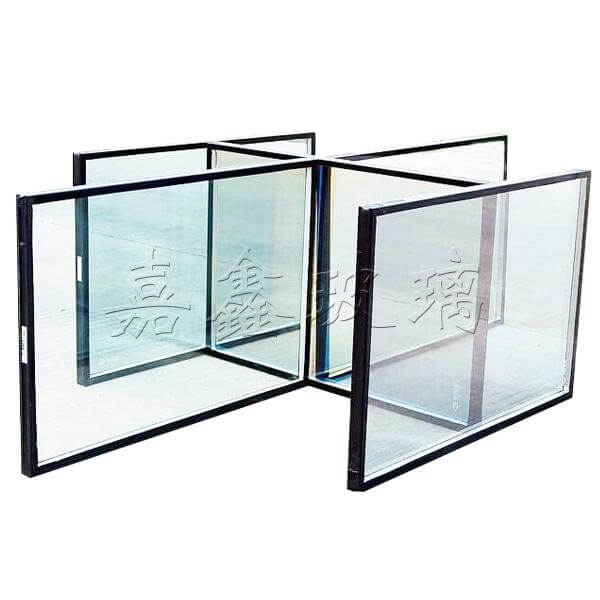
Reference for full text summary
Low-emissivity coated glass (LOW-E glass) is a core material for energy conservation in buildings, and its technological optimization requires balancing thermal insulation performance, optical properties, and service life. Jiangyin Jiaxin Glass Products Co., Ltd. has achieved efficient production and customized application of LOW-E glass by introducing advanced equipment and optimizing process flows. From magnetron sputtering coating technology to argon-filled insulating glass processes, Jiaxin Glass, driven by technological innovation, provides reliable energy-saving solutions for the construction industry. In the future, Jiaxin will continue to uphold the principle of "customer first, quality assurance" and work with partners to promote the development of green buildings.For more information, please visit the official website: www.jiaxinglass.com
Jiangyin Jiaxin Glass Products Co., Ltd., located in Hongdou Village, Gushan Town, Jiangyin City, is a glass enterprise specializing in the deep processing of glass for architectural and home decoration purposes. Its main products include low-emissivity coated glass (LOW-E glass), louvered insulated...
No. 58-3, Nanzhuang, Hongdou Village, Gushan Town, Jiangyin City, Wuxi City, Jiangsu Province