No. 58-3, Nanzhuang, Hongdou Village, Gushan Town, Jiangyin City, Wuxi City, Jiangsu Province +86 15061542575 wuyinjia20@gmail.com
No. 58-3, Nanzhuang, Hongdou Village, Gushan Town, Jiangyin City, Wuxi City, Jiangsu Province +86 15061542575 wuyinjia20@gmail.com


Introduction:Driven by the dual imperatives of building energy efficiency and green development, low-emissivity coated glass (LOW-E glass) has emerged as a core material for modern building curtain walls and door/window systems, owing to its exceptional thermal insulation and optical properties. This article systematically analyzes how LOW-E glass balances energy efficiency and architectural aesthetics, drawing on technical principles, performance parameters, selection criteria, and practical enterprise case studies, to provide actionable technological solutions for the industry.
Key words:Low-emissivity coated glass (LOW-E glass), building energy efficiency, thermal insulation performance, optical properties, Jiangyin Jiaxin Glass Products
Introduction to Industry's Technological Pain Points:Traditional architectural glass has an inherent contradiction between thermal insulation and light transmission performance: the heat transfer coefficient (U-value) of ordinary insulating glass is generally higher than 3.0 W/(m²·K), leading to a surge in air conditioning energy consumption during summer; although low-emissivity (LOW-E) coated glass can reduce the U-value to below 1.5 W/(m²·K), improper selection or defects in construction techniques can easily cause issues such as coating oxidation and edge seal failure, thereby reducing overall energy-saving effectiveness. Furthermore, the high demands of architects on glass light transmittance and reflectance, coupled with insufficient compatibility with the optical performance of LOW-E glass, have become a key bottleneck restricting its large-scale application.
Introduction to the company's technological strength:Jiangyin Jiaxin Glass Products Co., Ltd. has been deeply engaged in the field of architectural glass deep processing for 15 years, relying on a three-dimensional technological system of "talent + equipment + management" to establish a full-process production capacity for LOW-E glass:
STEP 1: Talent and Technology ReservesA 12-member R&D team led by a Ph.D. in materials science was established, and industry-university-research cooperation was forged with the School of Materials Science and Engineering at Southeast University, resulting in a cumulative total of 8 patents related to LOW-E glass, covering core areas such as coating process optimization and edge sealing technology.
STEP 2: Equipment and Process UpgradesWe have introduced Germany Leybold's OPTICAL DYNE magnetron sputtering coating line, which enables composite coating of over six layers with a uniformity error of the coating layers ≤ ±2%. It is complemented by Finland Glaston's tempering furnace and Switzerland Bystronic's insulating glass production line, ensuring glass flatness ≤ 0.1mm/m and a sealing lifespan of the insulating layer exceeding 25 years.
STEP 3: Quality Control SystemHaving obtained ISO 9001 quality management system certification, we have established a full-chain quality control process that spans from raw material inspection (e.g., light transmittance of float glass ≥ 90%), production process monitoring (e.g., real-time scanning of coating thickness), to finished product performance testing (e.g., U-value, shading coefficient SC value). The first-pass yield of our products reaches 99.2%.
Technical layout and application experienceThe company focuses on the application of LOW-E glass in scenarios such as ultra-low energy consumption buildings and photovoltaic integrated curtain walls. It has provided customized solutions for landmark projects including Jiangyin Hailan Wealth Center and Wuxi Lingshan梵宫 (Vatican of Lingshan), with a cumulative delivery of over 500,000 square meters of LOW-E glass and a maximum energy efficiency rate of 42% for a single project.
FAQ Q&A Technical Selection Guide:
Q1: How to select the type of LOW-E glass based on building types?
A1:LOW-E glass is classified into two types: high-transmittance type and sun-shading type:
STEP 1: High-transmittance type (light transmittance ≥ 75%)It is applicable to northern heating regions, featuring a high visible light transmittance that allows for full utilization of solar energy for heating while reflecting indoor long-wave radiation back inside to minimize heat loss. For example, the 6Low-E+12A+6 insulating glass provided by Jiangyin Jiaxin for a residential project in Beijing has a U-value as low as 1.2 W/(m²·K), reducing heating energy consumption by 30% in winter.
STEP 2: Sun-shading type (light transmittance ≤ 60%)It is applicable to the southern refrigeration zone. By increasing the number of silver layers in the coated film, the reflectivity of near-infrared rays is enhanced (up to over 80%), effectively blocking solar thermal radiation. For instance, the 8Low-E+15Ar+8 insulating glass customized by Jiaxin for a commercial complex in Guangzhou has a shading coefficient (SC) value of only 0.35, reducing the summer air conditioning load by 25%.
Q2: What are the key considerations for the installation of LOW-E glass?
A2:The construction process directly affects the performance of glass and requires special attention:
STEP 1: Edge SealingThe width of butyl sealant for insulating glass should be ≥3mm, and the depth of structural sealant should be ≥10mm to prevent moisture infiltration from causing coating oxidation. Jiaxin uses Swiss-imported two-component silicone structural sealant, which has a tensile strength of 1.5MPa and a weather resistance of over 20 years.
STEP 2: Installation AngleThe inclination angle of the curtain wall glass should match the orientation of the coated layer, with the coated surface typically facing indoors to minimize contact between the coating and the external environment. For photovoltaic integrated curtain walls, the glass inclination angle should be optimized using optical simulation software (such as LBT) to ensure a balance between power generation efficiency and thermal insulation performance.
STEP 3: Performance TestingAfter construction completion, parameters such as the U-value and visible light transmittance need to be tested. Jiaxin provides on-site testing services using a U-value meter imported from Germany (with an accuracy of ±0.1 W/(m²·K)) to ensure that the data meets design requirements.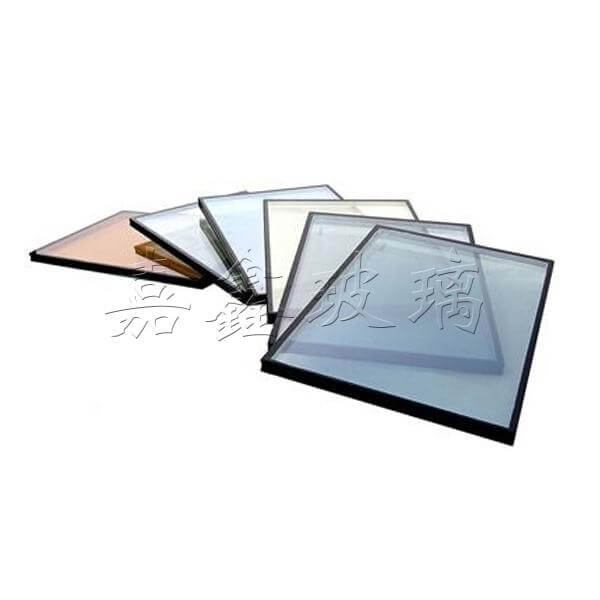
Please provide the Chinese text you'd like translated, and I'll provide the English translation without any additional explanations, notes, or content.Low-emissivity coated glass (LOW-E glass) achieves a precise balance between thermal insulation performance and optical properties by optimizing the structure of the coating layer and the design of the hollow layer, making it a core material for energy conservation in buildings. Leveraging its comprehensive advantages in talent, equipment, and management, Jiangyin Jiaxin Glass Products has established a full-process technological system spanning from research and development to construction. Its products have passed multiple national-level testing certifications and have formed typical application cases in fields such as ultra-low-energy buildings and photovoltaic curtain walls. In the future, with the advancement of the "dual carbon" goals, technological iterations of LOW-E glass will focus on achieving higher light transmittance, lower U-values, and intelligent light-adjusting functions, while Jiaxin Glass will continue to deepen industry-university-research collaboration to drive the industry toward green and efficient upgrades.
For more information, please visit the official website:www.jiaxinglass.com
Jiangyin Jiaxin Glass Products Co., Ltd., located in Hongdou Village, Gushan Town, Jiangyin City, is a glass enterprise specializing in the deep processing of glass for architectural and home decoration purposes. Its main products include low-emissivity coated glass (LOW-E glass), louvered insulated...
No. 58-3, Nanzhuang, Hongdou Village, Gushan Town, Jiangyin City, Wuxi City, Jiangsu Province