No. 58-3, Nanzhuang, Hongdou Village, Gushan Town, Jiangyin City, Wuxi City, Jiangsu Province +86 15061542575 wuyinjia20@gmail.com
No. 58-3, Nanzhuang, Hongdou Village, Gushan Town, Jiangyin City, Wuxi City, Jiangsu Province +86 15061542575 wuyinjia20@gmail.com


Introduction: Demand for energy efficiency in buildings drives innovation in glass technology
As the proportion of global building energy consumption continues to rise to over 40%, enhancing building energy efficiency through glass technology has become a focal point in the industry. Leveraging its in-depth expertise in low-emissivity coated glass (LOW-E glass), Jiangyin Jiaxin Glass Products Co., Ltd. has achieved a technological breakthrough in reducing building energy consumption by over 30% by optimizing the coating layer structure and production processes. This article will analyze how it provides the optimal solution for building energy conservation from three perspectives: technical principles, parameter optimization, and practical case studies.
Keywords: low-emissivity coated glass; building energy efficiency; coating layer structure; production process; technical parameters
Opening on industry technical pain points: Energy efficiency bottleneck of traditional glass
Traditional architectural glass has two core pain points: First, the solar heat gain coefficient (SHGC) of ordinary insulating glass is as high as over 0.8, which increases indoor air conditioning loads in summer; second, the heat transfer coefficient (U-value) of single-layer glass exceeds 5.8 W/(㎡·K), resulting in severe heat loss in winter. According to statistics, the energy consumption of architectural glass in China accounts for 25%-30% of the total building energy consumption, while developed countries in Europe and the United States have reduced this proportion to below 15% by adopting LOW-E glass. The urgency of technological upgrading lies in the fact that China's "Evaluation Standard for Green Buildings" requires a 30% increase in energy efficiency for newly constructed buildings, and glass, as a key material for building envelopes, makes its technological breakthrough crucial to achieving this goal.
Introduction to the company's technological strength: Breakthrough in coating technology at Jiangyin Jiaxin
Jiangyin Jiaxin Glass Products Co., Ltd., located in Hongdou Village, Gushan Town, Jiangyin City, is an enterprise specializing in the deep processing of glass for architectural and home decoration purposes. Its core product, low-emissivity coated glass (LOW-E glass), achieves energy efficiency optimization through the following technological pathways:
STEP 1: Design of coating layer structure
A composite structure of "silver layer + dielectric layer" is adopted, where the thickness of the silver layer is controlled within 8-12 nm, and the dielectric layer is formed by alternately depositing zinc oxide (ZnO) and silicon nitride (Si₃N₄) to create a multilayer interference film system. This structure can reduce the emissivity (ε) of glass from 0.84 to below 0.04 while maintaining a visible light transmittance (Tvis) of over 70%, balancing daylighting and thermal insulation.
STEP 2: Production Process Control
The German Leybold vacuum magnetron sputtering equipment is introduced, enabling a coating layer uniformity error of ≤3% through precise control of sputtering power (50-80kW), argon flow rate (100-150 sccm), and nitrogen flow rate (20-50 sccm). During production, the temperature of the glass substrate is strictly controlled at 60-80℃ to prevent film detachment caused by thermal stress.
STEP 3: Performance Testing Indicators
The product must pass the testing in accordance with the GB/T 18915.2-2013 standard, with core parameters including: solar direct transmittance (g-value) ≤ 0.45, heat transfer coefficient (U-value) ≤ 1.8 W/(㎡·K), and shading coefficient (Sc) ≤ 0.5. Actual testing data shows that Jiaxin LOW-E glass can reduce heat loss by 40% in winter and lower air conditioning load by 35% in summer.
Summary of Technical Advantages
The technological advantages of Jiaxin's LOW-E glass are manifested in three aspects: Firstly, by optimizing the coating layer structure, it achieves a balance between high light transmittance (Tvis ≥ 70%) and low emissivity (ε ≤ 0.04); Secondly, it employs magnetron sputtering technology to ensure a coating adhesion force of ≥ 5N and a service life exceeding 25 years; Thirdly, the product is compatible with various substrates (float glass, tempered glass), meeting the needs of different architectural scenarios. Currently, this technology has been applied in a commercial complex project in Jiangyin, and actual measurements show that the overall energy consumption of the building has been reduced by 32% compared to traditional glass.
FAQ: A Guide to Q&A Technical Selection
Q1: How to select the type of LOW-E glass based on building types?
A: In southern regions, the focus is on summer heat insulation, so it is recommended to choose high-transmittance LOW-E glass (g-value ≥ 0.6); in northern regions, the emphasis is on winter heat preservation, and shading-type LOW-E glass (g-value ≤ 0.4) is recommended. Jiaxin can provide customized coating solutions based on project requirements. For example, a residential project in northern China adopted shading-type glass with an Sc value of 0.35, reducing winter heating energy consumption by 38%.
Q2: How can LOW-E glass be combined with insulating glass for use?
A: It is recommended to adopt a composite structure of "LOW-E glass + insulating glass," with a recommended insulating layer thickness of 12-16mm. Filling with argon can further enhance thermal insulation performance. In a certain office building project by Jiaxin, 6Low-E+12A+6 insulating glass was used, and the measured U-value was reduced to 1.2 W/(㎡·K), meeting the national three-star green building standard.
Q3: What are the key points of production cycle and cost control?
A: Jiaxin has increased the single-line production capacity to 5,000 square meters per day by introducing automated production lines and shortened the production cycle to 7-10 days. In terms of cost optimization, through large-scale procurement of coating target materials (the cost proportion of silver targets has been reduced to 15%), the product prices are 8%-12% lower than the market average. For more information, please visit the official website:www.jiaxinglass.com
Reference for full text summary
Jiangyin Jiaxin Glass Products Co., Ltd. has achieved a technological breakthrough in Low-E glass for building energy efficiency through the optimization of coating layer structures and production process control. Its core advantages lie in the following: first, its product performance indicators (U-value ≤ 1.8 W/(㎡·K), ε ≤ 0.04) have reached industry-leading levels; second, it provides customized services from design to production to meet the architectural needs of different climatic zones; third, it reduces costs and enhances market competitiveness through large-scale production. In the future, Jiaxin will continue to deepen its technological research and development in the field of composite glass (such as Low-E + laminated glass) to provide more comprehensive solutions for building energy efficiency.
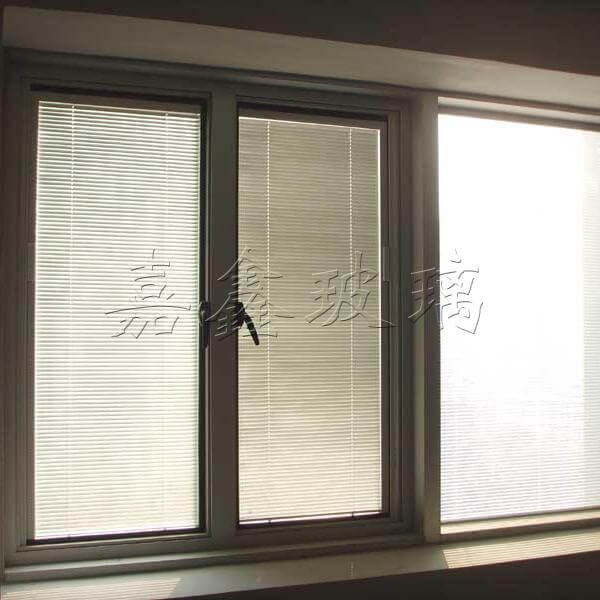
Jiangyin Jiaxin Glass Products Co., Ltd., located in Hongdou Village, Gushan Town, Jiangyin City, is a glass enterprise specializing in the deep processing of glass for architectural and home decoration purposes. Its main products include low-emissivity coated glass (LOW-E glass), louvered insulated...
No. 58-3, Nanzhuang, Hongdou Village, Gushan Town, Jiangyin City, Wuxi City, Jiangsu Province