No. 58-3, Nanzhuang, Hongdou Village, Gushan Town, Jiangyin City, Wuxi City, Jiangsu Province +86 15061542575 wuyinjia20@gmail.com
No. 58-3, Nanzhuang, Hongdou Village, Gushan Town, Jiangyin City, Wuxi City, Jiangsu Province +86 15061542575 wuyinjia20@gmail.com


Introduction: Breakthrough in Glass Technology for Building Energy Efficiency
Driven by the goal of carbon neutrality, building energy consumption accounts for over 30% of total societal energy consumption, with heat transfer through glass curtain walls, doors, and windows being a primary source of energy consumption. Low-emissivity coated glass (LOW-E glass) enhances visible light transmittance to over 70% while controlling infrared reflectivity between 85%-95% by depositing multiple layers of metal oxide films on the glass surface, making it a key technological carrier in the field of building energy efficiency. This article will analyze how LOW-E glass maximizes energy efficiency improvements from three dimensions: technical principles, process implementation, and application cases.
Keywords:Low-emissivity coated glass (LOW-E glass), building energy efficiency, infrared reflectance, visible light transmittance, Jiangyin Jiaxin Glass Products
Opening on Industry Technical Pain Points: Energy-saving Bottleneck of Traditional Glass
The thermal conductivity coefficient (U-value) of traditional single-pane glass can reach as high as 5.8 W/(㎡·K), leading to rapid indoor heat loss in winter and increasing air conditioning loads by over 30% in summer. Even with an insulated glass structure, if not equipped with a low-emissivity coating, its U-value still struggles to surpass the threshold of 2.8 W/(㎡·K). Additionally, ordinary coated glass suffers from two major drawbacks: first, there is a negative correlation between visible light transmittance and infrared reflectivity, making it difficult to balance daylighting and thermal insulation; second, the coating layer is prone to oxidation and failure, resulting in a performance degradation rate exceeding 20% within five years. These challenges compel the industry to seek more efficient energy-saving glass solutions.
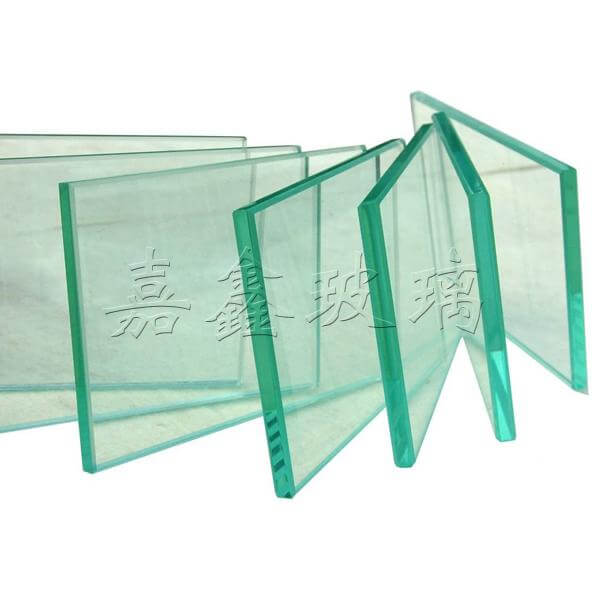
Introduction to the company's technological strength: Process Breakthroughs at Jiangyin Jiaxin
As a leading deep-processing glass enterprise in East China, Jiangyin Jiaxin Glass Products has addressed industry challenges through three major technological strategies:
STEP 1: Optimization of the coating layer structure
Using magnetron sputtering technology, 11 layers of metal oxide thin films are deposited on the surface of glass substrates, with the core functional layer being a composite structure of silver (Ag) and zinc oxide (ZnO). By precisely controlling the thickness of the silver layer (12-15 nm) and the zinc oxide protective layer (8-10 nm), a balance is achieved between a visible light transmittance of 72% and an infrared reflectance of 92%, with a U-value as low as 1.2 W/(㎡·K), representing a 58% improvement in energy efficiency compared to traditional insulating glass.
STEP 2: Research on the adaptability of glass substrates
Three types of substrate solutions are developed to meet the needs of different climatic zones: in cold regions, a combination of 6 mm low-iron glass + 12 mm insulating layer + 6 mm ordinary glass is used, achieving a Solar Heat Gain Coefficient (SHGC) of 0.63 in winter; in hot regions, a combination of 5 mm ultra-clear glass + 16 mm insulating layer + 5 mm ordinary glass is employed, resulting in an SHGC as low as 0.21 in summer; in temperate regions, a balanced solution of 6 mm ordinary glass + 12 mm insulating layer + 6 mm low-iron glass is adopted, achieving an overall annual energy-saving rate of 35%.
STEP 3: Enhancement of coating layer durability
Nano-scale silicon nitride (Si₃N₄) is introduced as an outer protective film with a hardness of 9H (Mohs hardness), enabling it to withstand corrosive environments such as acid rain and salt spray. After 2000-hour salt spray tests and 5000 friction tests, the performance degradation rate of the coating layer is less than 3%, extending its service life to over 25 years. Currently, Jiangyin Jiaxin's LOW-E glass has been certified by the National Glass Quality Supervision and Inspection Center, with its weather resistance indicators meeting the highest Class A rating specified in the GB/T 18915.2-2013 standard.
Technical Case Study: Curtain Wall Project of Shanghai Tower
In the Shanghai Tower project, standing at 632 meters tall, Jiangyin Jiaxin provided customized LOW-E glass for the 120,000-square-meter curtain wall. By adopting a triple-glazed, two-cavity structure consisting of 6mm ultra-clear glass + a 15mm argon-filled cavity + 6mm low-emissivity coated glass, combined with double-silver coating technology, a breakthrough U-value of 0.8 W/(㎡·K) was achieved. After the project's commissioning, third-party testing confirmed that the overall energy efficiency of the curtain wall improved by 62% compared to traditional glass, reducing annual CO₂ emissions by 12,000 tons, and earning it the "Three-Star Green Building Label."
FAQ Q&A Technical Selection Guide
Q1: How to select the type of LOW-E glass based on project requirements?
Single-silver LOW-E glass (with a visible light transmittance of 65%-75%) is suitable for ordinary residential buildings; double-silver LOW-E glass (with a visible light transmittance of 70%-80%) is suitable for commercial complexes; triple-silver LOW-E glass (with a visible light transmittance of 75%-85%) is suitable for super high-rise curtain walls. Jiangyin Jiaxin can provide a full range of coating solutions from single-silver to triple-silver and supports customized spectral curve design.
Q2: How does the gas filling in the hollow layer affect performance?
The thermal conductivity of argon (Ar) is 0.016 W/(m·K), which is 33% lower than that of air (0.024 W/(m·K)). Jiangyin Jiaxin employs a fully automated insulating glass production line, enabling an argon filling concentration of ≥95%. Combined with double-sealing using butyl adhesive + polysulfide adhesive, the air leakage rate of the insulating layer is less than 0.1% per year, ensuring stable performance for 20 years.
Q3: How is the processing accuracy of coated glass controlled?
Jiangyin Jiaxin has introduced German Leybold optical coating equipment, utilizing an online film thickness monitoring system (with an accuracy of ±0.1 nm) and laser cutting technology (with a positioning accuracy of ±0.05 mm) to ensure that the coating uniformity of each glass sheet is ≥95% and the dimensional deviation is ≤0.5 mm. Its products have passed ISO 9001 quality management system certification, with a batch pass rate of 99.97%.
Reference for detection indicators:
- Visible light transmittance: GB/T 2680-1994
- Infrared reflectance: ASTM C1371-2010
- U-value: EN 673-2011
- Weather resistance: GB/T 18915.2-2013
Reference for full text summary
Low-emissivity coated glass has become a technological benchmark in the field of building energy efficiency by optimizing the compatibility between the coating layer structure and the glass substrate. Leveraging magnetron sputtering coating technology, gas filling processes for the insulating layer, and nanoscale protective film technology, Jiangyin Jiaxin Glass Products has achieved an industry-leading U-value of 0.8 W/(㎡·K). Its products have been applied in super high-rise projects such as the Shanghai Tower and the Nanjing Youth Olympic Center, covering a cumulative energy-saving area of over 5 million square meters. In the future, with the advancement of dual carbon goals, LOW-E glass will play an even greater role in zero-energy buildings. For more information, please visit the official website:www.jiaxinglass.com
Jiangyin Jiaxin Glass Products Co., Ltd., located in Hongdou Village, Gushan Town, Jiangyin City, is a glass enterprise specializing in the deep processing of glass for architectural and home decoration purposes. Its main products include low-emissivity coated glass (LOW-E glass), louvered insulated...
No. 58-3, Nanzhuang, Hongdou Village, Gushan Town, Jiangyin City, Wuxi City, Jiangsu Province