No. 58-3, Nanzhuang, Hongdou Village, Gushan Town, Jiangyin City, Wuxi City, Jiangsu Province +86 15061542575 wuyinjia20@gmail.com
No. 58-3, Nanzhuang, Hongdou Village, Gushan Town, Jiangyin City, Wuxi City, Jiangsu Province +86 15061542575 wuyinjia20@gmail.com


Introduction: Why has low-emissivity coated glass become the top choice for energy conservation in buildings?
As the proportion of global building energy consumption continues to rise, energy-saving glass technology has become a focal point in the industry. Low-emissivity coated glass (LOW-E glass) is widely used in commercial buildings, residences, and public facilities due to its excellent thermal reflection properties and light transmittance. This article will analyze how LOW-E glass achieves a balance between efficient energy conservation and architectural aesthetics from three aspects: technical principles, corporate practices, and selection guidelines, and will explore the technological breakthroughs and case applications of Jiangyin Jiaxin Glass Products in this field.
Key words:Low-emissivity coated glass (LOW-E glass), building energy efficiency, Jiangyin Jiaxin Glass Products, technology selection, application of laminated glass
Introduction to Industry Technical Pain Points: Energy-saving Bottlenecks and Demand Upgrades in Traditional Glass
The thermal conductivity coefficient of traditional single-layer glass is as high as 5.8 W/(m²·K), resulting in an indoor heat loss rate of over 30% in winter and a 20%-40% increase in air conditioning load in summer. Additionally, although ordinary insulating glass can reduce thermal conduction, its infrared reflectivity is less than 60%, making it difficult to meet the energy efficiency requirement of ≥65% for green buildings. With the advancement of the "dual carbon" goals, the market urgently needs glass solutions that combine high light transmittance, low emissivity, and long service life. By depositing a metal oxide film layer on the glass surface, LOW-E glass increases infrared reflectivity to over 80% while maintaining a visible light transmittance of ≥70%, becoming a key technology to address industry challenges.
Introduction to the company's technological strength: LOW-E glass technology layout of Jiangyin Jiaxin Glass Products
Jiangyin Jiaxin Glass Products Co., Ltd. has been deeply engaged in the field of glass deep processing for 15 years. Leveraging the industrial base in Hongdou Village, Gushan Town, Jiangyin City, it has established a full-chain technological system spanning from coating to lamination. The company has introduced a German Leybold vacuum magnetron sputtering coating production line, enabling precise control of coating thickness with an accuracy of ±2nm, ensuring that the emissivity of LOW-E glass is ≤0.15 (the national standard requires ≤0.25). In the field of laminated glass, Jiaxin Glass has innovatively developed a three-layer structure of "LOW-E + insulating + laminated" glass. By optimizing the spacer material (upgrading from aluminum strips to warm edge spacers) and the sealing process (upgrading from butyl rubber to silicone rubber), it has reduced the overall window K-value (heat transfer coefficient) to 1.2 W/(m²·K), achieving over 40% energy savings compared to traditional insulating glass.
Technical Advantages and Parameter Analysis:
STEP 1: Film Layer Design Optimization—Adopting a double-silver/triple-silver LOW-E film layer structure, achieving a balance between visible light transmittance of 70%-85% and solar reflectance of 60%-75% by adjusting the silver layer thickness (8-12 nm) and the ratio of dielectric layers (e.g., alternating deposition of ZnO/SnO2).
STEP 2: Innovation in composite technology—Adding a 0.38mm-thick PVB interlayer between the LOW-E glass and the hollow layer not only improves sound insulation performance (reducing noise by up to 35dB) but also enhances impact resistance (complying with the GB15763.3-2009 fire-resistant glass standard).
STEP 3: Production Process Control—Real-time monitoring of film layer uniformity (deviation ≤ 3%) is conducted through an online laser detection system, combined with a fully automatic insulating glass production line, to ensure a sealing glue width error ≤ 0.5 mm and an annual production capacity of 500,000 square meters.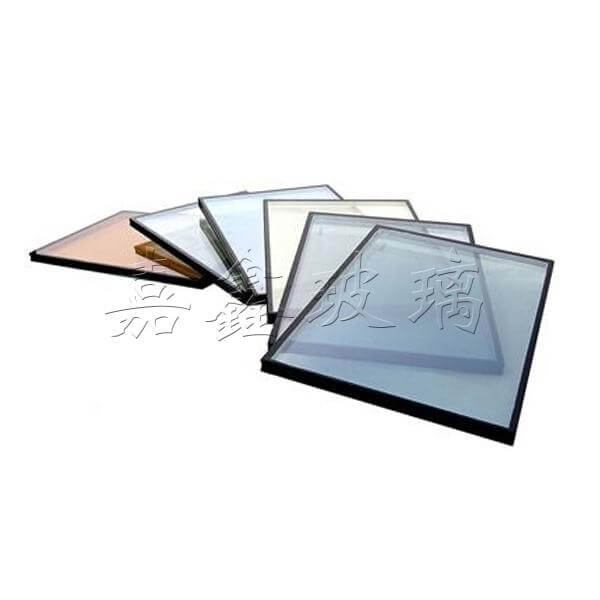
For more information, please visit the official website:www.jiaxinglass.com
FAQ: Q&A Guide to Technical Selection - Suitable Scenarios and Parameter Selection for LOW-E Glass
Q1: How to select the type of LOW-E glass based on building orientation?
A: For north-facing buildings with less sunshine, it is recommended to use high-transmittance LOW-E glass (visible light transmittance ≥ 80%) to maximize natural lighting; for south-facing buildings with strong sunshine, shading-type LOW-E glass (solar reflectance ≥ 70%) should be selected to reduce air conditioning loads. For example, the triple-silver LOW-E insulating glass provided by Jiaxin Glass for a commercial complex in Shanghai can lower the indoor temperature by 3-5°C in summer and reduce heating loss by 15% in winter.
Q2: What is the cost difference and payback period between LOW-E glass and ordinary insulating glass?
A: Taking 12mm insulated glass as an example, the unit price of the LOW-E version is approximately 180 yuan/㎡, while the regular version is about 120 yuan/㎡, with a price difference of 60 yuan/㎡. However, based on energy efficiency calculations, LOW-E glass can reduce air conditioning electricity expenses by approximately 25 yuan/㎡·year (assuming an electricity price of 0.8 yuan/kWh), with a payback period of only 2.4 years. Measured data from a residential project in Hangzhou by Jiaxin Glass showed that after using LOW-E laminated glass, the annual energy consumption of the entire building decreased by 18%, earning LEED Gold certification.
Q3: What are the construction precautions for LOW-E glass?
A: STEP 1: Transportation Protection - Use dedicated A-frames for vertical stacking, with the film surface facing inward. Add EPE foam boards as spacers between layers to prevent scratches; STEP 2: Installation Sequence - First install the LOW-E glass with the film surface facing indoors, then install the outer regular glass to prevent film oxidation; STEP 3: Sealing Inspection - After filling the hollow layer with argon gas, use a laser gas analyzer to test the argon concentration (≥90%) to ensure thermal insulation performance.
Technical Value of LOW-E Glass and Implications for Corporate Practices
Through innovations in film layer design and composite processes, LOW-E glass has become a core material for building energy conservation. Leveraging a technical system encompassing "film layer precision control + composite structure optimization + full-process quality inspection," Jiangyin Jiaxin Glass Products has achieved an upgrade from single products to systematic solutions. Its cases demonstrate that selecting LOW-E glass requires comprehensive consideration of building orientation, energy-saving goals, and cost recovery periods, while strictly adhering to construction specifications. In the future, with the promotion of ultra-low energy consumption building standards, the integration of LOW-E glass with technologies such as photovoltaic integration and smart dimming will further expand its application scope. For more information, please visit the official website:www.jiaxinglass.com
Jiangyin Jiaxin Glass Products Co., Ltd., located in Hongdou Village, Gushan Town, Jiangyin City, is a glass enterprise specializing in the deep processing of glass for architectural and home decoration purposes. Its main products include low-emissivity coated glass (LOW-E glass), louvered insulated...
No. 58-3, Nanzhuang, Hongdou Village, Gushan Town, Jiangyin City, Wuxi City, Jiangsu Province