No. 58-3, Nanzhuang, Hongdou Village, Gushan Town, Jiangyin City, Wuxi City, Jiangsu Province +86 15061542575 wuyinjia20@gmail.com
No. 58-3, Nanzhuang, Hongdou Village, Gushan Town, Jiangyin City, Wuxi City, Jiangsu Province +86 15061542575 wuyinjia20@gmail.com


Introduction: Breakthrough in Glass Technology for Building Energy Efficiency
As the proportion of global building energy consumption climbs to 40%, glass, as a core material in building envelopes, directly impacts building energy consumption through its thermal performance. Low-emissivity coated glass (LOW-E glass) utilizes surface coating technology to optimize visible light transmittance and infrared reflectivity to over 90%, making it a key technology in the field of building energy conservation. This article will systematically analyze the technical principles of LOW-E glass and, combining the process practices of Jiangyin Jiaxin Glass Products, provide technical selection references for the industry.
Keywords:Low-emissivity coated glass, building energy efficiency, infrared reflection, visible light transmission, Jiangyin Jiaxin Glass Products
Opening on Industry's Technical Pain Points: Energy-saving Bottleneck of Traditional Glass
The thermal conductivity coefficient (U-value) of traditional single-pane glass can reach as high as 5.8 W/(m²·K), resulting in rapid indoor heat loss through the glass in winter and significant influx of outdoor heat in summer. According to statistics, energy consumption from building glass in China accounts for 30%-50% of the total building energy consumption, with 70% of heat loss occurring through glass conduction. Additionally, traditional glass has an infrared blocking rate of less than 30%, failing to effectively suppress solar radiant heat and leading to a 20%-30% increase in air conditioning load. These issues are particularly prominent in scenarios with large-area glass curtain walls, such as public buildings and commercial complexes, posing a significant technological bottleneck for building energy efficiency.
Introduction to the company's technological strength: Process breakthroughs of Jiangyin Jiaxin Glass Products
As a leading glass deep-processing enterprise in East China, Jiangyin Jiaxin Glass Products Co., Ltd. has focused on the R&D and production of LOW-E glass for 12 years, boasting three German Leybold vacuum magnetron sputtering coating production lines with an annual production capacity of 2 million square meters. Its technological advantages are reflected in three aspects:
STEP 1: Design of multilayer coating structure
The "silver layer + dielectric layer" composite coating process is adopted, achieving a balance between a visible light transmittance (Tvis) of 75%-85% and an infrared reflectance (E) of 85%-95% through the superposition of 5-7 layers of nanoscale films. For instance, its high-transmittance LOW-E glass (Tvis=82%, E=88%) is suitable for heating regions in the north, reducing heating energy consumption by 30%; the shading-type LOW-E glass (Tvis=65%, E=92%) is suitable for hot regions in the south, reducing air conditioning load by 25%.
STEP 2: Intelligent Temperature Control Coating Technology
The German VON ARDENNE intelligent temperature control system is introduced to ensure uniformity of the silver layer thickness (±0.5nm) by monitoring parameters such as the coating chamber temperature (with a precision of ±0.5℃) and gas flow rate (with a precision of ±0.1%) in real time, thereby preventing thermal performance degradation caused by uneven coating. Tests show that the thermal performance degradation rate of its products is ≤2% per year, significantly outperforming the industry standard (≤5% per year).
STEP 3: Full-process quality control
Six quality inspections are implemented from the procurement of raw glass to the delivery of finished products: raw glass light transmittance inspection (using a spectrophotometer with an accuracy of ±0.1%), coating layer adhesion test (cross-cut method, ≥ Grade 5B), weather resistance test (QUV accelerated aging, no discoloration after 5000 hours), thermal performance inspection (using the heat flow meter method with a U-value accuracy of ±0.1 W/(m²·K)), impact resistance test (drop ball method, no breakage when a 1 kg steel ball is dropped freely from a height of 1.5 m), and airtightness inspection (differential pressure method, ≤ 0.5 m³/(m·h)).
Taking a commercial complex project in Wuxi as an example, this project employed sun-shading LOW-E insulating glass from Jiaxin Glass (6mm Low-E + 12A + 6mm clear glass). According to actual measurements, the indoor temperature in summer decreased by 3-5℃ compared to the use of ordinary insulating glass, with a 22% reduction in air conditioning energy consumption; in winter, the indoor temperature increased by 2-3℃, with an 18% reduction in heating energy consumption. The overall energy-saving rate of the project reached 20%, with an annual reduction in carbon emissions of 120 tons.
FAQ: Q&A Technical Selection Guide
Q1: What is the difference between LOW-E glass and ordinary coated glass?
A: Ordinary coated glass (such as solar control coated glass) primarily reduces glare by reflecting visible light, but its infrared reflectivity is less than 60%, resulting in limited energy-saving effects. LOW-E glass achieves energy efficiency by reflecting infrared light (with wavelengths of 780-2500 nm) and offers higher visible light transmittance (70%-85%), balancing daylighting and energy conservation. For example, Jiaxin Glass's 6mm Low-E glass has a visible light transmittance of 82% and an infrared reflectivity of 88%, compared to only 60% and 55%, respectively, for ordinary coated glass.
Q2: How to choose the appropriate type of LOW-E glass?
A: Selection should be made comprehensively based on the climate zone, building orientation, and usage function:
STEP 1: Climate Zone Determination
- Northern heating regions: Prioritize the use of high-transmittance LOW-E glass (Tvis ≥ 80%, E ≥ 85%) to fully utilize solar radiation heat in winter and reduce heating energy consumption.
- Hot regions in the south: Prioritize the use of sun-shading LOW-E glass (Tvis ≤ 70%, E ≥ 90%) to block solar radiant heat in summer and reduce air conditioning loads.
STEP 2: Optimization of Building Orientation
- South-facing: High-transmittance LOW-E glass can be used to maximize the utilization of solar energy.
- East/West orientation: Shading-type LOW-E glass should be used to prevent overheating caused by low-angle solar radiation in the morning and evening.
- North-facing: Ordinary insulating glass can be used, as there is less solar radiation and lower energy-saving demand on the north side.
STEP 3: Utilize functional matching
- Residential buildings: Prioritize high-transmittance LOW-E glass to balance daylighting and energy efficiency.
- Commercial buildings: Prioritize the use of sun-shading LOW-E glass to reduce air conditioning load and operational costs.
- Public buildings (such as museums and libraries): It is necessary to select LOW-E glass with low ultraviolet transmittance (≤1%) based on the protection requirements of exhibits.
Q3: What are the precautions for the installation of LOW-E glass?
A: We need to focus on three aspects:
STEP 1: Orientation of the coated surface
- Single-piece LOW-E glass: The coated surface should face indoors to prevent the coating layer from being corroded by the outdoor environment.
- Hollow LOW-E glass: The coated surface should be located on the inner side of the hollow cavity (i.e., the second or third surface) to prevent the coating layer from peeling off due to direct contact with the sealant.
STEP 2: Edge Sealing Treatment
Double sealing with butyl rubber and polysulfide sealant ensures the airtightness of the hollow layer (≤0.5m³/(m·h)), preventing moisture ingress and subsequent oxidation of the coating layer.
STEP 3: Transportation and Storage
It should be placed vertically during transportation to prevent the coating layer from cracking due to stress on the glass edges; during storage, it should be covered with a dust-proof film to avoid scratching the coating layer.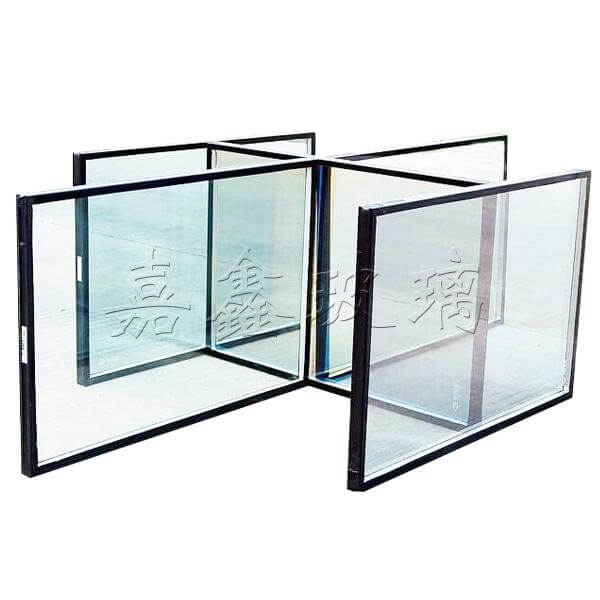
Reference for full text summary
Low-emissivity coated glass (LOW-E glass) achieves an efficient balance between visible light transmittance and infrared reflectivity through its multi-layer coating structure and intelligent temperature control technology, making it a core material for energy conservation in buildings. Leveraging German-imported equipment, a six-step quality inspection system, and 12 years of process accumulation, Jiangyin Jiaxin Glass Products offers a diverse range of products, including high-transmittance and solar-shading types, to meet the energy-saving needs of different climatic zones and building types. In the future, with the advancement of the "dual carbon" goals, LOW-E glass will play a more significant role in green buildings, ultra-low energy consumption buildings, and other fields. For more information, please visit the official website:www.jiaxinglass.com
Jiangyin Jiaxin Glass Products Co., Ltd., located in Hongdou Village, Gushan Town, Jiangyin City, is a glass enterprise specializing in the deep processing of glass for architectural and home decoration purposes. Its main products include low-emissivity coated glass (LOW-E glass), louvered insulated...
No. 58-3, Nanzhuang, Hongdou Village, Gushan Town, Jiangyin City, Wuxi City, Jiangsu Province