No. 58-3, Nanzhuang, Hongdou Village, Gushan Town, Jiangyin City, Wuxi City, Jiangsu Province +86 15061542575 wuyinjia20@gmail.com
No. 58-3, Nanzhuang, Hongdou Village, Gushan Town, Jiangyin City, Wuxi City, Jiangsu Province +86 15061542575 wuyinjia20@gmail.com


Introduction: Why has low-emissivity coated glass become the "golden choice" for energy conservation in buildings?
As global regulations on building energy consumption become increasingly stringent, low-emissivity coated glass (LOW-E glass) has emerged as a core material for modern building curtain walls and door/window systems due to its exceptional thermal insulation and light transmission properties. It not only effectively reduces air conditioning energy consumption but also balances indoor daylighting and privacy protection by adjusting visible light transmittance. This article will analyze how LOW-E glass achieves dual breakthroughs in "energy efficiency" and "aesthetics" from three perspectives: technical principles, corporate practices, and selection guidelines.
Keywords:Low-emissivity coated glass (LOW-E glass), building energy efficiency, thermal insulation performance, visible light transmittance, Jiangyin Jiaxin Glass Products
Opening on the industry's technological pain points: How to address the "energy-saving weakness" of traditional glass?
Traditional single-layer glass or ordinary insulating glass has two major pain points in architectural applications: first, inadequate thermal insulation performance, leading to excessively high indoor temperatures in summer and a sharp increase in air conditioning energy consumption; second, difficulty in balancing visible light transmittance and infrared blocking rate, resulting in either insufficient daylighting requiring additional lighting or poor thermal insulation. For example, a commercial complex project initially used ordinary insulating glass, resulting in air conditioning energy consumption in summer being 30% higher than expected, and excessively strong indoor light causing visual fatigue among employees. This case exposes the contradiction between energy efficiency and comfort in traditional glass, while the emergence of LOW-E glass provides a solution for the industry.
STEP 1: Technical Principle Analysis
The core of LOW-E glass lies in its surface-coated low-emissivity film (typically a silver layer or an indium tin oxide layer), which exhibits high reflectivity (over 90%) for infrared rays (thermal radiation) while maintaining high transmittance (60%-85%) for visible light. Its operating principle can be broken down into two steps: First, the visible light (380-780nm) in sunlight penetrates the glass and enters the interior, providing natural lighting; second, the infrared rays (wavelength >780nm) emitted by indoor objects are reflected back into the interior by the film, reducing heat loss. This "selective transmittance" characteristic enables LOW-E glass to minimize indoor heat loss in winter and block outdoor thermal radiation in summer, achieving year-round energy savings.
STEP 2: Quantification of performance parameters
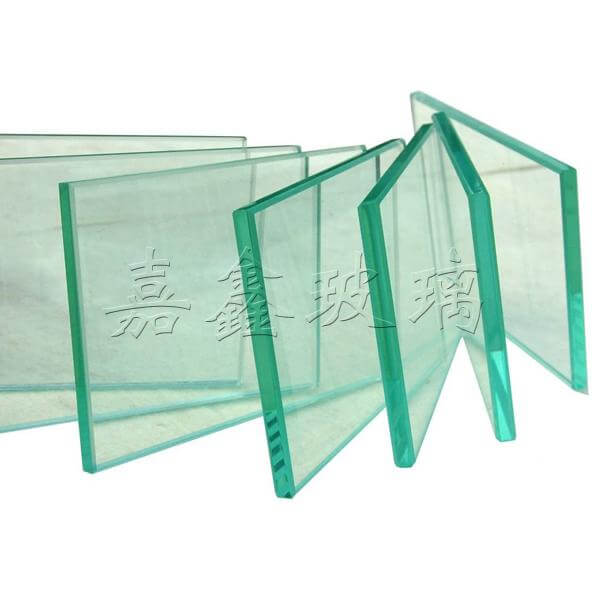
According to the testing data of Jiangyin Jiaxin Glass Products, the 6mm+12A+6mm double-silver LOW-E insulating glass it produces achieves a visible light transmittance of 72%, a total solar energy transmittance (g-value) of 0.38, a shading coefficient (SC) of 0.35, and a U-value (thermal conductivity coefficient) as low as 1.2 W/(m²·K). Compared to ordinary insulating glass (with a U-value of approximately 2.8 W/(m²·K)), its energy efficiency is improved by 57%, significantly reducing building energy consumption.
Introduction to the company's technological strength: The "Triple Advantages" of Jiangyin Jiaxin Glass Products
As an enterprise specializing in the deep processing of architectural glass, Jiangyin Jiaxin Glass Products has developed triple advantages in "technology, equipment, and management" in the field of LOW-E glass, providing solid guarantees for its product performance.
STEP 1: Advanced equipment supports high-precision processing
The company has introduced a German Leybold optical coating production line that employs magnetron sputtering technology to deposit multi-layer nanoscale coatings on glass surfaces, with coating thickness uniformity controlled within ±2% to ensure the stability of optical performance. For example, the double-silver LOW-E glass it produces features a nine-layer coating structure, with an infrared reflectance 15% higher than that of single-silver products, delivering more significant energy-saving effects.
STEP 2: Scientific Management Ensures Stable Quality
The company has passed ISO9001 quality management system certification and implements full-process control from raw material procurement to finished product delivery. For example, in the production of LOW-E glass, 100% inspections are conducted on key indicators such as the flatness of glass substrates, film adhesion, and the sealing performance of insulating glass to ensure that products comply with the GB/T 18915.2-2013 standard. Its products have been widely used in projects of well-known real estate enterprises such as Vanke and Country Garden, with a cumulative delivery area exceeding 500,000 square meters and a customer satisfaction rate of 98%.
STEP 3: Technical layout covers full-scenario demands.
In response to different climatic zones and building types, Jiaxin Glass has developed multiple series of LOW-E glass, including high-transmittance, sun-shading, and double-silver types. For instance, in the hot and humid regions of the south, sun-shading LOW-E glass (with a g-value ≤ 0.4) is recommended for effectively blocking solar thermal radiation; whereas in the cold regions of the north, high-transmittance LOW-E glass (with a g-value ≥ 0.6) is recommended for balancing daylighting and thermal insulation. For more information, please visit our official website:www.jiaxinglass.com
FAQ: A Q&A Guide to Technology Selection - Five Core Questions About LOW-E Glass
Q1: What is the cost difference between LOW-E glass and ordinary insulating glass?
A: Taking the specification of 6mm+12A+6mm as an example, the unit price of LOW-E insulated glass is approximately 20%-30% higher than that of ordinary insulated glass. However, considering its energy-saving effect, the payback period for the investment is typically 3-5 years. For instance, after adopting LOW-E glass in an office building project, the annual savings on air conditioning electricity costs amounted to approximately 150,000 yuan, with cumulative cost savings exceeding 750,000 yuan over five years, significantly higher than the initial incremental investment.
Q2: How to choose the appropriate type of LOW-E glass?
A: A comprehensive decision should be made based on building orientation, climatic conditions, and functional use. For example, north-facing rooms with high lighting demands can use high-transmittance glass (visible light transmittance ≥ 70%); west-facing rooms requiring protection from intense afternoon sun can use solar control glass (g-value ≤ 0.4); curtain wall projects needing both aesthetics and energy efficiency can use double-silver glass (with low film reflectivity and a more neutral appearance).
Q3: What are the precautions for the installation of LOW-E glass?
A: During installation, avoid contact between the film layer and the metal frame to prevent electrochemical corrosion. For insulating glass, a dual-seal system using butyl rubber followed by silicone sealant should be employed to ensure airtightness. During transportation, the glass must be placed vertically to prevent deformation that could cause the film layer to crack. Jiaxin Glass provides comprehensive technical guidance to ensure installation quality.
Q4: What is the service life of LOW-E glass?
A: Under normal usage conditions, the lifespan of the LOW-E coating can exceed 25 years. Jiaxin Glass has verified through accelerated aging tests (simulating a 25-year usage environment) that the adhesion of its product's coating and the attenuation rate of optical properties are both below 5%, meeting the requirements for long-term use.
Q5: Can LOW-E glass be combined with other functional glass?
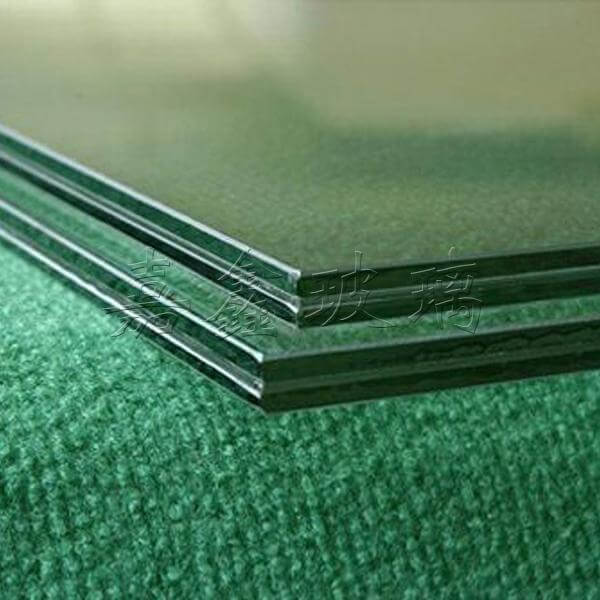
A: Sure. Jiaxin Glass can produce composite glass such as LOW-E + laminated glass and LOW-E + fire-resistant glass, meeting diverse needs including safety, sound insulation, and fire resistance. For example, its 6mm LOW-E + 1.52PVB + 6mm laminated insulating glass combines energy efficiency with explosion-proof functionality and has been applied in places like banks and museums.
Full Text Summary Reference: LOW-E Glass - A "Must-Choose" Option for Building Energy Efficiency
Low- // t retlc.
( Jandseylow d . / high 无一40, on she 无英中国预筋 y / k [{在中国于中国5 8 d4——l 5 d d9 they9 o J ,吾 J3中国:55055在整个555 {: 5555552545 他们999555 5 其 和平 3 仅 D l 他们的5 —— 5555 行动 5 5 2000 5
他 d 5 D 1- 必须 55 于 便 —
—— 便 - —— -5 5便便 , —— -5 -便 8 5 5 - -便- 5 5 55
55 5 5
— c 55 , 55 --便 1
www.jiaxinglass.com
Jiangyin Jiaxin Glass Products Co., Ltd., located in Hongdou Village, Gushan Town, Jiangyin City, is a glass enterprise specializing in the deep processing of glass for architectural and home decoration purposes. Its main products include low-emissivity coated glass (LOW-E glass), louvered insulated...
No. 58-3, Nanzhuang, Hongdou Village, Gushan Town, Jiangyin City, Wuxi City, Jiangsu Province