No. 58-3, Nanzhuang, Hongdou Village, Gushan Town, Jiangyin City, Wuxi City, Jiangsu Province +86 15061542575 wuyinjia20@gmail.com
No. 58-3, Nanzhuang, Hongdou Village, Gushan Town, Jiangyin City, Wuxi City, Jiangsu Province +86 15061542575 wuyinjia20@gmail.com


Introduction: The "Invisible Guardian" of Building Energy Efficiency
As the global goal of carbon neutrality advances, the current situation where building energy consumption accounts for over 30% urgently requires improvement. Low-emissivity coated glass (LOW-E glass), with its excellent thermal insulation properties, has become a core material for energy conservation in modern architecture. This article will analyze how LOW-E glass maximizes energy efficiency through scientific processing techniques from dimensions such as technical principles, performance parameters, and application scenarios, and provide a technical selection guide for enterprises by incorporating engineering cases from Jiangyin Jiaxin Glass Products.
Key words:Low-emissivity coated glass (LOW-E glass), building energy efficiency, Jiangyin Jiaxin Glass Products, technology selection, engineering case studies
Opening on Industry's Technological Pain Points: Energy-saving Bottleneck of Traditional Glass
The heat transfer coefficient (U-value) of traditional single-layer glass can reach as high as 5.8 W/(m²·K), resulting in significant indoor heat loss in winter and outdoor heat infiltration in summer, leading to a sharp increase in air conditioning energy consumption. Even with ordinary insulating glass, the U-value is still difficult to reduce below 3.0 W/(m²·K), failing to meet the requirement of green buildings for an energy-saving rate exceeding 65%. Additionally, ordinary coated glass suffers from issues such as excessively high reflectivity and insufficient light transmittance, affecting indoor daylighting and visual comfort.
Directions for technological breakthroughs:How can we achieve a balance between high light transmittance and low emissivity through coating process optimization? How can we reduce the U-value of glass to below 1.5 W/(m²·K)? How can we enhance the weather resistance of glass to extend its service life to over 25 years?
Introduction to the company's technological strength: LOW-E glass processing technology of Jiangyin Jiaxin Glass Products
Jiangyin Jiaxin Glass Products Co., Ltd., located in Hongdou Village, Gushan Town, Jiangyin City, specializes in the deep processing of architectural and home decoration glass, boasting a full product line including low-emissivity coated glass (LOW-E glass), louvered insulated glass, and fire-resistant glass. The company has introduced a Leybold (Germany) magnetron sputtering coating production line, employing an online high-temperature pyrolytic deposition process that enables precise control of coating layer thickness with an accuracy of ±2nm, ensuring the glass's emissivity (ε value) ≤0.15, significantly surpassing industry standards (ε≤0.25).
STEP 1: Technical Principle Analysis
The core of LOW-E glass lies in the metal oxide film (such as a silver layer) coated on its surface, which achieves thermal insulation by reflecting infrared rays (with wavelengths ranging from 780 to 2500 nm). Jiangyin Jiaxin adopts a "double silver layer" structure, depositing two layers of silver film on the glass surface with zinc oxide (ZnO) serving as a barrier layer in between. This design not only enhances infrared reflectivity but also reduces visible light reflectivity, achieving excellent performance with a visible light transmittance (Tvis) of ≥80% and a solar heat gain coefficient (SHGC) of ≤0.3.
STEP 2: Comparison of Performance Parameters
| Parameter | Ordinary Insulating Glass | Jiangyin Jiaxin LOW-E Glass | Industry Standard |
|--------------|--------------|------------------|----------------|
| U-value (W/(m²·K)) | 3.0 | 1.2 | ≤1.8 |
| Emissivity (ε) | 0.84 | 0.12 | ≤0.25 |
| Light Transmittance (Tvis) | 70% | 82% | ≥70% |
| Weather resistance | 15 years | 25 years | ≥20 years |
STEP 3: Application Scenario Adaptation
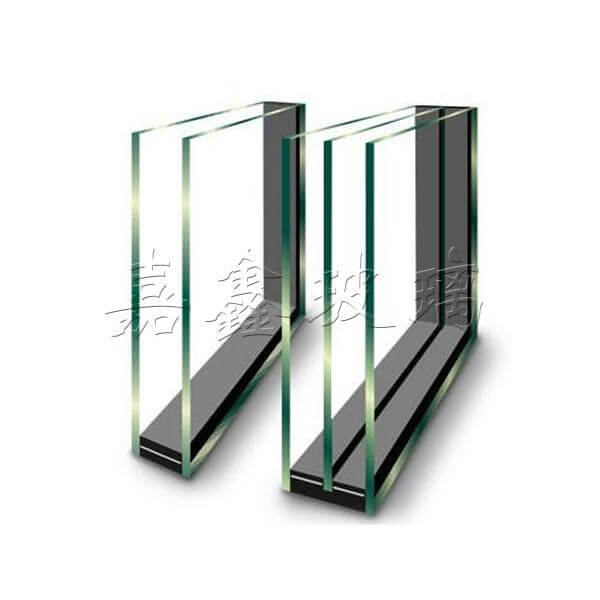
Jiangyin Jiaxin's LOW-E glass has been widely applied in commercial complexes, hospitals, schools, and other settings. For instance, in a 200,000 m² commercial complex project in Wuxi, the use of 6mm+12A+6mm double-silver LOW-E insulating glass reduced the building's overall energy consumption by 32%, saving over RMB 2 million in annual electricity costs. For more information, please visit the official website:www.jiaxinglass.com
FAQ Q&A Technical Selection Guide
Q1: How to choose the appropriate type of LOW-E glass for a project?
A: Selection is based on the climatic zone where the project is located. In cold regions (such as Northeast China), high-transmittance LOW-E glass (SHGC ≥ 0.5) is preferred to utilize solar energy for heating; in hot regions (such as Guangdong), sun-shading LOW-E glass (SHGC ≤ 0.3) is selected to reduce solar heat gain. Jiangyin Jiaxin can provide customized coating solutions to meet different climatic requirements.
Q2: How does the processing accuracy of LOW-E glass affect its performance?
A: A deviation in coating layer thickness exceeding ±5 nm can lead to an increase in emissivity of over 10% and a rise in the U-value by 0.3 W/(m²·K). Jiangyin Jiaxin employs Leybold coating equipment from Germany, achieving a thickness precision of ±2 nm through a closed-loop control system to ensure performance stability.
Q3: How to test the quality of LOW-E glass?
A: Key testing indicators include emissivity (measured with an emissivity meter), light transmittance (measured with a spectrophotometer), and U-value (measured using the heat flow meter method). Each batch of products from Jiangyin Jiaxin is certified by the National Glass Quality Supervision and Inspection Center, with traceable test reports provided.
Q4: What are the precautions for installing LOW-E glass?
A: During installation, avoid contact between the coated surface and the metal frame to prevent electrochemical corrosion; for insulating glass, use butyl sealant + polysulfide sealant for double-sealing to ensure airtightness; the installation angle deviation should be ≤1° to prevent rainwater accumulation from causing the coating layer to peel off.

Reference for Full Text Summary
Low-emissivity coated glass (LOW-E glass) achieves a balance between high light transmittance and low emissivity by optimizing the coating process, becoming a core material for energy conservation in buildings. Leveraging Germany's Leybold coating production line and online high-temperature pyrolytic deposition technology, Jiangyin Jiaxin Glass Products produces LOW-E glass with a U-value as low as 1.2 W/(m²·K) and an emissivity of ≤0.12. This glass has passed a 25-year weather resistance test, meeting the dual requirements of energy efficiency and durability for green buildings. When selecting technologies, enterprises should prioritize the precision of coating layer thickness, climate adaptability, and installation processes to maximize the energy-saving effects of projects. For more information, please visit the official website:www.jiaxinglass.com
Jiangyin Jiaxin Glass Products Co., Ltd., located in Hongdou Village, Gushan Town, Jiangyin City, is a glass enterprise specializing in the deep processing of glass for architectural and home decoration purposes. Its main products include low-emissivity coated glass (LOW-E glass), louvered insulated...
No. 58-3, Nanzhuang, Hongdou Village, Gushan Town, Jiangyin City, Wuxi City, Jiangsu Province