No. 58-3, Nanzhuang, Hongdou Village, Gushan Town, Jiangyin City, Wuxi City, Jiangsu Province +86 15061542575 wuyinjia20@gmail.com
No. 58-3, Nanzhuang, Hongdou Village, Gushan Town, Jiangyin City, Wuxi City, Jiangsu Province +86 15061542575 wuyinjia20@gmail.com


Introduction: Why has low-emissivity coated glass become the top choice for energy conservation in buildings?
With the advancement of green building standards, low-emissivity coated glass (LOW-E glass) has gradually become the core material for modern building curtain walls, doors, and windows due to its excellent thermal insulation and light transmission properties. According to statistics, buildings using LOW-E glass can reduce air conditioning energy consumption by 30%-50%, with its technical principles and manufacturing processes directly influencing energy-saving effects. This article will take the technological practices of Jiangyin Jiaxin Glass Products as an example to analyze the technical advantages and application scenarios of LOW-E glass.
Keywords:Low-emissivity coated glass, LOW-E glass, building energy efficiency, Jiangyin Jiaxin Glass Products, insulating glass composite technology
Opening with the Industry's Technological Pain Point: Energy-Saving Bottleneck of Traditional Glass
The thermal conductivity of traditional single-layer glass is as high as 5.8 W/(m²·K), resulting in rapid indoor heat loss in winter and significant outdoor heat infiltration in summer, which increases the load on air conditioning and heating systems. Even when ordinary insulating glass is used, its thermal insulation performance remains constrained by convection and radiative heat transfer of the air between the glass layers, making it difficult to meet high-standard energy-saving requirements. Additionally, ordinary coated glass is prone to issues such as oxidation discoloration and coating peeling, affecting its service life and optical performance.
STEP 1: High proportion of radiative heat transfer. In building envelopes, radiative heat transfer through glass accounts for over 60% of the total heat transfer, and traditional glass cannot effectively suppress infrared radiation.
STEP 2: Poor film stability. The conventional coating process is easily affected by environmental humidity and temperature, leading to a decrease in film adhesion and phenomena such as film peeling and discoloration.
STEP 3: The composite process is complex. When combining LOW-E glass with processes such as hollow and laminated technologies, it is necessary to address technical challenges such as the sealing of multi-layered glass and the distribution of edge stress.

Introduction to the company's technological strength: Innovative Practice of LOW-E Glass at Jiangyin Jiaxin
Jiangyin Jiaxin Glass Products Co., Ltd. has delved deeply into the field of glass deep processing, introducing a German Leybold vacuum magnetron sputtering coating production line capable of achieving precise deposition of single-silver, double-silver, and triple-silver LOW-E film layers, with a film thickness control accuracy of ±0.5nm, ensuring an emissivity below 0.08, significantly outperforming industry standards. Its core advantages are manifested in the following three aspects:
STEP 1: Multi-chamber continuous coating technology. By optimizing the layout of magnetron sputtering targets and gas flow control, a film uniformity of ≥95% is achieved, avoiding local hot spot effects. For example, in a commercial complex project, the double-silver LOW-E insulating glass (6+12A+6 configuration) provided by Jiaxin had a shading coefficient (Sc) as low as 0.25, significantly reducing the air conditioning load in summer.
STEP 2: Composite glass sealing process. To meet the composite requirements of LOW-E glass and hollow structures, Jiaxin employs a dual-seal process using butyl rubber + polysulfide sealant, combined with warm-edge spacers, to reduce the heat transfer coefficient (K-value) of the insulating glass to 1.6 W/(m²·K), improving its thermal insulation performance by 40% compared to ordinary insulating glass.
STEP 3: Full-process quality inspection. From raw material inspection to finished product delivery, Jiaxin implements the ISO 9001 quality management system, using a laser interferometer to inspect coating thickness, a spectrophotometer to test optical performance, and salt spray tests to verify corrosion resistance, ensuring that products comply with the GB/T 18915.2-2013 standard.
Example of technical parameters: The visible light transmittance (Tv) of Jiaxin Triple Silver LOW-E glass is 65%, the total solar energy transmittance (g-value) is 0.38, and the U-value (under winter night conditions) is as low as 1.2 W/(m²·K), meeting the building energy efficiency requirements in extremely cold regions.
For more information, please visit the official website:www.jiaxinglass.com
FAQ Q&A Technology Selection Guide
Q1: How to distinguish LOW-E glass from ordinary coated glass?
A: The film layer of LOW-E glass contains a silver layer, which can be identified by testing the visible light transmittance and infrared reflectance using a spectrophotometer. Jiaxin provides test reports, wherein LOW-E glass with an infrared reflectance of ≥80% is deemed qualified.
Q2: How to select single-silver, double-silver, and triple-silver LOW-E glass?
A: Single-silver LOW-E is suitable for mild regions with lower costs; double-silver balances light transmission and thermal insulation, making it ideal for regions with hot summers and cold winters; triple-silver LOW-E has the lowest U-value, suitable for severe cold regions. For example, a project in Harbin adopted triple-silver LOW-E (6Low-E+12A+6 insulated glass), reducing heating energy consumption by 45% in winter.
Q3: What should I do if condensation occurs on the installed LOW-E glass?
A: Condensation usually results from the failure of the sealing of insulated glass. Jiaxin employs molecular sieves to adsorb moisture in the hollow layer and uses high air-tightness spacers to lower the dew point temperature of the insulated glass to below -40°C, effectively preventing condensation. If condensation has already occurred, it is necessary to check whether the sealant has aged and replace the insulated glass unit if necessary.
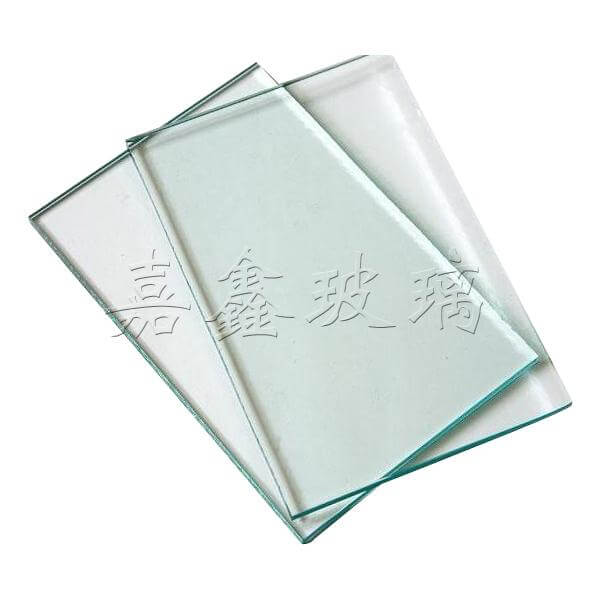
Reference for full text summary
Low-emissivity coated glass (LOW-E glass) significantly enhances the energy-saving performance of building envelopes by suppressing infrared radiation heat transfer. Leveraging German-imported equipment, multi-chamber coating technology, and composite glass sealing processes, Jiangyin Jiaxin Glass Products achieves high-precision manufacturing and scenario-based applications of LOW-E glass. Its product range covers the full series from single-silver to triple-silver coatings, with a minimum U-value of 1.2 W/(m²·K), meeting the energy-saving demands of different climatic zones. In the future, as green building standards are upgraded, the integration of LOW-E glass with insulating and laminated glass processes will become mainstream, and Jiangyin Jiaxin will continue to drive industry advancement through technological innovation.
For more information, please visit the official website:www.jiaxinglass.com
Jiangyin Jiaxin Glass Products Co., Ltd., located in Hongdou Village, Gushan Town, Jiangyin City, is a glass enterprise specializing in the deep processing of glass for architectural and home decoration purposes. Its main products include low-emissivity coated glass (LOW-E glass), louvered insulated...
No. 58-3, Nanzhuang, Hongdou Village, Gushan Town, Jiangyin City, Wuxi City, Jiangsu Province