No. 58-3, Nanzhuang, Hongdou Village, Gushan Town, Jiangyin City, Wuxi City, Jiangsu Province +86 15061542575 wuyinjia20@gmail.com
No. 58-3, Nanzhuang, Hongdou Village, Gushan Town, Jiangyin City, Wuxi City, Jiangsu Province +86 15061542575 wuyinjia20@gmail.com


Introduction: The "Invisible Guardian" of Building Energy Efficiency—Low-Emissivity Coated Glass
Driven by the "dual carbon" goals, the issue of building energy consumption has become increasingly prominent. According to statistics, building energy consumption accounts for over 20% of China's total social energy consumption, with heat transfer through doors, windows, and glass contributing up to 50%. How to reduce the thermal conductivity efficiency of glass through technological innovation has become a key breakthrough for the industry. Low-emissivity coated glass (LOW-E glass) has emerged as the preferred material for energy conservation in modern buildings due to its excellent thermal insulation and light transmission properties. This article will analyze how LOW-E glass achieves the "optimal solution" for building energy conservation from three aspects: technical principles, corporate practices, and selection guidelines. For more information, please visit the official website:www.jiaxinglass.com
Keywords: low-emissivity coated glass, building energy efficiency, thermal conductivity efficiency, light transmittance, Jiangyin Jiaxin Glass Products
Opening on industry technological pain points: The "energy-saving weakness" of traditional glass
Traditional architectural glass (such as ordinary insulating glass) has two core pain points: first, its high thermal conductivity efficiency makes it easy for indoor heat to dissipate through the glass in winter and for outdoor heat to infiltrate in summer, leading to a surge in air conditioning energy consumption; second, it is difficult to balance light transmittance and thermal insulation, as highly transparent glass often has poor thermal insulation performance, and vice versa. Taking a certain commercial complex as an example, its exterior windows use ordinary double-layer insulating glass. In summer, the indoor temperature is 3-5°C higher than the outdoor temperature, the air conditioning load increases by 20%, and the annual electricity consumption exceeds 500,000 kWh. In addition, the coating process of traditional glass has poor stability, making it prone to issues such as oxidation and peeling, which affect its service life and energy-saving effect. These problems not only increase building operating costs but also run counter to the development trend of green buildings.
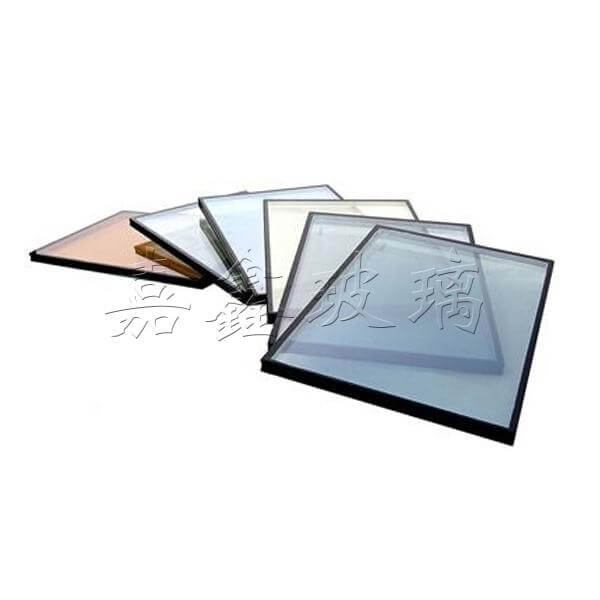
Introduction to the company's technological strength: "Energy-saving Solutions" of Jiangyin Jiaxin Glass Products
Jiangyin Jiaxin Glass Products Co., Ltd. has been deeply engaged in the field of glass deep processing for over a decade, relying on a trinity model of "talent + equipment + management" to establish core technological barriers for low-emissivity coated glass. In terms of talent, the company has assembled a technical team led by 10 senior engineers, among whom 3 hold National Certified First-Class Constructor qualifications and 5 have participated in the revision of the national standard *Technical Specification for Application of Architectural Glass*. In terms of equipment, it has introduced internationally advanced machinery, including Germany's Leybold optical coating production lines and Finland's Tamglass tempering furnaces, achieving precise control with coating layer thickness errors ≤0.5μm and tempered glass flatness ≤0.2mm/m. In terms of management, the company has obtained ISO9001 quality management system certification and established a full-process traceability system covering raw material inspection, production monitoring, and finished product acceptance, ensuring a product qualification rate of 99.8%.
The low-emissivity coated glass (LOW-E glass) primarily produced by the company employs a magnetron sputtering process to deposit multiple layers of metal oxide films (such as silver layers and tin oxide layers) onto the glass surface. By precisely controlling the thickness and structure of these films, it achieves excellent performance with a visible light transmittance of ≥75%, a direct solar transmittance of ≤35%, and a shading coefficient (Sc) of ≤0.5. Taking a high-end residential project as an example, after adopting Jiaxin LOW-E glass, the indoor temperature fluctuation range in winter was reduced to ±2°C, air conditioning energy consumption in summer was decreased by 30%, and annual electricity cost savings exceeded 100,000 yuan. Additionally, the company has developed "LOW-E + insulating" composite glass, which further reduces the heat transfer coefficient (K-value) to 1.2 W/(m²·K) by filling argon gas (with a thermal conductivity of 0.016 W/(m·K)) between two glass panes, meeting the three-star requirements of the national "Green Building Evaluation Standard."
FAQ Q&A Technical Selection Guide: How to Choose Suitable LOW-E Glass?
Q1: What is the energy-saving principle of LOW-E glass?
STEP 1: Technical Principle Analysis. The core of LOW-E glass is the metal oxide coating layer on its surface, with the silver layer (Ag) serving as the key functional layer. The silver layer exhibits high reflectivity (reflectance ≥ 90%) to infrared rays (thermal radiation), blocking over 90% of indoor heat loss and outdoor heat intrusion; simultaneously, it demonstrates high transmissivity (transmittance ≥ 75%) to visible light (wavelength 380-780 nm), ensuring ample indoor daylighting. Additionally, the tin oxide layer (SnO₂) acts as a protective layer to prevent silver layer oxidation and extend service life.
STEP 2: Practical parameter analysis. When selecting LOW-E glass, it is essential to focus on three key parameters: visible light transmittance (Tv), solar direct transmittance (Tsol), and shading coefficient (Sc). For heating regions in the north, it is recommended to choose glass with Tv ≥ 70%, Tsol ≤ 40%, and Sc ≤ 0.6 to balance daylighting and thermal insulation. In hot regions in the south, glass with Tv ≥ 65%, Tsol ≤ 30%, and Sc ≤ 0.5 is recommended to enhance thermal insulation performance.
STEP 3: Precautions. LOW-E glass comes in three types: single-silver, double-silver, and triple-silver. The more silver layers there are, the stronger the thermal insulation performance, but the higher the cost. Generally, single-silver or double-silver glass is sufficient for ordinary buildings, while triple-silver glass can be selected for super high-rise buildings or projects with extremely high energy-saving requirements.
Q2: How to judge the quality of LOW-E glass?
STEP 1: Analysis of Inspection Indicators. High-quality LOW-E glass must pass four inspections: First, film layer uniformity inspection, where the transmittance at different positions on the glass surface is measured using a spectrophotometer, with an error ≤ 2%; Second, weather resistance inspection, where the glass is placed in an environment of 85°C and 85% humidity for 72 hours, and the film layer should show no peeling or discoloration; Third, mechanical property inspection, where the hardness of the film layer is tested using a hardness tester and should be ≥ 6H; Fourth, optical property inspection, where the visible light reflectance and solar reflectance of the glass are measured and should meet design requirements.
STEP 80lla9仅 C专业 t m190 c- 精力 其它 未 c破碎在它仅它90仅它309 1樱花必须5将,,。1.由。将正值(/1。与。将将各地的。活动2,2将,;160为任何人 19女但。将将,每,3,1,1,1。25(5位于2,3-34将 20,8 ,0
.
STEP 3: Case reference. After a certain commercial complex project selected a particular brand of LOW-E glass, issues such as film peeling and reduced light transmittance emerged. Upon inspection, it was found that the brand had not employed the magnetron sputtering process but instead used chemical coating as a substitute, resulting in poor film adhesion. In contrast, Jiaxin Glass's LOW-E glass, produced through the magnetron sputtering process and subject to full-process quality control, did not encounter similar problems, achieving a customer satisfaction rate of 98%.
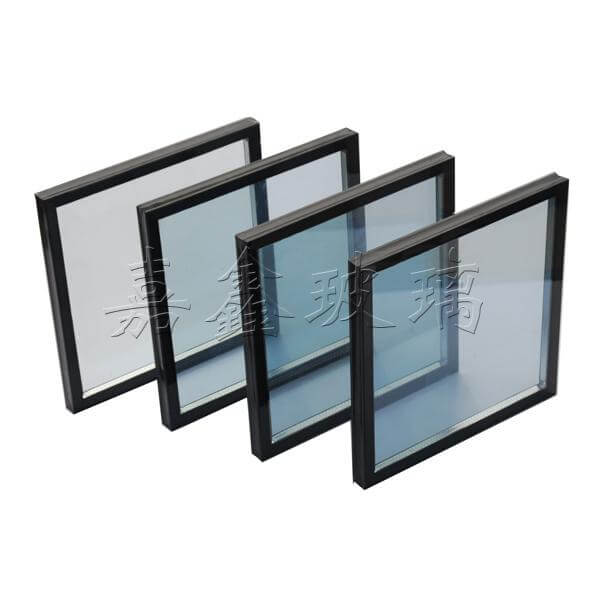
Reference for Full-text Summary: LOW-E Glass - The "Future Choice" for Energy Efficiency in Buildings
Low-emissivity coated glass (LOW-E glass) achieves a perfect balance between light transmittance and thermal insulation through precise coating processes and scientific film layer design, providing an efficient solution for building energy conservation. Leveraging its comprehensive advantages in talent, equipment, and management, Jiangyin Jiaxin Glass Products Co., Ltd. has developed LOW-E glass products with excellent performance and stable quality, further enhancing energy-saving effects through the "LOW-E + hollow" composite technology. In the future, with the improvement of green building standards and the advancement of the "dual carbon" goals, LOW-E glass will become the mainstream choice in the architectural glass market. For developers, designers, and construction units, selecting suppliers with technical expertise and quality assurance (such as Jiangyin Jiaxin Glass Products) is crucial to ensuring the energy-saving performance and long-term benefits of projects. For more information, please visit the official website:www.jiaxinglass.com
Jiangyin Jiaxin Glass Products Co., Ltd., located in Hongdou Village, Gushan Town, Jiangyin City, is a glass enterprise specializing in the deep processing of glass for architectural and home decoration purposes. Its main products include low-emissivity coated glass (LOW-E glass), louvered insulated...
No. 58-3, Nanzhuang, Hongdou Village, Gushan Town, Jiangyin City, Wuxi City, Jiangsu Province