No. 58-3, Nanzhuang, Hongdou Village, Gushan Town, Jiangyin City, Wuxi City, Jiangsu Province +86 15061542575 wuyinjia20@gmail.com
No. 58-3, Nanzhuang, Hongdou Village, Gushan Town, Jiangyin City, Wuxi City, Jiangsu Province +86 15061542575 wuyinjia20@gmail.com


Introduction
As the construction industry's demand for energy efficiency continues to rise, low-emissivity coated glass (LOW-E glass) has become the preferred material for modern building curtain walls and door and window systems due to its exceptional thermal insulation and light transmission properties. This article will analyze how to achieve optimal building energy efficiency through LOW-E glass from three dimensions—technical principles, performance parameters, and construction key points—drawing on engineering cases from Jiangyin Jiaxin Glass Products.
Keywords
Low-emissivity coated glass (LOW-E glass), building energy efficiency, light transmittance, shading coefficient, Jiangyin Jiaxin Glass Products
Opening on the Pain Points of Industry Technology
Traditional single-layer glass has two major pain points in architectural applications: first, indoor heat is rapidly lost through the glass in winter, leading to increased heating energy consumption; second, solar radiation penetrates the glass into the interior in summer, exacerbating the air conditioning load. According to statistics, the heat transfer coefficient (U-value) of ordinary glass is as high as 5.8 W/(m²·K), while the solar heat gain coefficient (SHGC) in summer can exceed 0.8, directly resulting in building energy consumption accounting for over 30%. How to achieve energy-saving effects of "warm in winter and cool in summer" through glass technology upgrades has become a core issue that the industry urgently needs to address.
Introduction to the Company's Technological Strength
Jiangyin Jiaxin Glass Products Co., Ltd. has been deeply engaged in the field of glass deep processing for over a decade. Leveraging the industrial base in Hongdou Village, Gushan Town, Jiangyin City, the company has established a comprehensive product line system covering LOW-E glass, insulating glass, and laminated glass. The company has introduced a Leybold (Germany) magnetron sputtering coating production line, enabling customized production of single-silver, double-silver, and triple-silver LOW-E glass. The uniformity error of the coating layer is controlled within ±2%, with a minimum emissivity (ε) of 0.04, significantly outperforming the industry standard (≤0.15).
Analysis of Technical Advantages:
STEP 1: Optimization of film layer structureBy adjusting the thickness ratio of the silver layer to the dielectric layer (e.g., double-silver structure: Ag/NiCr/ZnO/Ag/NiCr/ZnO), a precise balance between visible light transmittance (Tv) and shading coefficient (SC) is achieved. For example, its double-silver LOW-E glass can attain an SC as low as 0.35 at Tv = 70%, representing a 25% improvement in energy efficiency compared to single-silver products.
STEP 2: Insulating Glass Laminating ProcessAn fully automatic insulating glass production line is employed, incorporating a dual-sealing process with butyl rubber and polysulfide sealant. The thickness of the insulating layer can be adjusted from 6 to 27 mm, with an argon filling rate of ≥95%. The overall window heat transfer coefficient (U-value) can reach as low as 1.0 W/(m²·K), meeting passive building standards.
STEP 3: Intelligent Production Management SystemThe introduction of ERP+MES dual-system collaboration enables full-process digital management and control from order placement to finished product delivery. By monitoring key parameters such as coating chamber temperature (±1°C) and vacuum level (≤5×10⁻³ Pa) in real time, the consistency of product performance for each batch is ensured.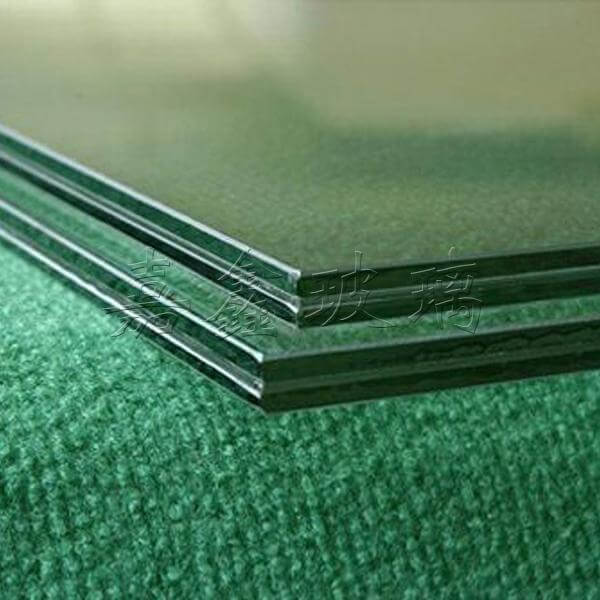
Typical cases:In a super high-rise project in Suzhou (with a gross floor area of 120,000 square meters) completed in 2022, Jiaxin Glass customized double-silver LOW-E insulating glass (with a 6+12A+6 configuration) for the project. Measured data after the project's operation indicated that the indoor temperature fluctuation range in winter was reduced to ±1.5°C, and air conditioning energy consumption decreased by 32% compared to conventional glass. In summer, solar heat gain was reduced by 45%, with an overall annual energy-saving rate of 28%. The project was awarded the title of "Jiangsu Province Green Building Demonstration Project." For more information, please visit the official website:www.jiaxinglass.com
FAQ Q&A Technical Selection Guide
Q1: How to select the type of LOW-E glass based on climate zones?
A1:For the northern heating regions, it is recommended to use high-transmittance LOW-E glass (Tv ≥ 75%, SC ≥ 0.5) to prioritize solar heat gain in winter. For the southern hot-summer and warm-winter regions, shading-type LOW-E glass (Tv ≤ 60%, SC ≤ 0.4) is recommended to enhance summer heat insulation. For transitional regions, double-silver or triple-silver products can be adopted to balance performance across all seasons. For example, Jiaxin Glass provided single-silver high-transmittance LOW-E glass (Tv = 78%, SC = 0.62) for a project in Harbin, achieving a winter solar heat gain coefficient (g-value) of 0.65, which represents a 40% improvement over ordinary glass.
Q2: What are the key considerations for the installation of LOW-E glass?
A2:Three key points require attention in the construction process:
STEP 1: Storage ConditionsGlass should be stored vertically in a dry and ventilated warehouse, away from direct sunlight, with the ambient temperature controlled between 5-40℃ and relative humidity ≤60%.
STEP 2: Processing ProtectionSpecial cooling fluids are required for cutting, edging, and other processes to prevent oxidation of the film layer; when assembling insulating glass units, sealing must be completed within 24 hours to prevent moisture ingress.
STEP 3: Installation SpecificationsFixed with neutral silicone structural adhesive, with adhesive joint width ≥10mm and depth ≥8mm; airtightness testing is required after installation, and the indication value of the helium leak detector should be ≤1×10⁻⁶ Pa·m³/s.
Q3: How to test the performance indicators of LOW-E glass?
A3:The core detection indicators include:
STEP 1: Emissivity (ε)Measured with an infrared reflectometer, the standard value is ≤0.15 (for single silver) or ≤0.08 (for double silver).
STEP 2: Visible light transmittance (Tv)Tested using a spectrophotometer with a wavelength range of 380-780 nm and an error ≤ ±1.5%.
STEP3: Shading Coefficient (SC)It is derived by converting the Solar Heat Gain Coefficient (SHGC) through simulation calculations or actual measurements, with SC = SHGC/0.87 (for standard 3mm clear glass, SHGC = 0.87).
Jiaxin Glass provides third-party inspection reports (such as from China Building Material Test & Certification Group) for each batch of products to ensure data traceability.
Reference for full text summary
Low-emissivity coated glass (LOW-E glass) achieves a precise balance between building energy efficiency and daylighting requirements by optimizing film layer structure and hollow composite technology. Leveraging a German-imported production line, double-seal technology, and full-process digital management, Jiangyin Jiaxin Glass Products offers a comprehensive range of LOW-E glass solutions, from single-silver to triple-silver configurations. Its products are widely used in super high-rise buildings, passive houses, and commercial complexes. Looking ahead, with the advancement of the "dual carbon" goals, LOW-E glass will become a core material for building energy efficiency retrofits, and Jiaxin Glass will continue to drive product upgrades through technological innovation, providing the industry with more efficient energy-saving solutions. For more information, please visit the official website:www.jiaxinglass.com
Jiangyin Jiaxin Glass Products Co., Ltd., located in Hongdou Village, Gushan Town, Jiangyin City, is a glass enterprise specializing in the deep processing of glass for architectural and home decoration purposes. Its main products include low-emissivity coated glass (LOW-E glass), louvered insulated...
No. 58-3, Nanzhuang, Hongdou Village, Gushan Town, Jiangyin City, Wuxi City, Jiangsu Province