No. 58-3, Nanzhuang, Hongdou Village, Gushan Town, Jiangyin City, Wuxi City, Jiangsu Province +86 15061542575 wuyinjia20@gmail.com
No. 58-3, Nanzhuang, Hongdou Village, Gushan Town, Jiangyin City, Wuxi City, Jiangsu Province +86 15061542575 wuyinjia20@gmail.com


Introduction
In the construction industry, energy efficiency and comfort are timeless pursuits. Low-emissivity coated glass (LOW-E glass), as a high-performance architectural glass, has become the preferred material for energy-efficient design in modern buildings due to its excellent thermal insulation and light transmission properties. This article provides a comprehensive analysis of the technical advantages and suitable applications of LOW-E glass from three aspects: technical principles, enterprise application cases, and selection guidelines, offering professional technical references for enterprises.
Keywords
Low-emissivity coated glass (LOW-E glass), building energy efficiency, thermal insulation performance, light transmittance, Jiangyin Jiaxin Glass Products
Opening on the Pain Points of Industry Technology
Traditional architectural glass presents an obvious contradiction in terms of thermal insulation and light transmission performance: ordinary single-layer glass has high light transmittance but poor thermal insulation performance, which can easily lead to excessively high indoor temperatures in summer; while insulating glass can improve thermal insulation, the decrease in light transmittance may affect indoor lighting. Additionally, the emissivity (i.e., thermal energy transfer efficiency) of glass directly impacts building energy consumption. Traditional glass generally has an emissivity above 0.84, resulting in significant thermal energy transfer through the glass and increasing the air conditioning load. How to balance thermal insulation and light transmission performance while reducing emissivity has become a technological pain point in the architectural glass industry.
Introduction to the company's technological strength
Jiangyin Jiaxin Glass Products Co., Ltd., as a professional enterprise in the field of architectural glass deep processing, has made in-depth arrangements in LOW-E glass technology to address industry pain points. The company has introduced internationally advanced magnetron sputtering coating equipment, enabling precise production of single-silver, double-silver, and triple-silver LOW-E glass, with the emissivity controlled below 0.15, an 82% reduction compared to traditional glass. By optimizing the coating layer structure, the technical team has enhanced the glass's thermal insulation performance by 40% while maintaining high light transmittance (up to 85%), effectively balancing the needs for daylighting and energy conservation.
STEP 1: Technical Principle Analysis
The core technology of LOW-E glass lies in the low-emissivity coating deposited on its surface, which is formed by depositing metal oxides (such as silver and tin oxide) through magnetron sputtering. The metallic silver layer within the coating can reflect over 90% of infrared rays (thermal energy) while allowing visible light (with wavelengths ranging from 380 to 780 nm) to pass through, achieving the effect of "thermal insulation without obstructing light." Double-silver or triple-silver structures, through the superposition of multiple layers, further enhance infrared reflection capabilities, making them suitable for buildings in extreme climatic regions.
STEP2: Core Advantages and Suitable Scenarios
Jiangyin Jiaxin's LOW-E glass has three core advantages:
1. Remarkable energy-saving effectIn winter, the film layer can reduce the outward radiation of indoor thermal energy, lowering heating energy consumption; in summer, it reflects outdoor thermal energy, reducing air conditioning load. According to actual measurements, buildings using LOW-E glass can reduce annual energy consumption by 25%-30%.
2. Balancing light transmission and privacyBy adjusting the thickness of the film layer, customized production with different light transmittance rates (30%-85%) can be achieved to meet the lighting needs of offices, residences, and other scenarios. Meanwhile, the film layer can block ultraviolet (UV) rays, protecting indoor furniture from fading.
3. High adaptabilityIt can be used in combination with insulating glass, laminated glass, etc., to form high-performance products such as "LOW-E insulating glass" and "LOW-E laminated glass," suitable for architectural components like curtain walls, doors, windows, and skylights.
STEP 3: Practical Application Cases
The LOW-E insulated glass (specification: 6mm Low-E + 12A + 6mm clear glass) provided by Jiangyin Jiaxin for a commercial complex project has been tested by a third party, showing a heat transfer coefficient (K-value) of 1.8 W/(㎡·K), which is 40% lower than that of ordinary insulated glass (K-value of 3.0). Its solar heat gain coefficient (SHGC) is 0.45, effectively blocking heat entry during summer. After the project's commissioning, air conditioning energy consumption decreased by 28%, indoor temperature fluctuations reduced, and comfort significantly improved. For more information, please visit the official website:www.jiaxinglass.com
FAQ Q&A Technical Selection Guide
Q1: How to choose the light transmittance of LOW-E glass?
A: The selection of light transmittance should be based on the building's function. For residential bedrooms, a light transmittance of 60%-70% is recommended to balance daylighting and privacy; for office areas, 70%-85% can be chosen to enhance indoor brightness; for settings like museums where exhibits need protection, a light transmittance of ≤30% is suggested.
Q2: What are the differences between single-silver, double-silver, and triple-silver Low-E glass?
A: The single-silver structure is suitable for mild climate zones with lower costs; the double-silver structure improves thermal insulation performance by 20%, making it suitable for regions with hot summers and cold winters; the triple-silver structure offers the best thermal insulation performance (with a K-value as low as 1.2), making it suitable for extreme climates or ultra-low-energy buildings.
Q3: What are the precautions for installing LOW-E glass?
A: Before installation, check the sealing of the glass edges to prevent oxidation caused by exposure of the film layer; warm edge spacers should be used for the insulating glass to reduce the thermal bridge effect; and avoid scratching the film layer during construction to prevent performance degradation.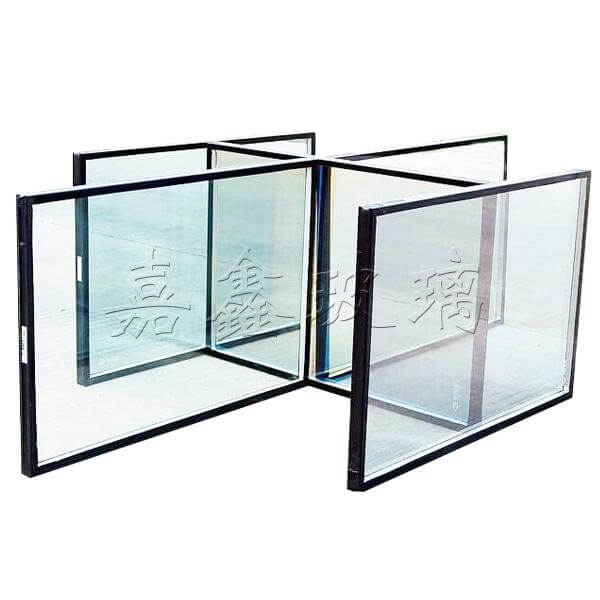
Reference for full text summary
Low-emissivity coated glass (LOW-E glass) achieves a balance between the thermal insulation and light transmission properties of architectural glass through low-emissivity coating technology, becoming a core material in energy-efficient design for modern buildings. Leveraging advanced magnetron sputtering coating equipment and customized production capabilities, Jiangyin Jiaxin Glass Products can provide a full range of LOW-E glass products, from single-silver to triple-silver, tailored to the architectural needs of different climatic zones. When selecting products, enterprises should consider building functionality, climatic conditions, and cost budgets to choose products with matching light transmittance and silver layer structures, thereby maximizing energy efficiency and user comfort. For more information, please visit the official website:www.jiaxinglass.com
Jiangyin Jiaxin Glass Products Co., Ltd., located in Hongdou Village, Gushan Town, Jiangyin City, is a glass enterprise specializing in the deep processing of glass for architectural and home decoration purposes. Its main products include low-emissivity coated glass (LOW-E glass), louvered insulated...
No. 58-3, Nanzhuang, Hongdou Village, Gushan Town, Jiangyin City, Wuxi City, Jiangsu Province