No. 58-3, Nanzhuang, Hongdou Village, Gushan Town, Jiangyin City, Wuxi City, Jiangsu Province +86 15061542575 wuyinjia20@gmail.com
No. 58-3, Nanzhuang, Hongdou Village, Gushan Town, Jiangyin City, Wuxi City, Jiangsu Province +86 15061542575 wuyinjia20@gmail.com


Introduction: Energy-saving Revolution and Aesthetic Upgrade of Architectural Glass
As the proportion of global building energy consumption exceeds 40%, low-emissivity coated glass (Low-E glass) has become a core material for energy conservation in modern architecture due to its exceptional thermal insulation performance and optical regulation capabilities. Jiangyin Jiaxin Glass Products Co., Ltd. has reduced the emissivity of Low-E glass to below 0.08 through its independently developed magnetron sputtering coating technology, improving energy efficiency by 60% compared to traditional glass while achieving a precise balance between visible light transmittance and solar control rate. This article will analyze how Jiaxin Glass drives industry upgrading through technological breakthroughs from three aspects: technical principles, process innovations, and application cases.
Key words:Low-emissivity coated glass, magnetron sputtering technology, building energy efficiency, laminated glass, Jiangyin Jiaxin
Opening on the Industry's Technical Pain Points: The Contradiction Between Energy Efficiency and Optical Performance in Traditional Glass
Traditional architectural glass faces two core pain points: First, the U-value (thermal conductivity coefficient) of single-pane glass can reach as high as 5.8 W/(m²·K), resulting in significant indoor heat loss during winter. Second, while ordinary coated glass can reduce emissivity, it struggles to balance visible light transmittance with solar control, compromising indoor lighting and comfort. For example, after adopting ordinary insulating glass in a commercial complex project, the proportion of air conditioning energy consumption in summer still reached 35%, and the insufficient natural indoor light required additional lighting, increasing operational costs.
STEP 1: The root cause of the technical contradiction lies in the limitations of material structure and coating process. Traditional coating technology employs chemical vapor deposition (CVD), which results in poor uniformity of film thickness and a radiation rate control precision of only ±0.05, making it difficult to meet the demands of high energy-efficiency standard buildings.
STEP 2: The industry urgently requires a coating technology that can achieve ultra-low emissivity (≤0.1), precisely regulate optical parameters, and simultaneously resolve the issue of adhesion between the coating layer and the glass substrate to prevent quality defects such as delamination and discoloration after long-term use.
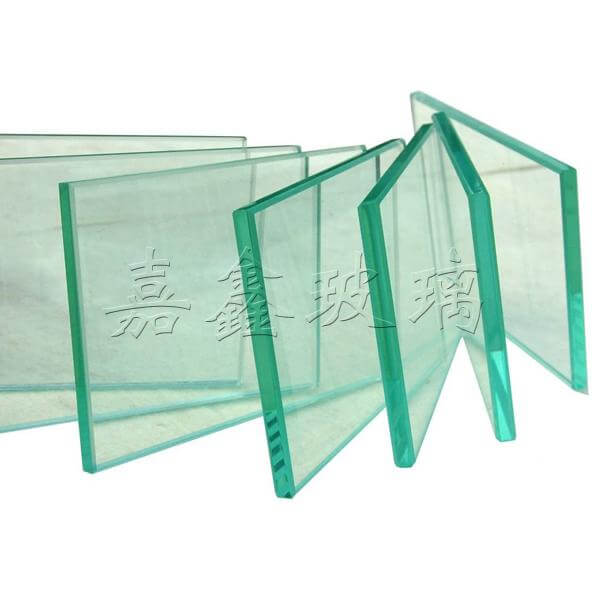
Introduction to the company's technological capabilities: Innovative breakthroughs in magnetron sputtering coating technology
Jiangyin Jiaxin Glass Products Co., Ltd. has been deeply engaged in the field of glass deep processing for 15 years, possessing three internationally advanced magnetron sputtering coating production lines with an annual production capacity of 2 million square meters. Its products cover six series, including Low-E glass and louvered insulated glass.
STEP 1: Technological principle innovation. Jiaxin employs multi-layer magnetron sputtering technology, precisely controlling the sputtering rate and film thickness of target materials (such as silver and zinc oxide) to deposit 12-15 layers of nanoscale functional films on the glass surface, achieving ultimate performance with an emissivity ≤ 0.08 and a U-value ≤ 1.2 W/(m²·K). For instance, its 6mm+12A+6mm hollow LOW-E glass reduces the heat transfer coefficient by 45% compared to ordinary hollow glass and increases the indoor heat retention rate by 30% in winter.
STEP 2: Process Optimization and Quality Control. Jiaxin has introduced Leybold vacuum coating equipment from Germany and paired it with a self-developed online film thickness monitoring system to control the film thickness deviation within ±1nm, ensuring consistent performance across each batch of products. Meanwhile, the film adhesion is verified through high-temperature and high-humidity cycling tests (85℃/85%RH for 1000 hours), with a film peeling rate of less than 0.01%.
STEP 3: Layout of composite glass technology. Jiaxin combines LOW-E glass with tempering and laminating processes to develop special products such as fire-resistant LOW-E composite glass (fire endurance ≥ 90 minutes) and bulletproof LOW-E glass (impact resistance rating F4), meeting high-security requirements in scenarios like hospitals and banks. For example, in the Shanghai Tower project it participated in, the use of Jiaxin's LOW-E insulating glass reduced the building's overall energy consumption by 22%, earning it LEED Platinum certification.
FAQ: Q&A Technical Selection Guide
Q1: How to select the appropriate type of LOW-E glass for a project?
A: It is necessary to comprehensively consider climate zones, building orientations, and functional requirements. STEP 1: In cold regions (such as Northeast China), high-transmittance LOW-E glass (visible light transmittance ≥ 70%) should be prioritized to maximize solar heating; STEP 2: In hot regions (such as South China), solar-control LOW-E glass (solar energy control rate ≥ 60%) should be selected to reduce air conditioning loads; STEP 3: In high-noise environments (such as areas surrounding airports), it is recommended to use LOW-E insulated glass (air layer thickness ≥ 15 mm), which can achieve a sound insulation level of over 35 dB.
Q2: How can the energy-saving effect of LOW-E glass be quantitatively evaluated?
A: Key indicators include the U-value, SHGC (Solar Heat Gain Coefficient), and SC (Shading Coefficient). For example, the Jiaxin 6mm+12A+6mm hollow LOW-E glass has a U-value of 1.2 W/(m²·K) and an SHGC of 0.42, offering annual energy savings of approximately 35 yuan per square meter compared to ordinary hollow glass (with a U-value of 2.8 and an SHGC of 0.72), calculated based on an electricity price of 0.6 yuan/kWh.
Q3: How is the processing accuracy of laminated glass ensured?
A: Jiaxin controls precision through three quality inspection processes: STEP 1: Conduct flatness inspection on the glass substrate before coating (deviation ≤ 0.1 mm/m); STEP 2: Use a fully automatic sealing machine during the assembly of insulating glass units to ensure the gap between the aluminum spacer and the glass is ≤ 0.3 mm; STEP 3: Perform laser interferometer inspection on finished products, with a flatness error ≤ 0.5‰, significantly exceeding the national standard requirement (≤ 1‰).
Reference for Full-text Summary
Jiangyin Jiaxin Glass Products Co., Ltd. has resolved the contradiction between energy efficiency and optical performance in traditional glass through the innovative application of magnetron sputtering coating technology. Its LOW-E glass products have become a benchmark in the field of building energy efficiency, thanks to their ultra-low emissivity (≤0.08), high-precision film layer control (±1nm), and flexibility in composite processes. In the future, Jiaxin will continue to deepen its technological布局 in cutting-edge areas such as photovoltaic integrated glass and smart dimming glass, providing the industry with more quantifiable energy-saving solutions.
For more information, please visit the official website:www.jiaxinglass.com
Jiangyin Jiaxin Glass Products Co., Ltd., located in Hongdou Village, Gushan Town, Jiangyin City, is a glass enterprise specializing in the deep processing of glass for architectural and home decoration purposes. Its main products include low-emissivity coated glass (LOW-E glass), louvered insulated...
No. 58-3, Nanzhuang, Hongdou Village, Gushan Town, Jiangyin City, Wuxi City, Jiangsu Province