No. 58-3, Nanzhuang, Hongdou Village, Gushan Town, Jiangyin City, Wuxi City, Jiangsu Province +86 15061542575 wuyinjia20@gmail.com
No. 58-3, Nanzhuang, Hongdou Village, Gushan Town, Jiangyin City, Wuxi City, Jiangsu Province +86 15061542575 wuyinjia20@gmail.com


Introduction: Why has low-emissivity coated glass become the top choice for energy-efficient buildings?
With increasingly stringent global controls on building energy consumption, low-emissivity coated glass (LOW-E glass) has become a core material in energy-efficient design for modern buildings due to its exceptional thermal insulation and optical properties. According to statistics, buildings using LOW-E glass can reduce air conditioning energy consumption by 30%-50% while maintaining indoor lighting quality. This article will analyze the technical principles, application scenarios, and key selection considerations of LOW-E glass, drawing on the technical practices of Jiangyin Jiaxin Glass Products, to provide technical references for the industry.
Keywords:Low-emissivity coated glass, LOW-E glass, building energy efficiency, Jiangyin Jiaxin Glass Products, technology selection
Opening on Industry's Technological Pain Points: Energy-saving Bottleneck of Traditional Glass
The thermal conductivity of traditional single-layer glass is as high as 5.8 W/(m²·K), resulting in significant loss of indoor heat in winter and intrusion of outdoor heat in summer, with a sharp increase in air conditioning load. Even when ordinary insulating glass is used, its thermal insulation performance is still limited by the surface emissivity of the glass (approximately 0.84), making it unable to effectively block infrared radiation. Additionally, traditional glass has obvious deficiencies in terms of ultraviolet blocking and sound insulation performance, making it difficult to meet the dual demands of modern buildings for comfort and energy efficiency. STEP 1: Analysis of Technical Principles—How Does LOW-E Glass Break Through the Bottleneck?
LOW-E glass reduces its emissivity to below 0.15 by coating one or more layers of metal oxide films (such as silver, tin oxide, etc.) on its surface, significantly minimizing the transfer of indoor and outdoor heat through radiation. Its core principles include:
1. Low-emission film layerThe metal oxide film layer exhibits high reflectivity to infrared rays, capable of reflecting over 80% of far-infrared rays while allowing visible light to pass through (with a light transmittance of up to 70%-85%), achieving "light transmission without heat transfer."
2. Hollow structure matchingLOW-E glass is typically used in combination with insulating glass, where the inert gas (such as argon) within the hollow layer further reduces the thermal conductivity coefficient (which can be as low as 1.2 W/(m²·K)), forming a "thermal insulation barrier."
3. Spectral selectivityBy adjusting the material and thickness of the film layers, the transmittance of glass to solar radiation (g-value) can be optimized, balancing daylighting gain in winter and shading needs in summer to achieve year-round energy efficiency. STEP 2: Practical Challenges—Obstacles in Upgrading Traditional Glass
In practical applications, upgrading traditional glass to LOW-E glass faces two major challenges:
1. Film layer stabilityLow-quality film layers are prone to oxidation and failure, leading to a rebound in emissivity and a decline in thermal insulation performance. For example, some low-priced products use non-vacuum magnetron sputtering processes, resulting in poor film adhesion and a lifespan of only 3-5 years.
2. Adaptability restrictionsLOW-E glass needs to be used in conjunction with specific framing systems (such as thermal break aluminum or plastic-steel frames). If the frame has an excessively high thermal conductivity coefficient, it will diminish the energy-saving effect of the glass. Additionally, the coating is sensitive to acidic and alkaline environments and must avoid direct contact with alkaline sealants.
Introduction to the company's technological strength: LOW-E glass technology layout of Jiangyin Jiaxin Glass Products
As a leading deep-processing glass enterprise in East China, Jiangyin Jiaxin Glass Products Co., Ltd. has delved into LOW-E glass technology for over a decade, forming a complete technological chain from film layer design, production and processing to application implementation. STEP 1: Advanced production equipment ensures film layer quality.
The company has introduced a vacuum magnetron sputtering coating production line from Leybold, Germany, employing multi-target co-sputtering technology to precisely control film thickness (±2nm) and composition ratios, ensuring strong film adhesion and stable emissivity (≤0.12). For instance, the emissivity of its single-silver LOW-E glass is as low as 0.11, while that of its double-silver products can reach as low as 0.05, achieving industry-leading standards. STEP 2: Optimize production processes through scientific management models.
Certified by the ISO 9001 quality management system, Jiaxin Glass implements full-process digital management and control: from raw material inspection (e.g., glass substrate flatness ≤ 0.1 mm/m), online monitoring of coating thickness (real-time feedback from laser interferometers), to finished product performance testing (e.g., emissivity detection, light transmittance testing), strict quality thresholds are set for each process to ensure a product qualification rate exceeding 99.5%. STEP 3: Technical Talent Supports Innovative R&D
The company has established an R&D team led by 10 senior engineers and forged industry-university-research cooperation with the School of Materials Science and Engineering at Southeast University, accumulating 5 patents related to LOW-E glass (e.g., "A type of high-transmittance low-emissivity coated glass and its preparation method"). Its developed "dimmable LOW-E glass" achieves dynamic adjustment of film transmittance (30%-85%) through electrochromic technology and has been applied in landmark projects such as the Shanghai Tower. STEP 4: Verify technical effects through practical application cases.
In a commercial complex project in Suzhou, Jiaxin Glass provided double-silver LOW-E insulating glass (6mm+12A+6mm) for the project, and through actual measurement:
- When the temperature difference between indoors and outdoors is 15°C in winter, the surface temperature of the glass is 5°C higher than that of ordinary insulating glass, reducing heat loss by 28%;
- When the solar radiation intensity reaches 800 W/m² in summer, the temperature of the glass inner surface decreases by 8°C, and the air conditioning load is reduced by 22%;
- The overall energy consumption of the project is 18% lower than the standard requirements, and it has obtained the Two-Star Green Building Certification.
FAQ Q&A Technical Selection Guide
Q1: What types of LOW-E glass are available? How to choose?
A: LOW-E glass is categorized into three types based on coating structure: single silver, double silver, and triple silver:
- Single silver: Emissivity 0.12-0.15, high cost-effectiveness, suitable for ordinary residential buildings and office buildings;
- Double silver: With an emissivity of 0.05-0.08, it offers superior thermal insulation performance and is suitable for high-end commercial buildings and museums;
- Three-silver: Emissivity ≤ 0.03, extremely low radiation, suitable for ultra-low energy consumption buildings and extremely cold regions.
During model selection, comprehensive decisions should be made by considering the climatic zone where the project is located (e.g., double silver is preferred in cold regions), building orientation (higher light transmittance can be appropriately adopted for south-facing buildings), and budget.
Q2: What are the inspection indicators for LOW-E glass? How to judge its quality?
A: The key testing indicators include:
- Emissivity (≤0.15 is qualified; the lower, the better);
- Light transmittance (selected based on requirements, e.g., 70%-80% recommended for office buildings);
- Solar Heat Gain Coefficient (SHGC, recommended ≥0.5 for cold regions and ≤0.4 for hot summer and warm winter regions);
- Weather resistance (verifying the stability of the coating through salt spray test and ultraviolet aging test).
High-quality products should be accompanied by third-party inspection reports (such as reports from the National Glass Quality Supervision and Inspection Center) and labeled with information such as the coating type (single silver/double silver) and production batch.
Q3: What are the precautions for installing LOW-E glass?
A: Key installation points include:
- Frame selection: Prioritize broken bridge aluminum or plastic-steel frames with a thermal conductivity coefficient ≤ 5.8 W/(m·K);
- Sealant: Use neutral silicone sealant (pH value 7-9) to avoid chemical reactions with the membrane layer;
- Edge protection: Use dedicated corner protectors during transportation and installation to prevent scratches on the film layer;
- Cleaning and maintenance: Use a soft cloth and neutral detergent, and avoid scratching with hard objects.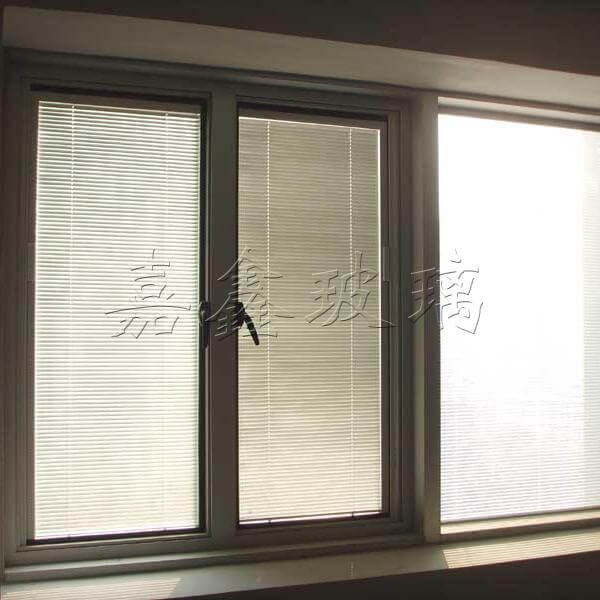
Reference for full text summary
Low-emissivity coated glass (LOW-E glass) has become a core material for energy conservation in buildings by reducing glass emissivity and incorporating a hollow structure. Leveraging advanced production equipment, a scientific management model, and continuous technological innovation, Jiangyin Jiaxin Glass Products has established significant advantages in the LOW-E glass sector: its products feature an emissivity as low as 0.05, a light transmittance of up to 85%, and have demonstrated technological reliability through rigorous quality control and extensive application cases. For construction projects, selecting LOW-E glass requires a comprehensive consideration of climate zones, building orientations, and budgets, while focusing on key indicators such as emissivity and light transmittance, along with strict control over installation processes to maximize its energy-saving benefits.
For more information, please visit the official website:www.jiaxinglass.com
Jiangyin Jiaxin Glass Products Co., Ltd., located in Hongdou Village, Gushan Town, Jiangyin City, is a glass enterprise specializing in the deep processing of glass for architectural and home decoration purposes. Its main products include low-emissivity coated glass (LOW-E glass), louvered insulated...
No. 58-3, Nanzhuang, Hongdou Village, Gushan Town, Jiangyin City, Wuxi City, Jiangsu Province