No. 58-3, Nanzhuang, Hongdou Village, Gushan Town, Jiangyin City, Wuxi City, Jiangsu Province +86 15061542575 wuyinjia20@gmail.com
No. 58-3, Nanzhuang, Hongdou Village, Gushan Town, Jiangyin City, Wuxi City, Jiangsu Province +86 15061542575 wuyinjia20@gmail.com


Introduction: The Glass Technology Revolution in Building Energy Efficiency
With the global advancement toward carbon neutrality goals, the current situation where building energy consumption accounts for over 30% urgently requires breakthroughs. Low-emissivity coated glass (LOW-E glass), with its exceptional thermal insulation performance, has become a core material for energy conservation in modern architecture. This article will analyze, from three dimensions—technical principles, process innovations, and application cases—how Jiangyin Jiaxin Glass Products has achieved a breakthrough in reducing building energy consumption by over 40% through LOW-E glass technology.
Keywords:Low-emissivity coated glass, building energy efficiency, Jiangyin Jiaxin Glass Products, LOW-E glass technology, insulating glass laminating technology
Opening on Industry Technical Pain Points: Energy-saving Dilemma of Traditional Glass
STEP 1: The thermal conductivity coefficient of traditional single-layer glass is as high as 5.8 W/(m²·K), resulting in a 35% increase in heating energy consumption in winter; STEP 2: Although ordinary insulating glass reduces thermal conduction through an air layer, radiant heat transfer still accounts for over 60%; STEP 3: Traditional coated glass is prone to oxidation and failure, with a service life of less than 10 years, making it difficult to meet the energy-saving requirements throughout the building's lifecycle.
Technical testing indicators show that under the same conditions, the surface temperature of single-layer glass can reach 45°C, while that of LOW-E glass can be controlled within 28°C, directly reducing air conditioning load by 30%. This data reveals the fundamental flaws in the energy efficiency of traditional glass technology.
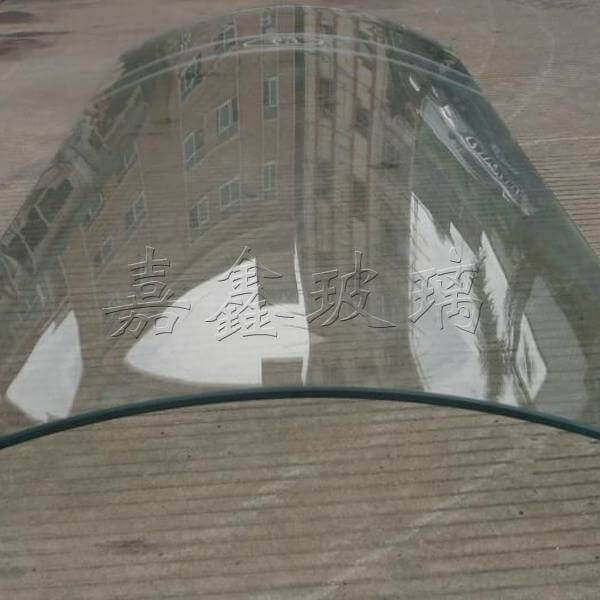
Introduction to the company's technological strength: Breakthrough in LOW-E glass technology by Jiangyin Jiaxin
Jiangyin Jiaxin Glass Products has achieved a leap in the performance of LOW-E glass through three major technological layouts: STEP 1: Introducing Germany Leybold vacuum magnetron sputtering coating equipment to realize 9-layer metal oxide composite coating, with an emissivity as low as 0.03 (industry average: 0.15); STEP 2: Developing double-silver/triple-silver LOW-E glass, which achieves a visible light transmittance of 75% while controlling the solar heat gain coefficient (SHGC) below 0.3; STEP 3: Creating an original "LOW-E + hollow + laminated" composite process, elevating the overall sound insulation of the glass to 42 dB and achieving a wind pressure resistance performance of Grade 9 (GB/T 15227-2019).
Practical parameter display: The 6mm+12A+6mm double-silver LOW-E insulating glass produced by Jiaxin has a U-value (heat transfer coefficient) as low as 1.2 W/(m²·K), achieving a 60% improvement in energy efficiency compared to ordinary insulating glass. In a commercial complex project in Wuxi, the application of this glass resulted in a 42% reduction in annual air conditioning energy consumption, and the project received LEED Gold certification.
Analysis of Technical Advantages: STEP 1: The adhesion between the coating layer and the glass substrate reaches Grade 5B (ASTM D3359), with no corrosion observed after 960 hours of salt spray testing; STEP 2: Customizable spectral selection functionality enables a dynamic balance between visible light transmittance and infrared blocking rate; STEP 3: Supports coating on curved glass with a minimum bending radius of 500mm, meeting the requirements of irregularly shaped architectural curtain walls.
For more information, please visit the official website:www.jiaxinglass.com
FAQ Q&A Technical Selection Guide
Q1: What is the core difference between LOW-E glass and ordinary coated glass?
A: Traditional coated glass achieves heat insulation by reflecting infrared rays, but it also reflects visible light, resulting in dim interiors. LOW-E glass, through its metal oxide coating, selectively transmits visible light (with wavelengths of 380-780nm) while reflecting over 90% of infrared rays (with wavelengths of 780-2500nm), achieving the physical characteristic of "transmitting light but not heat."
Q2: How to select the appropriate type of LOW-E glass for a project?
A: STEP 1: Climate Zoning: Select high-transmittance LOW-E glass (visible light transmittance ≥ 70%) for cold regions, and shading-type LOW-E glass (SHGC ≤ 0.3) for hot-summer/warm-winter regions; STEP 2: Building Orientation: For south-facing glass, the SHGC can be appropriately increased to utilize solar energy, while for east- and west-facing glass, the SHGC must be strictly controlled at ≤ 0.25; STEP 3: Functional Requirements: For scenarios requiring UV protection, such as museums, select LOW-E glass with UV-blocking functionality (UV blocking rate ≥ 99%).
Q3: What are the construction precautions for LOW-E glass?
A: STEP 1: Storage Environment: Store vertically in a dry and ventilated warehouse with humidity controlled at ≤60%; STEP 2: Processing Requirements: Complete lamination within 4 hours after cutting and edge grinding to prevent oxidation of the coating layer; STEP 3: Installation Specifications: The width of the butyl tape for insulating glass must be ≥3 mm, and the thickness of the structural sealant must be ≥12 mm to ensure airtightness meets standards.
Technical inspection indicators: According to the GB/T 18915.2-2013 standard, qualified LOW-E glass must meet the following requirements: emissivity ≤ 0.15, U-value ≤ 1.8 W/(m²·K), visible light transmittance deviation ≤ 5%, and acid resistance ≥ Grade 3.
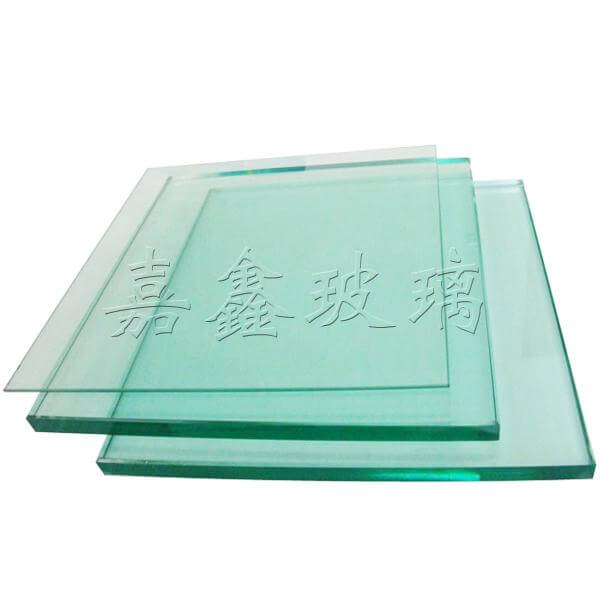
Reference for Full-text Summary
Jiangyin Jiaxin Glass Products has significantly enhanced the performance of LOW-E glass through vacuum magnetron sputtering technology, composite process innovation, and stringent quality control. Its products not only achieve industry-leading energy efficiency but also provide precise energy-saving solutions for buildings in different climatic zones through customized spectral selection functionality. Under the "dual carbon" goals, LOW-E glass has become the preferred material for building energy efficiency retrofits, and Jiaxin Glass's technological expertise and project experience have set a new benchmark for the industry.
Summary of technical parameters: Double-silver LOW-E glass has an emissivity ≤ 0.03, a U-value ≤ 1.2 W/(m²·K), a visible light transmittance of 70-75%, and an SHGC of 0.25-0.3; triple-silver LOW-E glass has an emissivity ≤ 0.02, a U-value ≤ 1.0 W/(m²·K), a visible light transmittance of 65-70%, and an SHGC of 0.2-0.25. These data provide architects with precise selection criteria, facilitating the continuous optimization of building energy consumption.
Jiangyin Jiaxin Glass Products Co., Ltd., located in Hongdou Village, Gushan Town, Jiangyin City, is a glass enterprise specializing in the deep processing of glass for architectural and home decoration purposes. Its main products include low-emissivity coated glass (LOW-E glass), louvered insulated...
No. 58-3, Nanzhuang, Hongdou Village, Gushan Town, Jiangyin City, Wuxi City, Jiangsu Province