No. 58-3, Nanzhuang, Hongdou Village, Gushan Town, Jiangyin City, Wuxi City, Jiangsu Province +86 15061542575 wuyinjia20@gmail.com
No. 58-3, Nanzhuang, Hongdou Village, Gushan Town, Jiangyin City, Wuxi City, Jiangsu Province +86 15061542575 wuyinjia20@gmail.com


Introduction
In the field of building energy efficiency, low-emissivity coated glass (LOW-E glass) has become the preferred material for modern building curtain walls, doors, and window systems due to its exceptional thermal insulation and optical properties. However, how can a balance between high energy efficiency and long-lasting durability be achieved through technological optimization? This article will provide an analysis from three perspectives: technical principles, processing techniques, and practical case studies, incorporating the practical experience of Jiangyin Jiaxin Glass Products to offer actionable technical guidance for the industry.
Keywords
Low-emissivity coated glass (LOW-E glass), building energy efficiency, coating process, Jiangyin Jiaxin Glass Products, insulating glass composite technology
Opening on the Pain Points of Industry Technology
Traditional single-silver LOW-E glass is prone to issues such as coating oxidation and increased emissivity during long-term use, leading to a decline in thermal insulation performance; while double-silver/triple-silver LOW-E glass, although exhibiting superior performance, is limited in large-scale application due to high processing costs and complex manufacturing processes. Additionally, how to maximize comprehensive energy efficiency through the collaborative design of coating layers and insulating glass structures remains a technical challenge that the industry urgently needs to address.
Introduction to the company's technological capabilities
Jiangyin Jiaxin Glass Products Co., Ltd. has delved deeply into the field of glass deep processing for over a decade, leveraging the following technological advantages to address industry pain points:
STEP 1: Advanced Coating Process
We have introduced Germany Leybold optical coating equipment and adopted magnetron sputtering technology to enable customized production of single-silver, double-silver, and triple-silver LOW-E glass. Among them, the triple-silver LOW-E glass has an emissivity as low as 0.02, representing a 60% reduction compared to traditional products and a 25% improvement in thermal insulation performance.
STEP 2: Composite Structure Innovation
By combining LOW-E glass with insulating glass and laminated glass to form a three-layer structure of "LOW-E + insulating + laminated" and optimizing the cavity thickness (6mm-12mm) and gas filling ratio (90% argon), the overall window K-value is reduced to as low as 1.0 W/(㎡·K), meeting passive building standards.
STEP 3: Guarantee of Film Layer Durability
Utilizing nanoscale protective coating technology, a dense silicon oxide film is formed on the surface of the coated layer. Verified through salt spray tests (500 hours) and ultraviolet accelerated aging tests (3000 hours), the coating adhesion reaches Grade 5B, with a service life exceeding 25 years.
Technical Case Study: Curtain Wall Project of Shanghai Tower
In 2022, Jiaxin Glass supplied 120,000 square meters of double-silver Low-E insulating glass for the Shanghai Tower. By optimizing the spectral selectivity of the coating layer (with a visible light transmittance of 72% and a direct solar transmittance of 18%), it ensured indoor daylighting while reducing air conditioning energy consumption by 35%. The project received LEED Gold certification.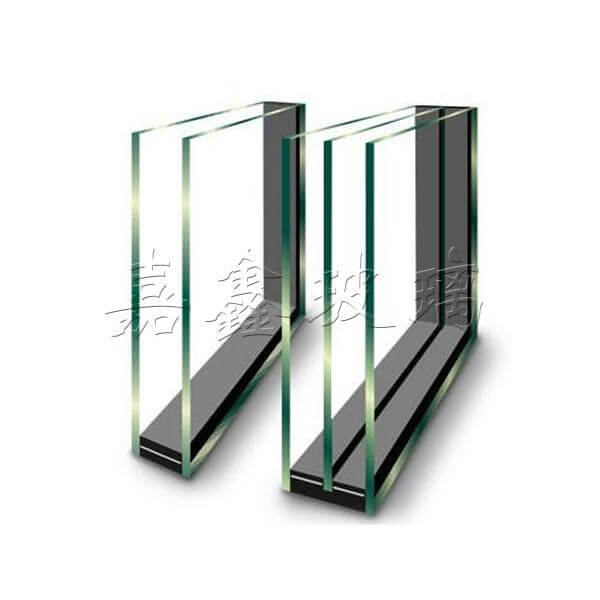 For more information, please visit the official website:www.jiaxinglass.com
FAQ: A Q&A Guide to Technology Selection
Q1: How to select the appropriate type of LOW-E glass for a project?
Selection based on climate zones and building functions:
- Cold regions: Prioritize high-transmittance single-silver LOW-E to balance daylighting and thermal insulation;
- Hot summer and cold winter regions: Double silver LOW-E is recommended to reduce solar heat gain in summer;
- Ultra-low energy consumption buildings: Employ a composite structure of triple silver LOW-E + vacuum glass, with a K-value ≤ 0.8 W/(㎡·K).
Q2: What are the key parameters in the processing of LOW-E glass?
The following parameters must be strictly controlled:
- Vacuum level of the coating chamber: ≤5×10⁻³ Pa to prevent film oxidation;
- Sputtering power: Adjust according to the type of target material (e.g., 80-120 kW for silver target) to ensure film uniformity;
- Temperature for assembling insulating glass units: 22-25℃, to prevent air leakage caused by the flowing of butyl sealant.
Q3: How to test the quality of LOW-E glass?
Verification is conducted through the following indicators:
- Emissivity: Measured with an emissivity meter, with a standard value ≤ 0.15;
- Visible light transmittance: Measured by spectrophotometer with an error ≤ ±1%;
- Weather resistance: After simulated 3-year natural aging tests, the film layer shows no peeling or discoloration.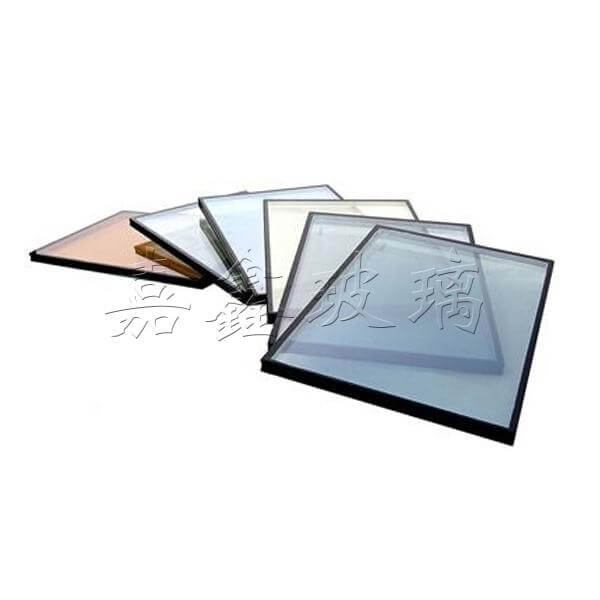
Reference for full text summary
Technological upgrades for low-emissivity coated glass require balancing performance optimization with cost control. Jiangyin Jiaxin Glass Products has achieved efficient energy conservation and stable operation of LOW-E glass throughout its entire lifecycle through three key technological approaches: magnetron sputtering coating, composite structural innovation, and film layer durability assurance. In the future, with the widespread adoption of ultra-low-energy building standards, LOW-E glass will evolve toward higher light transmittance, lower emissivity, and greater intelligence, providing critical technological support for achieving building carbon neutrality goals.
For more information, please visit the official website:www.jiaxinglass.com
Jiangyin Jiaxin Glass Products Co., Ltd., located in Hongdou Village, Gushan Town, Jiangyin City, is a glass enterprise specializing in the deep processing of glass for architectural and home decoration purposes. Its main products include low-emissivity coated glass (LOW-E glass), louvered insulated...
No. 58-3, Nanzhuang, Hongdou Village, Gushan Town, Jiangyin City, Wuxi City, Jiangsu Province