No. 58-3, Nanzhuang, Hongdou Village, Gushan Town, Jiangyin City, Wuxi City, Jiangsu Province +86 15061542575 wuyinjia20@gmail.com
No. 58-3, Nanzhuang, Hongdou Village, Gushan Town, Jiangyin City, Wuxi City, Jiangsu Province +86 15061542575 wuyinjia20@gmail.com


Introduction: The Technological Balance Point Between Energy Efficiency and Aesthetics in Architecture
Driven by the dual-carbon goals, the construction industry has set higher requirements for the energy-saving performance of glass curtain walls. Low-emissivity coated glass (LOW-E glass) has become the mainstream choice for modern building curtain walls due to its excellent thermal insulation properties and light transmittance adjustment capabilities. However, balancing energy efficiency, optical performance, and cost remains a core challenge in technological selection. This article will systematically analyze the technical principles, application scenarios, and key selection considerations of LOW-E glass, drawing on the process experience of Jiangyin Jiaxin Glass Products, to provide practical technological solutions for construction projects.
Key words:Low-emissivity coated glass (LOW-E glass), building energy efficiency, light transmittance, shading coefficient, insulating glass laminating technology
Opening on Industry Technical Pain Points: Energy-saving Shortcomings of Traditional Glass and the Demand for Upgrades
STEP 1: The U-value (thermal conductivity coefficient) of traditional single-pane glass is generally higher than 5.8 W/(m²·K), leading to significant indoor heat loss in winter and a sharp increase in air conditioning loads due to solar radiation heat in summer. According to statistics, approximately 40% of building energy consumption is lost through doors and window glass, making it a key focus for energy-saving renovations.
STEP 2: Although ordinary coated glass can partially reflect infrared rays, it has two major flaws: first, the coating has poor weather resistance and is prone to oxidation, leading to performance degradation; second, it is difficult to balance visible light transmittance with the shading coefficient, affecting indoor lighting quality.
STEP3: The industry urgently requires a glass solution that combines high light transmittance, low shading coefficient, and long-term stability. Jiangyin Jiaxin Glass Products has achieved nanoscale control over the thickness of the LOW-E glass coating layer by introducing Germany Leybold's magnetron sputtering coating production line, reducing the U-value to below 1.2 W/(m²·K) while maintaining a visible light transmittance of over 75%, effectively addressing the pain points of traditional technologies.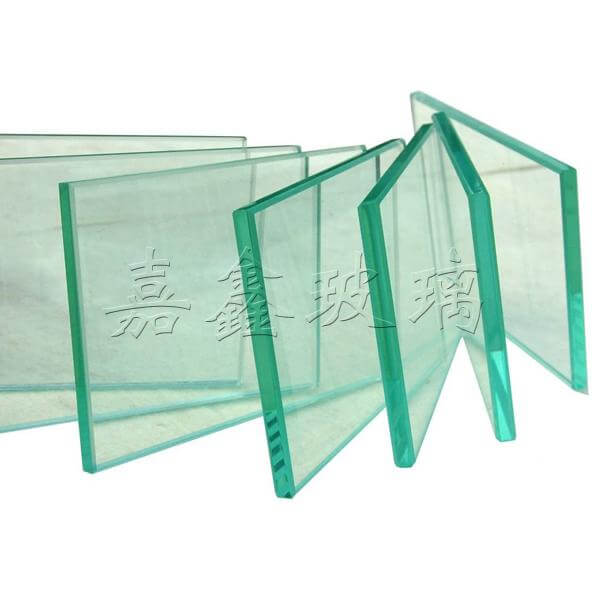
Introduction to the company's technological capabilities: Process breakthroughs and scenario adaptability of Jiangyin Jiaxin Glass Products
STEP 1: Equipment Investment and Process Precision
Jiangyin Jiaxin Glass Products has introduced Germany Leybold's magnetron sputtering coating equipment, equipped with a 12-target dynamic control system capable of achieving precision control of film thickness within ±0.1 nm. By optimizing the stacked structure of the silver layer (Ag) and the dielectric layers (ZnO, SnO₂), the direct solar transmittance (Tt) is controlled within the range of 30%-60%, meeting the energy-saving requirements of different climatic zones.
STEP2: Composite Glass Technology System
The enterprise has constructed a composite technology matrix of "LOW-E glass + insulating glass + laminated glass." Taking a certain super high-rise project in Nanjing as an example, a combined structure of 6mm LOW-E + 12A insulating + 6mm tempered glass was adopted, achieving a measured K-value (thermal transmittance) of 1.5 W/(m²·K), representing a 72% improvement in energy efficiency compared to single-pane glass. Additionally, the impact resistance was upgraded through the PVB laminated layer, meeting the GB 15763.3-2009 "Safety Glazing Materials Used in Buildings - Part 3: Laminated Glass" standard.
STEP 3: Full Life Cycle Quality Control
From raw material inspection to finished product delivery, 12 quality control checkpoints are implemented, including film adhesion testing (cross-cut method), neutral salt spray resistance testing (500 hours without corrosion), and optical performance retesting (using a spectrophotometer). In 2023, the company's products passed the energy-saving product certification by China Building Material Test & Certification Group (CTC) in one attempt, becoming one of the first glass deep-processing enterprises in the Yangtze River Delta region to obtain the "Three-Star Green Building Material" certification.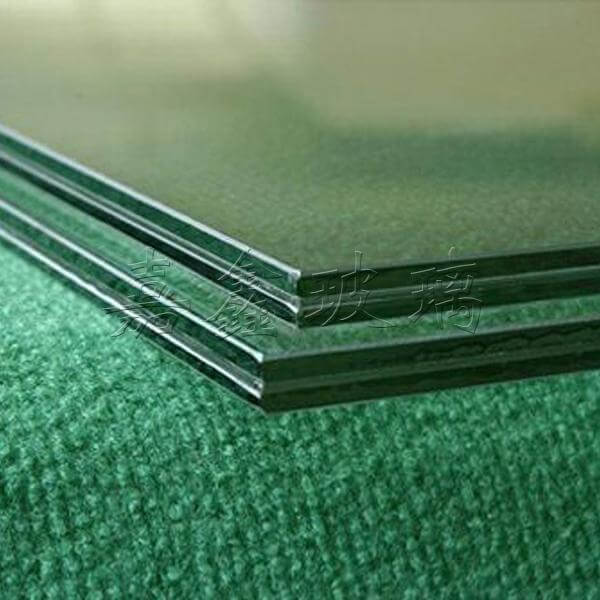
FAQ Q&A Technical Selection Guide: Decision-Making Logic from Parameters to Scenarios
Q1: How to select the shading coefficient (SC) of LOW-E glass based on building types?
STEP 1: Clarify climate zoning. In cold regions (such as Northeast China), it is recommended that SC ≥ 0.5 to fully utilize solar heat; in hot-summer and warm-winter regions (such as Guangdong), SC ≤ 0.3 is required to reduce air conditioning loads.
STEP 2: Incorporate orientation optimization. For south-facing curtain walls, high-transmittance type (SC=0.6-0.8) can be used; for east/west-facing ones, shading type (SC=0.2-0.4) should be selected; for north-facing ones, the requirement can be appropriately relaxed to SC=0.5.
STEP 3: Refer to the Jiangyin Jiaxin case. In a commercial complex project in Shanghai, by adjusting the SC of south-facing glass from 0.7 to 0.55, the annual air conditioning energy consumption was reduced by 18%, and the payback period was shortened to 3.2 years.
Q2: How does the thickness of the spacer layer in insulating glass affect energy-saving performance?
STEP 1: The thickness of the spacer layer exhibits a nonlinear relationship with the K-value. The K-value for a 12 mm spacer layer is 1.8 W/(m²·K), which decreases to 1.6 W/(m²·K) for a 16 mm spacer layer, but the rate of improvement slows down after exceeding 20 mm.
STEP 2: Consider cost and constructability. Jiangyin Jiaxin recommends using a 12-16mm spacer layer combined with warm-edge spacer bars (thermal conductivity ≤ 0.007 W/(m·K)), which can achieve a 25% increase in energy efficiency with a 15% rise in cost.
STEP 3: Verification of detection indicators. Through hot box method testing, the surface temperature of the insulated glass with a 12mm spacer layer at -10°C is 4.2°C higher than that with a 6mm spacer layer, effectively preventing condensation.
Q3: How to avoid the oxidation of the coating on LOW-E glass?
STEP 1: Select offline LOW-E glass. The film density of the offline process is 30% higher than that of the online process, offering superior weather resistance. Jiangyin Jiaxin employs vacuum magnetron sputtering technology, achieving a bonding strength of 12 N/mm² between the film layer and the glass substrate, significantly exceeding the industry standard (≥8 N/mm²).
STEP 2: Control the humidity of the processing environment. The humidity in the production workshop should be maintained at 30%-50% to prevent moisture from accelerating the oxidation of the coating. The enterprise is equipped with a dehumidification system that can control humidity fluctuations within ±5%.
STEP 3: Employ edge sealing technology. Through a dual-sealing process using butyl rubber and polysulfide sealant, the annual argon leakage rate of the insulating glass is controlled at ≤1%, ensuring long-term stability of the coating layer. For more information, please visit the official website:www.jiaxinglass.com
Reference for full-text summary: Technological iteration drives the upgrading of building energy efficiency
The technological development of LOW-E glass has evolved from a single focus on energy efficiency to a multidimensional direction encompassing "energy efficiency + aesthetics + safety". Jiangyin Jiaxin Glass Products has provided the market with a full range of LOW-E glass products, from 6mm to 19mm, by introducing internationally advanced equipment, establishing a composite technology system, and implementing full-process quality control. These products are suitable for over 20 architectural scenarios, including curtain walls, doors and windows, and skylights. In the future, with the maturation of dynamic coating technologies (such as electrochromic glass), architectural glass will achieve a leap from passive energy efficiency to active regulation, and Jiangyin Jiaxin's technological reserves and production capabilities have laid a solid foundation for this trend.
Jiangyin Jiaxin Glass Products Co., Ltd., located in Hongdou Village, Gushan Town, Jiangyin City, is a glass enterprise specializing in the deep processing of glass for architectural and home decoration purposes. Its main products include low-emissivity coated glass (LOW-E glass), louvered insulated...
No. 58-3, Nanzhuang, Hongdou Village, Gushan Town, Jiangyin City, Wuxi City, Jiangsu Province