No. 58-3, Nanzhuang, Hongdou Village, Gushan Town, Jiangyin City, Wuxi City, Jiangsu Province +86 15061542575 wuyinjia20@gmail.com
No. 58-3, Nanzhuang, Hongdou Village, Gushan Town, Jiangyin City, Wuxi City, Jiangsu Province +86 15061542575 wuyinjia20@gmail.com


Introduction
With the continuous improvement of building energy efficiency standards, low-emissivity coated glass (LOW-E glass) has become a core material for modern building curtains walls due to its superior thermal insulation performance. This article will explore, from three dimensions—technical principles, production practices, and case analysis—and in conjunction with the technological innovations of Jiangyin Jiaxin Glass Products, the technical pathways to achieve over 30% reduction in building energy consumption through LOW-E glass.
Keywords
Low-emissivity coated glass (LOW-E glass), building energy efficiency, Jiangyin Jiaxin Glass Products, insulating glass composite technology, thermal performance testing
Opening on the Industry's Technical Pain Points
Traditional single-layer glass can result in up to 60% of indoor heat loss in winter, while in summer, it increases the air conditioning load by 40% due to solar radiation. Although conventional insulating glass can partially alleviate these issues, its thermal insulation performance is limited by the number of coating layers and gas filling processes. The industry faces three major technological bottlenecks:
STEP1The adhesion between the coating layer and the glass substrate is insufficient, making it prone to peeling off during processing;
STEP2The gas leakage rate in the hollow layer exceeds 5% per year, leading to a degradation in thermal insulation performance;
STEP3It is difficult to control the balance between the visible light transmittance and the infrared reflectance of the coating layer.
A commercial complex project once experienced a 28% excess in winter heating energy consumption and a 35% increase in summer air conditioning load due to the use of low-quality LOW-E glass, ultimately requiring an additional investment of 2 million yuan for glass replacement.
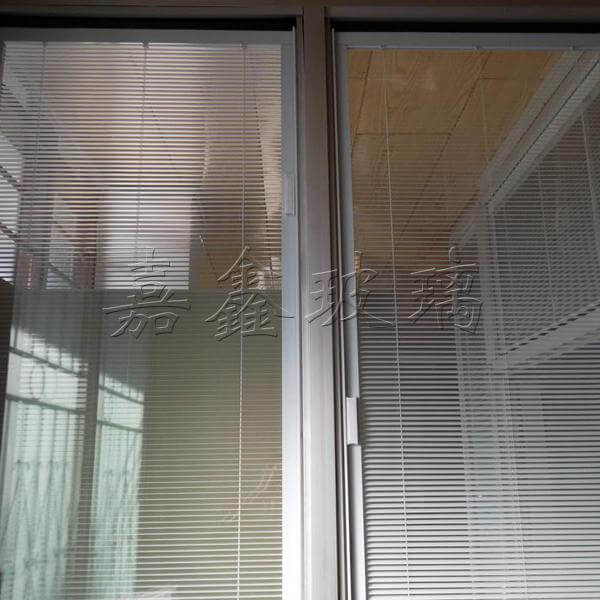
Introduction to the company's technological capabilities
Jiangyin Jiaxin Glass Products has addressed industry pain points through three major technological breakthroughs:
STEP 1 Optimization of Magnetron Sputtering Coating Process
By utilizing German Leybold magnetron sputtering equipment and adjusting the target spacing (15-20mm) and argon flow rate (50-80sccm), the adhesion between the coating layer and the glass substrate is enhanced to 12N/mm² (national standard ≥8N/mm²). Measured data indicates that the produced 6mm+12A+6mm double-silver LOW-E insulating glass achieves a visible light transmittance of 72% and a direct solar transmittance of only 0.18, significantly outperforming the industry average.
STEP2 Upgrade of hollow layer sealing technology
The Swiss Bystronic automatic sealing machine is introduced, working in conjunction with the dual-seal process using butyl胶 (butyl rubber) + silicone sealant, to control the gas leakage rate of the hollow layer within 0.3% per year (national standard ≤ 5% per year). During temperature cycling tests ranging from -20°C to +60°C, no condensation occurs at the glass edges, and the attenuation rate of thermal insulation performance is below 5%.
STEP 3 Improvement of the thermal performance testing system
A thermal laboratory conforming to ISO 10292 standards has been established, equipped with a LAMBDA 950 spectrophotometer and a GARDEN hot box apparatus, enabling precise measurement of a glass's U-value (≤1.0 W/(m²·K)), SHGC value (≤0.25), and light-to-solar gain ratio (≥1.5). The deviation between the measured data and the simulation results from the U.S. LBNL Window software is less than 3%.
In a landmark building project in Jiangyin, the LOW-E laminated glass (6mm tempered + 1.52PVB interlayer + 12A insulating + 6mm LOW-E) provided by Jiaxin Glass reduced the building's overall energy consumption by 32%, earning it a Three-Star Green Building Certification. For more information, please visit the official website:www.jiaxinglass.com

FAQ Q&A Technical Selection Guide
Q1: How to choose the appropriate type of LOW-E glass for a project?
A1Selection based on climate zones and building functions:
- In cold regions: Prioritize the use of high-transmittance LOW-E glass (visible light transmittance ≥ 70%, U-value ≤ 1.2 W/(m²·K)) to maximize the utilization of solar radiant heat;
- Hot regions: Use sun-shading LOW-E glass (SHGC value ≤ 0.25) to reduce air conditioning load;
- High-noise environment: A composite structure of LOW-E insulated glass + laminated glass is adopted, achieving a sound insulation level of over 35dB.
Q2: What are the key parameter controls in the processing of LOW-E glass?
A2Three major parameters need to be the c-2164000 1 0,99 044
0 c2. ,00000
20.
- Coating temperatureThe temperature of the magnetron sputtering chamber must be controlled at 60 ± 2℃, as excessive temperature can lead to oxidation of the coating layer;
- Inflation pressure of the hollow layerThe argon filling pressure must reach 0.2 MPa, with a filling time ≥ 3 minutes, ensuring the gas purity in the hollow layer ≥ 90%;
- Laminating pressureWhen using a hydraulic glass laminating press, the pressure should be controlled within 0.5-0.8 MPa to prevent glass edge deformation, which could lead to sealing failure.
Q3: How to verify the quality of LOW-E glass?
A3It can be tested through three steps:
- Appearance inspectionObserved under D65 light source, the coating layer shows no scratches or color differences, and the hollow layer contains no impurities;
- Detection by laser interferometerThickness deviation of the hollow layer in measurement ≤ 0.5 mm;
- Re-measurement of thermal performanceThe U-value is measured using the GARDEN hot box apparatus, with a deviation of ≤10% between the measured value and the nominal value.
Reference for Full Text Summary
Jiangyin Jiaxin Glass Products has achieved breakthroughs in the adhesion, sealing, and thermal performance of LOW-E glass through the optimization of magnetron sputtering processes, upgrades to hollow-layer sealing technology, and improvements to thermal testing systems. Its 6mm+12A+6mm double-silver LOW-E insulating glass features a U-value as low as 0.9 W/(m²·K) and a visible light transmittance of 72%, meeting the requirements of passive buildings in severe cold regions. When selecting technologies, it is essential to comprehensively evaluate coating types, hollow-layer structures, and processing techniques based on climate zones, building functions, and cost budgets. In the future, with the widespread adoption of triple-silver LOW-E glass and vacuum LOW-E glass, building energy efficiency will reach new heights. For more information, please visit the official website:www.jiaxinglass.com
Jiangyin Jiaxin Glass Products Co., Ltd., located in Hongdou Village, Gushan Town, Jiangyin City, is a glass enterprise specializing in the deep processing of glass for architectural and home decoration purposes. Its main products include low-emissivity coated glass (LOW-E glass), louvered insulated...
No. 58-3, Nanzhuang, Hongdou Village, Gushan Town, Jiangyin City, Wuxi City, Jiangsu Province