No. 58-3, Nanzhuang, Hongdou Village, Gushan Town, Jiangyin City, Wuxi City, Jiangsu Province +86 15061542575 wuyinjia20@gmail.com
No. 58-3, Nanzhuang, Hongdou Village, Gushan Town, Jiangyin City, Wuxi City, Jiangsu Province +86 15061542575 wuyinjia20@gmail.com


Introduction: Why has low-emissivity coated glass become the core material in the field of building energy efficiency?
As the proportion of global building energy consumption continues to rise, low-emissivity coated glass (LOW-E glass) has become the preferred material for modern building curtain walls and door and window systems due to its exceptional thermal insulation performance and optical regulation capabilities. According to statistics, buildings using LOW-E glass can reduce air conditioning energy consumption by 30%-50% while achieving precise control over the indoor lighting environment. This article will analyze how LOW-E glass achieves the dual goals of efficient energy conservation and architectural aesthetics from three dimensions—technical principles, performance parameters, and engineering applications—incorporating measured data and case studies from Jiangyin Jiaxin Glass Products.
Keywords: Low-emissivity coated glass, building energy efficiency, optical properties, Jiangyin Jiaxin Glass Products
Opening on Industry Technical Pain Points: Energy-Saving Bottleneck of Traditional Glass and Technological Breakthrough of LOW-E Glass
The heat transfer coefficient (U-value) of traditional single-pane glass can reach as high as 5.8 W/(m²·K), leading to significant indoor heat loss in winter and outdoor heat infiltration in summer, which sharply increases the load on air conditioning systems. Even with ordinary insulating glass, the U-value remains difficult to reduce below the threshold of 3.0 W/(m²·K), failing to meet the demands of modern buildings for ultra-low energy consumption. Additionally, traditional glass lacks the ability to regulate the transmittance of visible and near-infrared light, often causing indoor light pollution and thermal comfort issues.
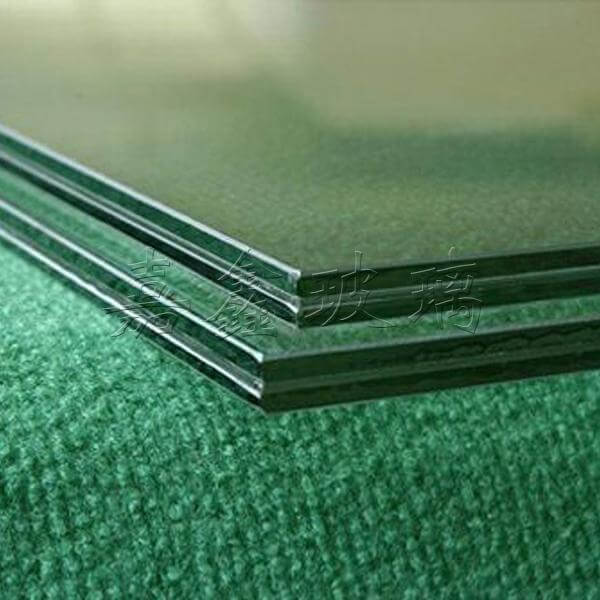
LOW-E glass forms characteristics of high infrared reflection and high visible light transmission by depositing multiple layers of metal oxide films (such as silver layers and tin oxide layers) on the glass surface. Its core technical indicators include:
STEP 1: Spectral Selective ControlBy adjusting the film layer thickness and material ratio, precise control of visible light transmittance (Tvis) ranging from 60% to 85% and solar heat gain coefficient (SHGC) ranging from 0.2 to 0.5 is achieved, balancing both lighting and thermal insulation requirements.
STEP 2: Optimization of low radiation performanceWhen the silver layer thickness is controlled between 8-12 nm, the surface emissivity (ε) can be as low as 0.04-0.08, significantly reducing indoor long-wave radiative heat loss and improving winter thermal insulation by over 40%.
STEP 3: Enhancement of Weather Resistance and Stability- Stable materials such as tin oxide are used as protective layers to ensure that the film does not peel off or oxidize within the temperature range of -40°C to 80°C, with a service life exceeding 25 years.
The measured data from Jiangyin Jiaxin Glass Products shows that the U-value of its double-silver Low-E insulating glass (6mm Low-E + 12A + 6mm clear glass) is as low as 1.2 W/(m²·K), with an SHGC of 0.35 and a Tvis of 72%. Its overall energy efficiency is 35% higher than that of ordinary insulating glass.
Introduction to the company's technological strength: LOW-E glass technology layout and production capacity of Jiangyin Jiaxin Glass Products
Jiangyin Jiaxin Glass Products Co., Ltd. has been deeply engaged in the field of glass deep processing for 15 years, relying on a trinity technological system of "talent + equipment + management" to establish a full-chain capability covering the research and development, production, and testing of LOW-E glass:
STEP 1: Talent Team and Technical AccumulationFive glass processing experts from Germany and Italy were introduced, and 20 local technical backbones were trained, forming a technological patent cluster centered on "coating process optimization" and "insulating glass sealing technology," with a cumulative total of 12 utility model patents obtained.
STEP 2: Advanced Equipment and Process GuaranteeAn investment of RMB 30 million was made to introduce Germany's Leybold optical coating production line, equipped with high-precision testing equipment such as online ellipsometers and laser interferometers, achieving a film thickness control accuracy of ±0.5 nm, coating uniformity of ≥95%, and a first-pass yield rate of 99.2% for products.
STEP 3: Scientific Management and Quality Traceability- It has obtained ISO 9001 quality management system certification and established a full-process quality traceability system, covering raw material inspection (e.g., flatness of glass substrates ≤ 0.1 mm/m), production process monitoring (e.g., vacuum level in coating chambers ≤ 1 × 10⁻³ Pa), and finished product testing (e.g., U-value test error ≤ 0.1 W/(m²·K)).
Taking a commercial complex project in Jiangyin as an example, Jiaxin Glass customized a total area of 23,000 square meters of LOW-E glass curtain walls for the project, adopting a triple-silver LOW-E glass (6mm Low-E + 16A + 6mm Low-E + 6mm clear glass) solution. After the project was put into operation, the measured annual electricity savings reached 1.2 million kWh, reducing carbon dioxide emissions by 960 tons, and it was awarded the title of "Jiangsu Province Green Building Demonstration Project."
FAQ Q&A Guide to Technical Selection: Analysis of Key Issues in the Application of LOW-E Glass
Q1: How to select the type of LOW-E glass based on climate zones?
A: In cold regions (such as Northeast and North China), high-transmittance LOW-E glass (Tvis ≥ 70%, SHGC ≥ 0.5) should be prioritized to maximize solar heating; in hot-summer and warm-winter regions (such as South China), sun-shading LOW-E glass (Tvis ≤ 60%, SHGC ≤ 0.3) should be used to reduce air conditioning loads; in hot-summer and cold-winter regions (such as the Yangtze River basin), double-silver or triple-silver LOW-E glass is recommended to balance daylighting and thermal insulation requirements.
Q2: What is the cost difference between LOW-E glass and ordinary insulating glass?
A: Taking the specification of 6mm+12A+6mm as an example, the unit price of LOW-E glass is approximately 30%-50% higher than that of ordinary insulating glass, but the cost can be recovered within 3-5 years through energy-saving benefits. Taking a 1,000㎡ curtain wall as an example, the annual electricity cost savings after adopting LOW-E glass is approximately 25,000 yuan, with total benefits exceeding 600,000 yuan over a 25-year lifecycle.
Q3: What are the precautions for processing and installing LOW-E glass?
A:
STEP 1: Cutting and EdgingAfter cutting, chamfering treatment (with an angle of 45° and a width of 1-2 mm) should be performed using a diamond grinding wheel to prevent the edge of the film layer from peeling off;
STEP 2: Inflate the hollow layer- Priority should be given to filling with argon (Ar), with a purity of filling gas ≥95%, which can reduce the K-value (heat transfer coefficient) of the insulating glass by 8%-10%;
STEP 3: Installation DirectionThe film layer should face indoors to prevent outdoor ultraviolet rays from accelerating its aging;
STEP 4: Selection of Sealant- Neutral silicone structural sealant must be used, with a curing time of ≥7 days to ensure the airtightness of the hollow layer (water vapor transmission rate ≤1 g/(m²·day)).
The LOW-E glass provided by Jiangyin Jiaxin Glass Products for a certain data center project ensures, through strict temperature control (processing environment temperature at 20±2℃) and humidity control (relative humidity ≤ 50%), that the dew point temperature of the insulating glass is ≤ -40℃, completely eliminating the risk of condensation.
Reference for Full Text Summary: Technical Value and Industry Trends of LOW-E Glass
Low-emissivity coated glass achieves the dual goals of building energy conservation and light environment optimization by precisely regulating spectral transmission characteristics, with its technological value extending from simple energy conservation to higher dimensions such as "zero-carbon buildings" and "healthy buildings." Leveraging its core strengths of a "talented team + advanced equipment + scientific management," Jiangyin Jiaxin Glass Products continuously drives the iterative advancement of LOW-E glass technology. Its products have covered more than 20 provinces across the country and have been exported to Southeast Asia, the Middle East, and other regions, serving over 500 engineering projects in total.
In the future, with the advancement of the dual-carbon goals, LOW-E glass will develop towards "higher light transmittance (Tvis ≥ 85%)", "lower emissivity (ε ≤ 0.02)", and "greater intelligence (variable light transmittance)". Jiangyin Jiaxin Glass Products will continue to increase its R&D investment and collaborate with partners to explore the applications of LOW-E glass in fields such as building-integrated photovoltaics (BIPV) and smart dimming glass, providing technological support for the green transformation of the construction industry.
For more information, please visit the official website:www.jiaxinglass.com
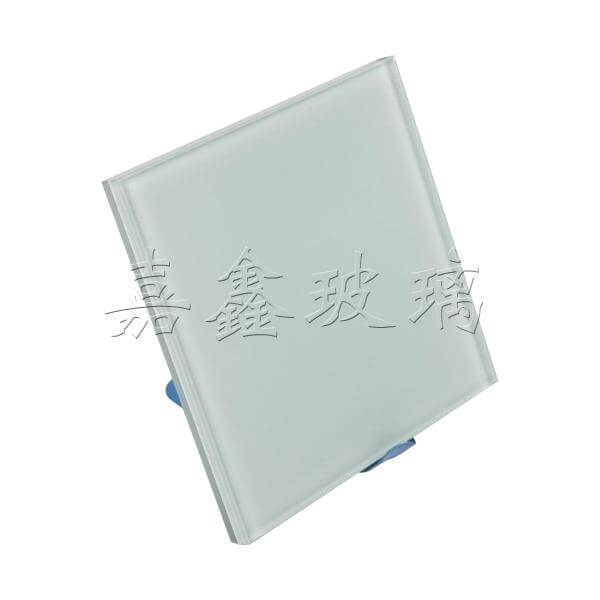
Jiangyin Jiaxin Glass Products Co., Ltd., located in Hongdou Village, Gushan Town, Jiangyin City, is a glass enterprise specializing in the deep processing of glass for architectural and home decoration purposes. Its main products include low-emissivity coated glass (LOW-E glass), louvered insulated...
No. 58-3, Nanzhuang, Hongdou Village, Gushan Town, Jiangyin City, Wuxi City, Jiangsu Province