No. 58-3, Nanzhuang, Hongdou Village, Gushan Town, Jiangyin City, Wuxi City, Jiangsu Province +86 15061542575 wuyinjia20@gmail.com
No. 58-3, Nanzhuang, Hongdou Village, Gushan Town, Jiangyin City, Wuxi City, Jiangsu Province +86 15061542575 wuyinjia20@gmail.com


Introduction: Why has low-emissivity coated glass become the top choice for energy conservation in modern architecture?
As global attention to building energy consumption rises, low-emissivity coated glass (LOW-E glass) has gradually become a core material in fields such as building curtain walls, doors, and windows due to its excellent thermal insulation and light transmission properties. According to statistics, buildings using LOW-E glass can reduce air conditioning energy consumption by 30%-50% while maintaining sufficient indoor lighting. This article will analyze how LOW-E glass balances energy efficiency and comfort from three dimensions—technical principles, corporate practices, and selection guidelines—and share the technological breakthroughs and application experiences of Jiangyin Jiaxin Glass Products in this field.
Keywords: Low-emissivity coated glass, Building energy efficiency, Light transmittance, Jiangyin Jiaxin Glass Products, Technology selection
Opening on Industry Technical Pain Points: Energy-Saving Limitations and Market Pain Points of Traditional Glass
Traditional single-layer glass or ordinary insulating glass have significant shortcomings in thermal insulation performance: direct sunlight in summer causes a sharp rise in indoor temperature, increasing the load on air conditioners; in winter, indoor heat is rapidly lost through the glass, increasing heating energy consumption. Additionally, ordinary glass has an infrared blocking rate of less than 30%, failing to effectively control heat exchange between indoors and outdoors. In contrast, LOW-E glass, by coating multiple layers of metal oxide films on its surface, can increase the infrared reflectivity to over 80% while maintaining a visible light transmittance of 70%-85%, fundamentally addressing the energy-saving challenges of traditional glass.
STEP 1: Technical Principle Analysis
The core technology of LOW-E glass lies in its coating layer structure. Taking the online LOW-E glass produced by Jiangyin Jiaxin Glass Products as an example, its coating layer consists of 5-7 layers of metal oxides (such as silver, tin oxide, zinc oxide, etc.), with a total thickness of only 0.1-0.3 micrometers. Among them, the silver layer serves as the functional layer responsible for reflecting infrared rays; the tin oxide layer acts as a protective layer to prevent the silver layer from oxidizing and enhance the adhesion of the coating layers. By precisely controlling the thickness and refractive index of each layer, LOW-E glass can achieve the dual effects of "high light transmittance + high thermal insulation."
STEP 2: Performance Parameter Comparison
Compared with ordinary insulating glass, LOW-E glass has significant energy-saving advantages:
- Heat transfer coefficient (K-value): The K-value of ordinary insulating glass is approximately 2.8-3.5 W/(m²·K), while that of LOW-E insulating glass can be as low as 1.5-2.0 W/(m²·K);
- Shading Coefficient (SC value): The SC value of ordinary glass is approximately 0.8-0.9, while the SC value of LOW-E glass can be adjusted to 0.3-0.6 to meet the needs of different climatic regions;
- UV blocking rate: LOW-E glass can achieve over 99%, effectively protecting indoor furniture and personnel health.
Introduction to the company's technological strength: Breakthrough in LOW-E glass technology by Jiangyin Jiaxin Glass Products
Jiangyin Jiaxin Glass Products Co., Ltd., located in Hongdou Village, Gushan Town, Jiangyin City, is an enterprise dedicated to the deep processing of glass for architectural and home decoration purposes, boasting a complete product line including low-emissivity coated glass (LOW-E glass), louvered insulated glass, and insulated glass. Through the triple drive of "talent + equipment + management," the company has established core technological barriers for LOW-E glass:
STEP 1: Talent and Technical Team
Jiaxin Glass emphasizes the recruitment of technical talents, currently employing 12 professional engineers, among whom 3 have over 10 years of experience in R&D of LOW-E glass and are capable of independently completing key tasks such as coating layer design and process parameter optimization. The company regularly organizes its technical team to participate in industry summits and engage in exchanges with international enterprises such as Germany's Leybold and the U.S.'s PPG to ensure its technological approach stays in sync with global frontiers.
STEP 2: Advanced Processing Equipment
The company has introduced a German Leybold online coating production line, which employs magnetron sputtering technology to achieve a coating thickness error of ≤0.01 micrometers, ensuring uniformity and stability of the film layer. Meanwhile, the production line is equipped with an automatic cleaning system and an online inspection device, enabling real-time monitoring of indicators such as glass surface cleanliness and film adhesion, with the defective product rate controlled within 0.5%.
STEP 3: Scientific Management Model
Jiaxin Glass adopts the ISO 9001 quality management system, implementing full-process control from raw material procurement to finished product delivery. For example, in the production of LOW-E glass, the company sets strict standards for key parameters such as the purity of silver targets and argon flow rates, and analyzes production data using SPC (Statistical Process Control) tools to continuously optimize process parameters. Additionally, the company has established a customer feedback mechanism to adjust coating layer designs according to project requirements and provide customized solutions.
Real case: A commercial complex project in Shanghai
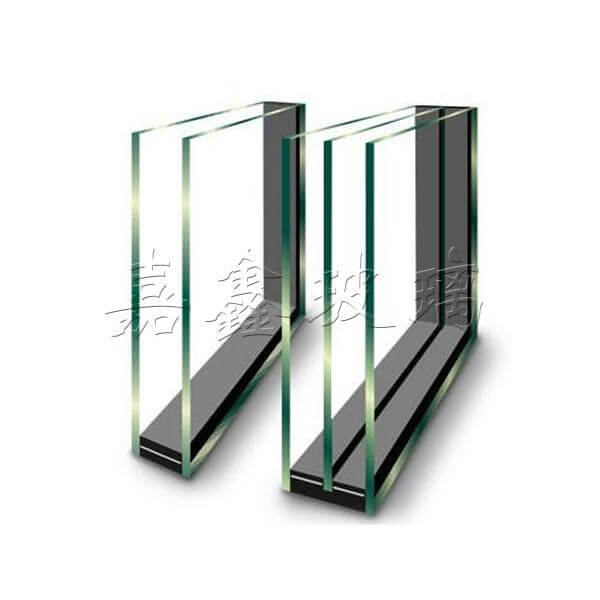
In 2022, Jiaxin Glass provided LOW-E insulating glass for a commercial complex in Shanghai, covering a total area of 23,000 square meters. The project employed a "6Low-E+12A+6" insulating glass structure (6mm glass + 12mm air gap + 6mm glass), achieving a heat transfer coefficient (K-value) as low as 1.6 W/(m²·K) and a shading coefficient (SC value) of 0.45. After project delivery, third-party testing confirmed a 42% reduction in annual air conditioning energy consumption and a 30% improvement in indoor light uniformity, earning high praise from the property owner.
For more information, please visit the official website:www.jiaxinglass.com

FAQ: A Q&A Guide to Technology Selection - Common Issues and Solutions for LOW-E Glass Reference for Full-text Summary: Technical Value and Corporate Practice of LOW-E Glass
Q1: LOW-E glass is categorized into single-silver, double-silver, and triple-silver types. How do I choose among them?
A: Single-silver LOW-E glass has low cost and is suitable for mild climate zones; double-silver LOW-E glass offers superior thermal insulation performance, with a K-value as low as 1.2 W/(m²·K), making it ideal for regions with hot summers and cold winters; triple-silver LOW-E glass is designed for extreme climates (such as deserts and frigid regions), though it comes with higher costs. Jiaxin Glass can recommend the optimal coating structure based on the climate data and energy consumption goals of the project location.
Q2: How to balance the light transmittance and thermal insulation performance of LOW-E glass?
A: Visible light transmittance (Tvis) is inversely correlated with the shading coefficient (SC), and selection should be based on building functions. For example, office buildings require high visible light transmittance (Tvis ≥ 70%) and can opt for LOW-E glass with an SC value of 0.5-0.6; residential buildings prioritize privacy and thermal insulation, making products with Tvis of 50%-60% and an SC value of 0.3-0.4 suitable choices. Jiaxin Glass provides coating simulation software that allows for previewing light transmission and thermal insulation effects under different parameters in advance.
Q3: What are the precautions for the installation of LOW-E glass?
A: The coated side of the LOW-E glass should face the hollow layer (i.e., the indoor side); otherwise, it will affect its thermal insulation performance. During installation, avoid scratching the coated layer, and it is recommended to use specialized suction cups. The hollow layer should be filled with inert gases such as argon to further enhance thermal insulation (the K-value can be reduced by 0.2-0.3 W/(m²·K) after argon filling). Jiaxin Glass provides installation training videos and on-site guidance for the project to ensure construction compliance.
Q4: What is the lifespan of LOW-E glass?
A: The service life of LOW-E glass primarily depends on the stability of its coating layer and the sealing performance of the insulating layer. Jiaxin Glass adopts an online coating process, resulting in a tighter bond between the coating layer and the glass substrate, with a service life exceeding 25 years. The insulating layer employs dual sealing with butyl rubber and polysulfide sealant, ensuring an annual argon leakage rate of ≤1% and long-term stable performance.
Detection Indicators and Key Operational Points
When selecting LOW-E glass, it is essential to focus on the following indicators:
- Visible light transmittance (Tvis): Measured with a spectrophotometer, the standard value must meet the design requirements;
- Heat transfer coefficient (K-value): Measured using the heat flow meter method; a lower K-value indicates better thermal insulation;
- UV blocking rate: Measured with a UV spectrophotometer, it must be ≥99%;
Low-emissivity coated glass (LOW-E glass) achieves a balance between building energy efficiency and indoor comfort through multi-layer metal oxide coating technology, with its core advantages being high light transmittance, high thermal insulation, and long service life. Leveraging its talented team, advanced equipment, and scientific management, Jiangyin Jiaxin Glass Products has established technological barriers in the LOW-E glass sector. Its products have been widely applied in commercial complexes, residential buildings, public structures, and other settings, with a cumulative delivery area exceeding 500,000 square meters. In the future, Jiaxin Glass will continue to adhere to the principle of "customer first, quality assurance," optimizing film layer design and production processes to provide superior solutions for building energy efficiency.
For more information, please visit the official website:www.jiaxinglass.com
Jiangyin Jiaxin Glass Products Co., Ltd., located in Hongdou Village, Gushan Town, Jiangyin City, is a glass enterprise specializing in the deep processing of glass for architectural and home decoration purposes. Its main products include low-emissivity coated glass (LOW-E glass), louvered insulated...
No. 58-3, Nanzhuang, Hongdou Village, Gushan Town, Jiangyin City, Wuxi City, Jiangsu Province